
Description
Symptoms
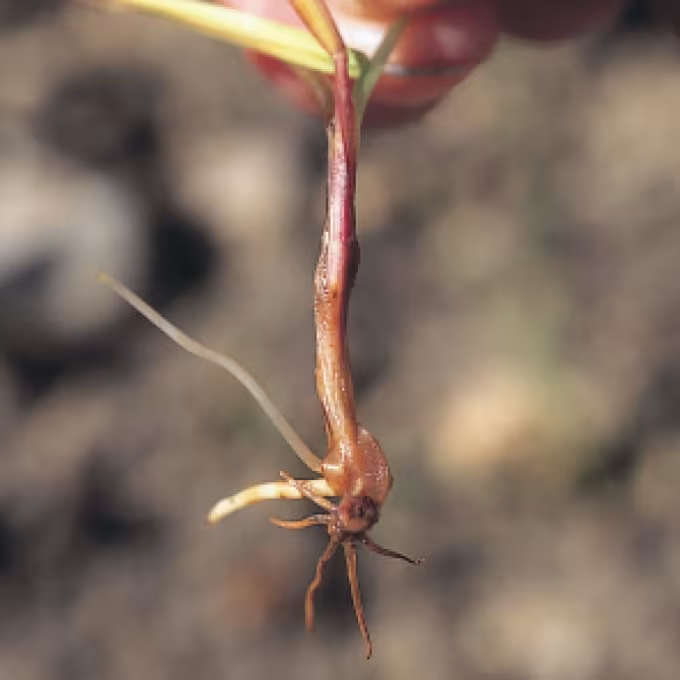
The first characteristic sign of the disease is the browning and softening of the root system or the seedling's hypocotyl (crown). Affected tissues quickly become water-soaked and brownish, indicating the progression of decay.
In seedlings, "damping-off" is commonly observed, where the stem at the soil line thins, turns soft and brown, eventually causing the plant to collapse and perish. In mature plants, the disease manifests as wilting that does not recover overnight.
When watermelon fruits are affected, the disease can strike areas in contact with moist soil. The rind develops circular, soft, sunken lesions that expand rapidly in size.
Inside the infected fruit tissue, the flesh becomes mushy, water-soaked, and often emits an unpleasant odor due to secondary bacterial colonization. Surfaces of the infected areas may exhibit a thin, white mycelial growth.
The root systems of infected plants become decayed and brittle, with the outer cortical layer easily sloughing off from the central cylinder. The plant loses its ability to absorb water and nutrients, resulting in gradual dehydration.
Pathogen
The causal agent of this disease is Globisporangium ultimum (formerly Pythium ultimum), a soil-borne pathogenic oomycete. It is one of the most aggressive members of its genus, capable of surviving for long periods in the soil as oospores, which are highly resistant to adverse environmental conditions.
This organism is a facultative parasite, capable of both saprotrophic and pathogenic growth. Its infection cycle initiates when oospores germinate in response to chemical signals exuded by the root systems of susceptible host plants.
The pathogen attacks a wide range of agricultural crops. Cucurbits, including watermelon, cucumber, and melon, are particularly vulnerable, alongside various vegetable and ornamental plants during both seedling and mature growth stages.
The mycelium actively colonizes host tissues, secreting enzymes that degrade plant cell walls. This process leads to rapid tissue softening and the development of necrotic lesions.
During its life cycle, the pathogen produces zoosporangia, which release motile zoospores in the presence of free moisture. These zoospores swim through soil pores to infect new host tissues within the vicinity.
Conditions for development
The primary trigger for disease outbreaks is excessive soil moisture. Globisporangium ultimum requires free water in the soil for the active dispersal of zoospores.
The optimal temperature for this pathogen ranges from 15 to 25 degrees Celsius. Notably, the fungus is highly active even at relatively cool soil temperatures, causing significant damage to germinating seeds.
Poor soil aeration, caused by compaction or heavy soil texture, creates anaerobic conditions that facilitate the rapid progression of rot.
Inadequate crop rotation and monoculture practices lead to the accumulation of high inoculum levels in the soil. The pathogen is easily spread via contaminated tillage equipment and irrigation water.
The presence of undecomposed organic matter in the soil also encourages pathogen activity, as it provides a nutritional substrate for the fungus before it attacks living plant roots.
Why it matters
The disease causes mass mortality in seedlings, leading to reduced crop density and the necessity for replanting. This results in significant economic losses for agricultural operations.
In mature plants, infection leads to a sharp decline in both yield and produce quality. For watermelons, fruits become unsuitable for storage and transportation, rotting shortly after harvest.
Infections can result in total loss of marketable yield in greenhouse environments, where high humidity maintains a continuous cycle of infection throughout the season.
Secondary infections that penetrate through pathogen-damaged tissues can exacerbate crop stress, leading to the death of plants even after the primary infection site has been addressed.
The long-term persistence of oospores in the soil poses a continuous risk of re-infection in subsequent growing seasons, even when less susceptible crops are planted.
Protection
Effective management relies on maintaining high standards of agronomic practice. Ensuring excellent soil drainage to prevent water stagnation and using sterilized or pathogen-free potting mixes for seedlings are essential measures.
It is important to manage irrigation carefully, allowing the top layer of soil to dry slightly between watering cycles. Avoid keeping the substrate overly saturated during the seedling stage, especially in cool weather.
Implementing science-based crop rotations that exclude cucurbits for 3–5 years in infested areas is highly recommended. Growing plants on raised beds or using mulching materials can also mitigate the contact between fruits and infested soil.
Biological fungicides based on Trichoderma species can help suppress pathogen development in the rhizosphere. In professional farming, specialized seed treatments and soil-applied fungicides are used to combat severe infestations.
- Disinfection of soil mixes and farming equipment.
- Utilization of resistant crop hybrids.
- Strict control of soil moisture and aeration levels.
- Prompt roguing and disposal of infected plant material.
Pathogens and affected parts
Affects crops · 1
Discussion
No discussions yet — be the first.