
Pythium root rot
Pythium conidiophorum
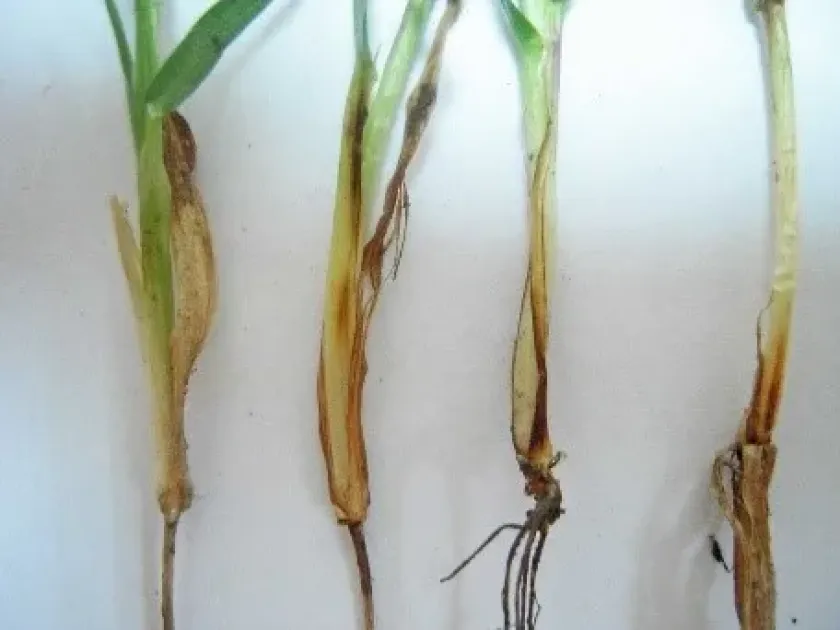
Description
Symptoms
The primary symptom of Pythium root rot is a darkening and softening of the root system, often resulting in a water-soaked, necrotic appearance.
Plants affected by this pathogen often show signs of severe wilting during the day, which may temporarily recover at night but progressively worsens over time.
Seedlings are highly susceptible and frequently suffer from "damping-off," where the stem collapses at the soil line, leading to rapid death of the entire plant.
A diagnostic characteristic in many mature plants is the ease with which the outer cortex of the root slips off the inner vascular cylinder when pulled.
Stunting, yellowing of leaves (chlorosis), and a sparse root system are also indicative of a chronic infection that restricts the plant's overall development.
Pathogen
The causative agent of this disease is Pythium conidiophorum, a soil-borne pathogen belonging to the oomycetes class, often referred to as water molds.
These organisms thrive in wet conditions, utilizing motile zoospores that swim through water films in the soil to reach and infect plant roots.
Pythium species produce resilient resting structures known as oospores, which allow the pathogen to survive for several years in the soil without a host.
Infection typically begins when zoospores are attracted by root exudates, which provide essential chemical signals for the pathogen to locate susceptible tissues.
Once inside, the pathogen colonizes the root cortex, destroying the vascular tissues and preventing the uptake of water and nutrients essential for plant growth.
Conditions for development
The development of Pythium conidiophorum is heavily favored by saturated soil conditions and poor drainage, which restrict oxygen availability to plant roots.
Low soil temperatures combined with high moisture levels are particularly conducive to early-season outbreaks, often occurring shortly after germination.
Over-irrigation and compaction of soil contribute to the buildup of free water, which is necessary for the movement of zoospores between adjacent root systems.
High nutrient levels, particularly an excess of nitrogen, can stimulate lush plant growth that is structurally vulnerable to initial pathogen colonization.
Lack of proper sanitation in greenhouse environments, such as reusing non-sterile containers or contaminated irrigation water, significantly accelerates spread.
Why it matters
The economic impact of Pythium root rot is severe, particularly in greenhouse operations where it can cause total loss of entire batches of transplants.
For field crops, the disease leads to uneven stands and stunted growth, drastically reducing total yields and the marketability of harvested produce.
Compromised root systems make plants susceptible to secondary infections by other opportunistic bacteria and fungi, further complicating the disease process.
Long-term infestation of the soil forces growers to implement expensive chemical treatments or costly soil replacement to restore land productivity.
The inability of the crop to mature uniformly causes significant logistical issues during harvest, increasing operational costs for commercial farmers.
Protection
Effective management begins with improving soil physical properties, ensuring adequate drainage, and avoiding over-watering practices during critical growth stages.
Cultural practices such as crop rotation, sanitizing tools and equipment, and removing crop debris are essential to limit the initial inoculum load.
Chemical control strategies involve the use of specialized fungicides targeting oomycetes as seed treatments or soil drenches to provide early protection.
Biological control using beneficial microbes like Trichoderma species or Bacillus strains can help create a suppressive soil environment against Pythium.
Regular monitoring of moisture levels and the use of healthy, disease-free transplants are fundamental for minimizing the incidence and spread of root rot.
Discussion
No discussions yet — be the first.