
Pythium root rot
Pythium coloratum
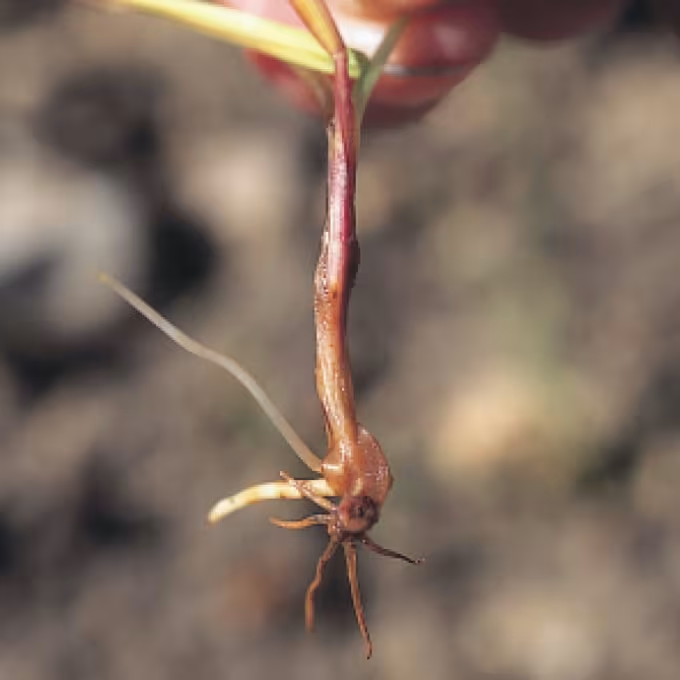
Description
Symptoms
The first signs of Pythium root rot are often non-specific and resemble symptoms of nutrient deficiency. Affected plants exhibit stunted growth, chlorosis, and general wilting, especially during the hottest parts of the day.
Examination of the roots reveals a distinct brown discoloration and a soft, mushy texture. The outer layer of the root (epidermis) often sloughs off easily when touched, exposing the central vascular cylinder, which may remain intact for longer periods.
Young lateral roots and root hairs are typically destroyed first, which severely impairs the plant's ability to uptake water and nutrients. As the disease progresses, the entire root system may become necrotic and severely compromised.
In some cases, the infection moves up to the crown, resulting in a dark, sunken lesion that causes the stem to collapse, a condition frequently referred to as damping-off in seedlings or crown rot in older plants.
- Stunted plant growth and pale yellow foliage.
- Soft, watery, and brown roots.
- Decay of root tips and loss of fine lateral roots.
- Seedling collapse due to stem lesions.
- Overall lack of vigor and susceptibility to environmental stress.
Pathogen
The causative agent of this disease is Pythium coloratum, a soil-borne oomycete. Although often grouped with fungi, oomycetes have distinct biological characteristics in their cell wall composition and reproductive strategies, classifying them as water molds.
This pathogen survives in the soil primarily as thick-walled resting spores known as oospores. These structures are remarkably resilient, allowing the pathogen to persist for several seasons even in the absence of a suitable host plant.
Under moist conditions, oospores germinate to produce sporangia, which release motile zoospores. These zoospores swim through water films in the soil towards the root tips, which serve as the primary entry points for infection.
Once the zoospores reach the root, they encyst and penetrate the host tissue. The pathogen rapidly colonizes the cortical cells, utilizing nutrients from the plant and leading to the destruction of the integrity of the root system.
The biology of Pythium coloratum is highly adapted to the rhizosphere, where it can outcompete other microorganisms and establish a primary infection site when environmental factors are favorable for the pathogen's growth.
Conditions for development
Excessive soil moisture is the primary condition promoting the development of Pythium root rot. Because the pathogen relies on water for zoospore movement, waterlogged conditions significantly accelerate the rate of infection.
The disease is most prevalent in poorly drained fields, areas with compacted soil, or in greenhouse settings where irrigation systems provide too much water, preventing the soil from drying out sufficiently.
Temperature plays a significant role in the pathogen's life cycle. While different strains have varying optimal temperature requirements, mild to moderate temperatures often facilitate rapid zoospore release and infection cycles.
Lack of soil aeration limits oxygen availability, which stresses the plant roots and reduces their natural defense mechanisms. This stress makes the roots much more susceptible to colonization by Pythium coloratum.
Continuous cropping of susceptible hosts on the same plot increases the pathogen population in the soil. Without appropriate crop rotation, the density of oospores can reach levels that make commercial production of susceptible varieties impossible.
Why it matters
The economic impact of Pythium root rot is significant due to reduced plant stands and inconsistent yields. Poor germination or seedling death shortly after emergence forces farmers to incur additional costs for reseeding.
For mature crops, the damage manifests as reduced photosynthesis and diminished yield quality. Plants with compromised roots cannot tolerate drought or heat stress, often dying prematurely before reaching harvest maturity.
Post-harvest losses are also a major concern. Produce that appears healthy at harvest may develop decay during transport and storage if the infection was latent, leading to substantial financial losses for growers and retailers.
The cost of implementing management strategies, such as soil fumigation or the use of expensive fungicides, adds to the production costs, thereby squeezing the profit margins for farmers in infested areas.
In greenhouse operations, Pythium coloratum is notoriously difficult to eradicate once it establishes itself in the growing medium, potentially forcing the disposal of entire plant batches and interrupting production cycles.
Protection
Effective management begins with improving cultural practices. Ensuring excellent soil drainage and avoiding over-irrigation are critical steps to deny the pathogen the wet environment it needs for mobility.
Implementing a rigorous crop rotation schedule with non-host species is essential for reducing the soil inoculum levels. Rotating out of susceptible crops for several years can significantly lower the oospore population.
Seed treatment with systemic fungicides specifically active against oomycetes provides necessary protection for the most vulnerable developmental stages of the plant, helping to ensure a healthy start to the season.
In greenhouses, strict sanitation protocols must be maintained. This includes disinfecting tools, surfaces, and pots, as well as using sterilized, high-quality growing media to prevent the introduction of the pathogen.
Biological control agents, such as beneficial Trichoderma species or specific strains of Bacillus subtilis, can be introduced into the root zone to compete with Pythium coloratum and promote overall plant health.
Discussion
No discussions yet — be the first.