
Pythium root rot
Pythium butleri
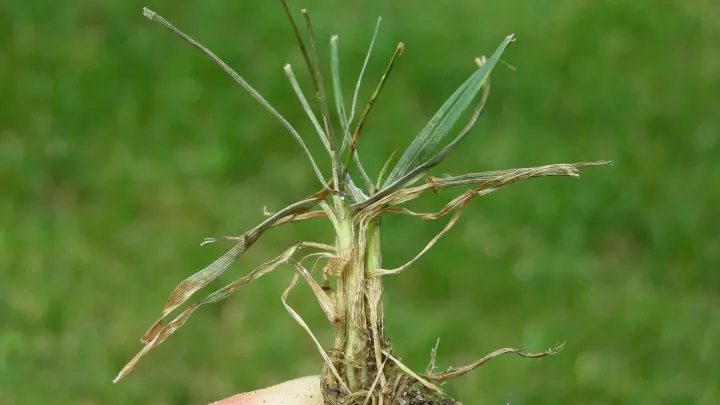
Description
Symptoms
The first symptoms are often vague and can be confused with drought stress or nutrient deficiencies. Infected plants show stunted growth, leaf chlorosis, and temporary wilting during the day, which may partially recover during cooler night hours.
The most diagnostic feature is the discoloration and softening of the root system. Roots turn brown or grey, become mushy, and the outer cortex easily sloughs off, exposing the central stele. The root system effectively loses its integrity and anchorage.
Seedlings often exhibit "damping-off," where the hypocotyl becomes thin, water-soaked, and collapses at the soil line. This sudden collapse is a classic sign of rapid infection in young plants under high humidity conditions.
In mature plants, the loss of lateral roots reduces the total absorptive surface area. This leads to the decline of the plant's overall vigor, early senescence of lower leaves, and a significant decrease in flower or fruit production due to the lack of metabolic resources.
A faint white, cottony mycelium may occasionally be observed on the roots under high moisture conditions, though this is difficult to spot in soil-grown crops. Diagnosing the disease usually requires pulling a plant to inspect the roots directly.
Pathogen
The causative agent of the disease is the oomycete Pythium butleri, which is a common soil-borne pathogen. Although often referred to as a fungus, it belongs to the Stramenopila group, surviving in the soil as resilient oospores for many years.
This pathogen has an exceptionally wide host range, attacking various vegetable crops, ornamental plants, and greenhouse seedlings. By colonizing the root system, it systematically disrupts the plant's ability to absorb water and essential nutrients from the substrate.
The life cycle of Pythium butleri is highly dependent on environmental moisture. In the presence of free water, oospores germinate to produce sporangia, which release motile zoospores capable of swimming through soil pores to locate healthy plant roots.
Infection primarily targets young root hairs and the zone of elongation. Upon reaching the host tissue, the pathogen produces enzymes that degrade cell walls, allowing the hyphae to penetrate and expand, which leads to tissue necrosis and severe root dysfunction.
The biological success of this pathogen lies in its ability to thrive in disturbed ecological niches. When soil conditions favor anaerobic processes, Pythium quickly dominates the microbial community, leaving the crop without natural biological defense.
Conditions for development
Excessive soil moisture and poor drainage are the primary factors favoring Pythium butleri outbreaks. Waterlogged conditions provide the perfect medium for zoospore movement, drastically increasing the speed at which the infection spreads.
The pathogen thrives in temperatures between +18°C and +25°C (64°F–77°F). These temperatures are commonly found in greenhouses, creating an ideal environment for the pathogen to complete its life cycle and maintain high virulence throughout the growing season.
Compacted, heavy soils that lack proper aeration are highly susceptible. Furthermore, over-irrigation or improper watering schedules that keep the root zone constantly saturated prevent the roots from performing respiration effectively.
High salt concentration in the soil or nutrient solution can induce osmotic stress in the roots, making them more vulnerable to infection. Similarly, lack of biological diversity in the soil allows Pythium to proliferate without competition from beneficial fungi.
Human activity is a major vector for spread. Contaminated tools, equipment, muddy footwear, and even non-sterile irrigation water can introduce the pathogen into new areas, making biosecurity a critical concern in professional farming.
Why it matters
The primary economic impact is the loss of seedlings, which forces growers to repeat planting cycles. This leads to delays in production and significantly increases costs related to labor and input materials.
In mature crops, the disease causes significant yield losses. Because the root system cannot adequately provide for the plant's needs, growth is stunted, and fruits may fail to mature or develop properly, leading to lower quality and reduced market value.
The pathogen’s ability to persist in the soil for years makes it a long-term problem. Once a greenhouse or field is infested, the grower must invest in costly soil disinfection or consider a shift in crop rotation to less susceptible varieties.
The spread of the infection through water systems can lead to massive outbreaks in hydroponic or nursery settings, potentially destroying entire batches of plants in a very short amount of time if not caught early.
Furthermore, plants weakened by Pythium are more prone to secondary infections. Bacteria and other fungi often colonize the already damaged roots, accelerating the death of the plant and making chemical control significantly more difficult.
Protection
Managing soil moisture is the cornerstone of prevention. Improving drainage and ensuring the top layer of the substrate is allowed to dry slightly between waterings helps keep the root zone healthy and resistant to zoospores.
Biological control methods are highly effective when used preventatively. Incorporating beneficial fungi like Trichoderma species or bacteria like Bacillus subtilis helps populate the rhizosphere and creates a natural barrier against pathogens.
Strict sanitation protocols must be maintained. Disinfecting greenhouse tools, benches, and irrigation lines is essential, as even tiny amounts of contaminated soil can restart an outbreak in clean batches.
Using certified, pathogen-free growing media is vital. Always ensure that the substrate used for propagation is either sterilized or sourced from a reputable supplier that guarantees phytosanitary safety.
- Ensure optimal aeration by adding perlite or other structural additives to the soil mix.
- Remove and destroy any plants showing signs of root rot immediately.
- Test irrigation water quality and use UV or filtration systems if necessary.
- Avoid overcrowding plants to improve airflow and surface drying in nursery beds.
Discussion
No discussions yet — be the first.