
Pythium root rot
Pythium arrhenomanes
Description
Symptoms
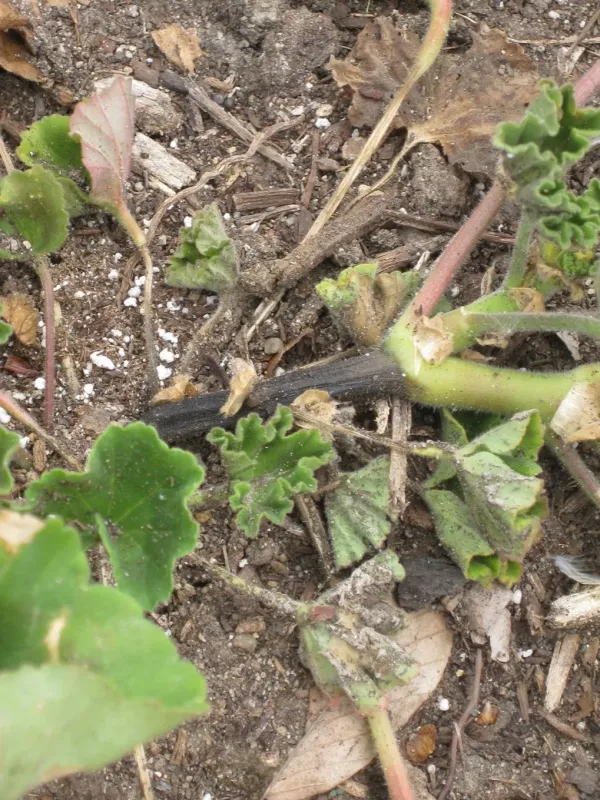
The first signs of infection usually appear as stunted growth and chlorosis in seedlings. Plants often look nutrient-deficient because the damaged root system cannot adequately absorb minerals and water.
When examining the root system of affected plants, one will observe significant necrotic lesions. The roots turn brown or dark brown and become soft, watery, and eventually disintegrate entirely.
Fields affected by the pathogen show uneven emergence and thin stands. Often, seedlings die before they can break the soil surface, leading to bare patches across the planting area.
During periods of high humidity, a white, cottony layer of mycelium may be visible on the surface of the infected roots or the base of the stem. The cortical layer of the root is easily sloughed off, leaving only the central vascular cylinder.
In mature plants, symptoms may manifest as sudden wilting, especially during hot, dry periods when the compromised root system can no longer supply sufficient moisture to the transpiring canopy.
Pathogen
The causative agent of the disease is the soil-borne pathogen Pythium arrhenomanes, which belongs to the class Oomycetes. These organisms are water molds, not true fungi, but they act as devastating plant parasites.
The pathogen persists in the soil and on crop residues in the form of resting spores called oospores. These structures are highly resistant to environmental stress and can remain viable in the soil for several years.
Under favorable conditions, such as high soil moisture, oospores germinate and produce zoospores. These motile structures use flagella to swim through soil water films to reach the roots of host plants.
Infection typically begins at the root tips or in the elongation zone. Once inside, the pathogen colonizes the tissue, producing enzymes that degrade cell walls, which leads to tissue disintegration and root decay.
Pythium arrhenomanes has a wide host range, primarily affecting monocotyledonous crops. It is a significant problem for corn, wheat, barley, and various types of turfgrass, leading to severe stand depletion.
Conditions for development
The primary factor driving the development of Pythium root rot is excessive soil moisture. Because the zoospores require a water film to swim and infect new tissue, the disease is most prevalent in poorly drained or flooded areas.
Pythium arrhenomanes thrives in cool to moderate temperature conditions. Outbreaks are most common during early spring when low temperatures and frequent rains delay seed germination and seedling emergence.
Agro-technical factors significantly impact disease pressure. Excessive seeding depth and low-quality seed vigor can slow down emergence, keeping the young plant in a vulnerable state for a longer period.
Soil compaction is a critical concern, as it limits oxygen availability and slows down root growth, creating the perfect anaerobic micro-environment favored by oomycetes for infection.
Continuous cropping without a rotation scheme allows the population of oospores in the soil to build up over time, increasing the probability of severe infections in every subsequent season.
Why it matters
The major harm caused by Pythium root rot is a significant reduction in plant population. This stand loss often forces farmers to replant fields, resulting in massive financial and time losses.
Plants that survive the initial infection are rarely as productive as healthy ones. Their compromised root systems significantly limit yield potential, resulting in lower grain weight and overall lower quality at harvest.
Increased vulnerability to drought is another major consequence. Because the root architecture is stunted or absent, the plant cannot access deeper water reserves when rainfall ceases during the vegetative stage.
Economic impact is compounded by the fact that Pythium root rot can predispose plants to secondary infections by other soil-borne pathogens, further damaging the crop's physiological state.
Finally, the presence of this pathogen in the soil restricts the choice of future crops, requiring long-term management strategies and potentially forcing the use of more expensive chemical control options.
Protection
The most effective strategy is the use of seed treatments. Applying specialized fungicides, such as metalaxyl or mefenoxam, is essential to protect the seed and young seedling from early-season infection.
Crop rotation is vital to disrupt the life cycle of the pathogen. Rotating susceptible crops like corn with non-host crops helps reduce the inoculum load in the soil over time.
Improving soil drainage is a critical long-term management practice. Ensuring that water does not remain stagnant in the field significantly reduces the ability of zoospores to spread.
Optimizing planting time is also key. Sowing should occur when soil temperatures are warm enough to support rapid germination and emergence, allowing the plant to quickly outgrow its most vulnerable stage.
Maintaining soil health through proper fertilization and avoiding unnecessary compaction keeps the plants resilient. A robust root system is the best defense against minor pathogen pressure.
Discussion
No discussions yet — be the first.