
Pythium root rot
Pythium aristosporum
Description
Symptoms
The primary symptom of infection is stunted growth. Affected seedlings appear weak and may show yellowing of the leaves, a symptom often mistaken for nitrogen deficiency by inexperienced growers.
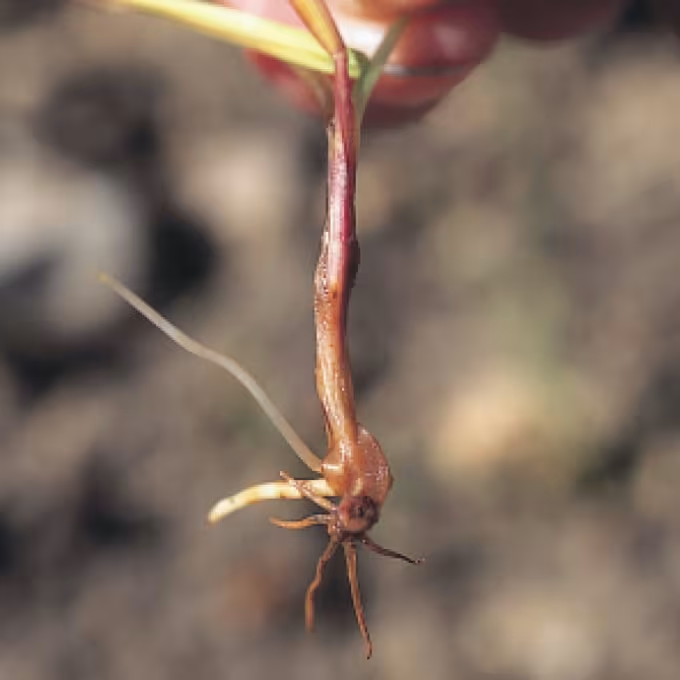
The root system of infected plants is poorly developed. Roots exhibit dark brown or black lesions, which often spread rapidly to encompass the entire root system. In many cases, lateral roots fail to develop completely.
As the rot progresses, the outer tissues of the roots become soft, slimy, and watery. Upon extraction from the soil, the outer root cortex may easily slough off, leaving behind a denuded central vascular cylinder.
In the field, Pythium root rot often manifests as irregular patches of poor stand establishment. During periods of heat, plants may exhibit wilting because the damaged roots cannot maintain the necessary water supply.
Lack of vigor and general chlorosis are key indicators. In severe cases, the plants die during the early vegetative stage, leading to significant thinning of the crop stand.
Pathogen
The causal agent of this disease is the soil-borne oomycete Pythium aristosporum. This pathogen is not a true fungus but a pseudo-fungus widely distributed in agricultural soils, known for its ability to devastate root systems.
The pathogen persists in the soil primarily through the formation of thick-walled oospores. These survival structures are highly resistant to adverse environmental conditions and can remain viable in the soil for several years.
The life cycle of the organism is heavily dependent on moisture. When conditions are wet, oospores germinate to produce sporangia, which release motile zoospores. These zoospores use flagella to swim through soil water toward chemical signals released by host roots.
Once they reach a root, the zoospores encyst and penetrate the host tissue. The pathogen rapidly colonizes the cortical cells, secreting enzymes that destroy the cell walls, which causes rotting and prevents the plant from absorbing nutrients.
The disease affects a wide range of crops, including cereals like wheat and barley, corn, and various turfgrass species. Susceptibility is highest during the early stages of seedling development, particularly under stress conditions.
Conditions for development
High soil moisture is the most critical environmental factor for Pythium development. Heavy, poorly drained soils with low oxygen levels are particularly prone to severe outbreaks of the disease.
While the pathogen is active across a range of temperatures, the initial stages of infection are often favored by cool, wet weather. Such conditions are typical of early spring, which coincides with the germination phase of many crops.
Poor agronomic practices, including planting too deep or in compacted soils, exacerbate the disease. Compaction restricts air movement, creating an anaerobic environment that favors the pathogen while stressing the crop.
The disease is more prevalent in fields with intensive monoculture. Continuous cropping of susceptible species allows the population of oospores to build up in the soil over time.
Low soil oxygen levels and excessive irrigation or rainfall provide the necessary medium for zoospore motility, allowing the pathogen to spread effectively from root to root across the field.
Why it matters
The main economic impact of Pythium root rot is the reduction in stand density due to pre-emergence and post-emergence damping-off. This leads to early-season yield loss that cannot be fully recovered.
Damaged root systems significantly impair the plant's ability to uptake water and minerals. Consequently, infected plants remain unproductive throughout their lifecycle, even if the environment improves later.
Infected crops are more susceptible to other stress factors, including drought and secondary infections by other pathogens. A compromised root system significantly increases the risk of lodging, which complicates harvesting.
In hot and dry periods, crops with compromised root systems die prematurely, leading to uneven crop maturity and reduced grain quality. This inconsistency often results in significant financial losses at harvest time.
The cost of re-planting, additional fungicide applications, and lower overall yields make Pythium root rot a major concern for commercial agricultural operations.
Protection
The most effective strategy for managing Pythium is a well-planned crop rotation that includes non-host species. This helps to break the pathogen's life cycle and reduce the inoculum density in the soil.
Improving soil drainage is essential for long-term control. Sub-soiling to break up compacted layers and using field drainage systems help ensure that excess water does not accumulate near the root zone.
Using high-quality seed treated with specific fungicides is the standard defense. Systemic seed treatments provide crucial protection to the germinating seed and young radicle during the period of highest susceptibility.
Optimizing plant nutrition, especially phosphorus levels, promotes vigorous root growth. Healthy, rapidly developing roots are naturally more resilient to infection and can compensate for minor levels of root tissue damage.
- Field scouting for signs of yellowing and stunted seedlings.
- Optimizing planting depth to encourage rapid germination.
- Application of systemic fungicides as seed treatments.
- Improving soil aeration and water management practices.
Discussion
No discussions yet — be the first.