
Pythium acanthicum
Pythium acanthicum
Description
Symptoms
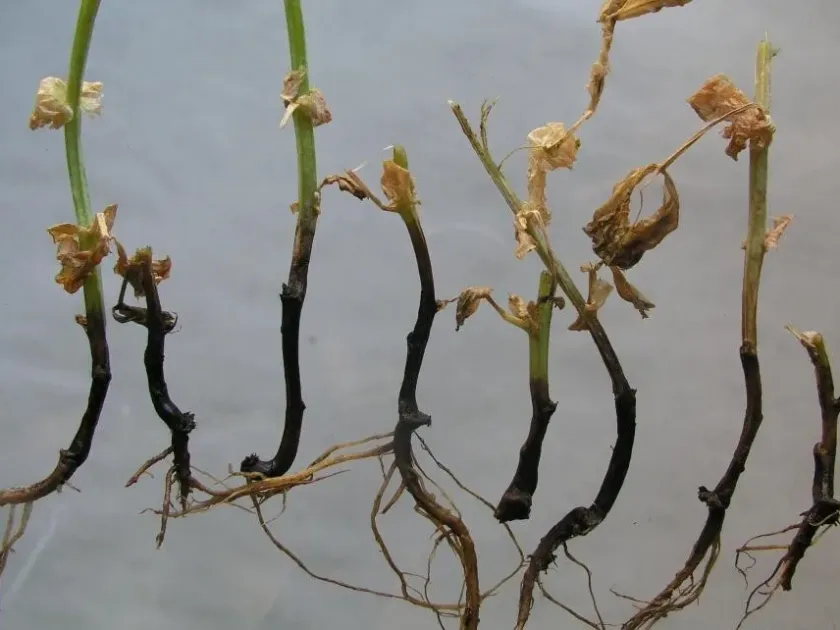
Early symptoms of infestation often include stunted growth and general lack of vigor. Plants may appear chlorotic, with leaves turning yellow and wilting, especially during peak temperature hours.
The root system is the main site of infection, where small roots become soft, brown, and slimy as they decay. In advanced stages, the rot progresses to the taproot and the crown of the plant.
A classic diagnostic sign is the ease with which the root epidermis slides off the central vascular cylinder when the root is pulled from the ground. This separation is characteristic of severe pythium root rot.
In seedlings, the disease causes damping-off, where the stem near the soil line becomes thin, discolored, and weak, leading to the collapse of the plant shortly after germination.
Under high humidity, a sparse white mycelial growth may appear on the soil surface or the base of the stem, often accompanied by the production of sporangia, signaling active spread of the pathogen.
Pathogen
Pythium acanthicum is a soil-borne oomycete pathogen belonging to the Pythiaceae family. These organisms are pseudo-fungi that require moisture to complete their life cycle and infect host plants.
The pathogen reproduces via zoospores, which are motile spores equipped with flagella that allow them to swim through water-saturated soils or irrigation solutions to reach the host's roots.
A distinctive morphological feature of this species is the presence of spine-like (acanthoid) projections on its oogonia. This unique structure helps researchers differentiate it from other related Pythium species during microscopic analysis.
The fungus survives in the soil in the form of oospores, which are thick-walled resting spores. These structures allow the pathogen to remain dormant in unfavorable conditions for several years until the next crop is planted.
It also functions as a saprophyte, efficiently consuming dead organic matter in the soil, which provides a competitive advantage and a baseline population density before it attacks healthy root tissues.
Conditions for development
High moisture levels in the soil or hydroponic medium are the primary drivers for the development of Pythium acanthicum. Saturated soils provide the necessary medium for zoospores to swim and locate susceptible roots.
Warm to moderate temperatures generally favor the activity of this pathogen. In greenhouse settings, temperature fluctuations combined with high humidity create the perfect environment for rapid disease outbreaks.
Poor soil aeration and compaction create low-oxygen zones that stress plant roots and facilitate infection. Roots struggling to respire due to lack of oxygen are far more susceptible to oomycete attack.
Infection is frequently introduced through contaminated irrigation water, infested soil, or infected nursery stock. Once introduced, the pathogen can quickly spread through communal water distribution systems.
Improper crop rotation allows for the buildup of the pathogen inoculum in the soil. When susceptible hosts are grown repeatedly on the same land, the disease pressure increases exponentially with every cycle.
Why it matters
The primary economic harm of Pythium acanthicum is the loss of seedling stands, leading to poor crop uniformity and the need for costly replanting operations.
Infected mature plants suffer from compromised water and nutrient uptake, leading to significantly lower yields and reduced quality of harvested produce, rendering them unmarketable.
By damaging the root system, the pathogen creates entry points for secondary opportunistic pathogens, such as bacteria and other fungi, which complicate the disease management and accelerate plant decline.
Hydroponic operations are particularly at risk, where the pathogen can spread through the entire nutrient solution reservoir, potentially destroying the entire crop in a very short time.
Soil infestation is a long-term problem. Since the oospores are highly persistent, infected soil may require expensive fumigation or total replacement of the growing media to allow for future production.
Protection
Effective management begins with strict cultural practices, such as ensuring proper drainage and avoiding over-irrigation to maintain optimal oxygen levels in the root zone.
Using disease-free, certified seeds and sterile growing media for seedling production is essential to prevent the initial introduction of Pythium acanthicum into the field or greenhouse.
Sanitation of tools, containers, and irrigation systems is vital. In greenhouse environments, periodic cleaning and disinfecting of the entire facility can significantly reduce the risk of outbreaks.
Biocontrol agents, specifically beneficial microbes like Trichoderma harzianum and certain strains of Bacillus subtilis, can be applied to create a protective barrier around the root system.
If chemical control is necessary, apply specific fungicides labeled for oomycete management. It is crucial to rotate chemical modes of action to prevent the development of resistant strains of the pathogen.
Discussion
No discussions yet — be the first.