
Pyronema
Pyronema
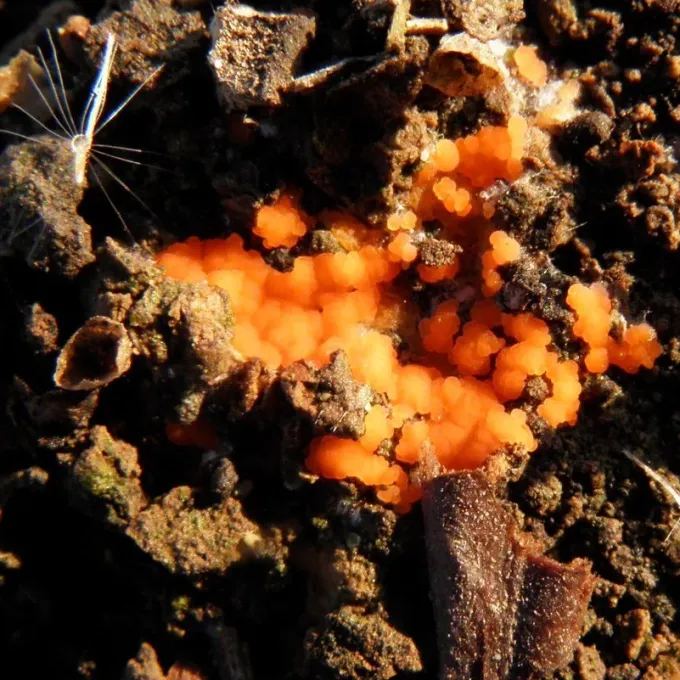
Description
Symptoms
The most visible sign is the appearance of bright pink or orange cup-shaped apothecia clustered on the soil surface.
The mycelium appears as a white or yellowish cobweb-like mat that can rapidly cover large areas of the seedbed.
These fungal structures are easily recognizable due to their distinct coloration against the dark background of the soil.
Seedlings growing in affected areas may appear stunted or pale due to the localized depletion of soil nutrients.
A faint, earthy, or slightly metallic odor may be present during the active stage of fungal fruiting.
Pathogen
Pyronema is a genus of fungi belonging to the Pyronemataceae family, often found in habitats affected by heat.
The most commonly encountered species in agricultural settings is Pyronema domesticum, known for its rapid colonization of treated soil.
It is not a primary plant pathogen; instead, it is a saprophytic fungus that exploits the absence of microbial competition.
Biologically, it is classified as a pyrophilous fungus, meaning it thrives in environments that have been subjected to fires or heat treatments.
Its life cycle is brief and is usually associated with the decomposition of organic matter in the topsoil layer.
Conditions for development
Development is triggered by the breakdown of natural soil microbial balance, often caused by over-steaming or excessive heating of greenhouse substrates.
High moisture levels in the soil are essential for the rapid germination of spores and subsequent expansion of the mycelium.
The presence of easily degradable organic matter provides the necessary energy for the fungus to establish large colonies.
Poor ventilation within enclosed greenhouse environments further promotes the growth of the fungus on the soil surface.
It typically appears shortly after sterilization procedures when the soil is temporarily devoid of biological diversity.
Why it matters
The primary harm is the disruption of the rhizosphere, where the fungus competes with young plants for nutrients.
Although it does not infect plant tissues, the thick mycelial mat can inhibit water penetration and root respiration.
Its presence is a clear indicator that the soil microflora has been severely depleted, which weakens the plants' natural defense mechanisms.
The fungus can cause physical damage to young, delicate roots by physically encasing them in dense mycelial structures.
Long-term harm stems from the inability of plants to establish a healthy relationship with beneficial soil bacteria in a degraded substrate.
Protection
Preventative management is key, focusing on avoiding excessive soil heating during sterilization.
Introducing beneficial microorganisms, particularly Trichoderma species, helps restore the natural balance and suppress Pyronema.
Mechanical cultivation of the surface soil layer disrupts the mycelial network and promotes faster drying.
Improving greenhouse ventilation and drainage helps to create an unfavorable environment for further fungal expansion.
- Avoid over-sterilizing greenhouse soil.
- Inoculate soil with beneficial microbial products.
- Maintain proper soil aeration through regular shallow tilling.
Discussion
No discussions yet — be the first.