
Pyrofomes
Pyrofomes
Description
Symptoms
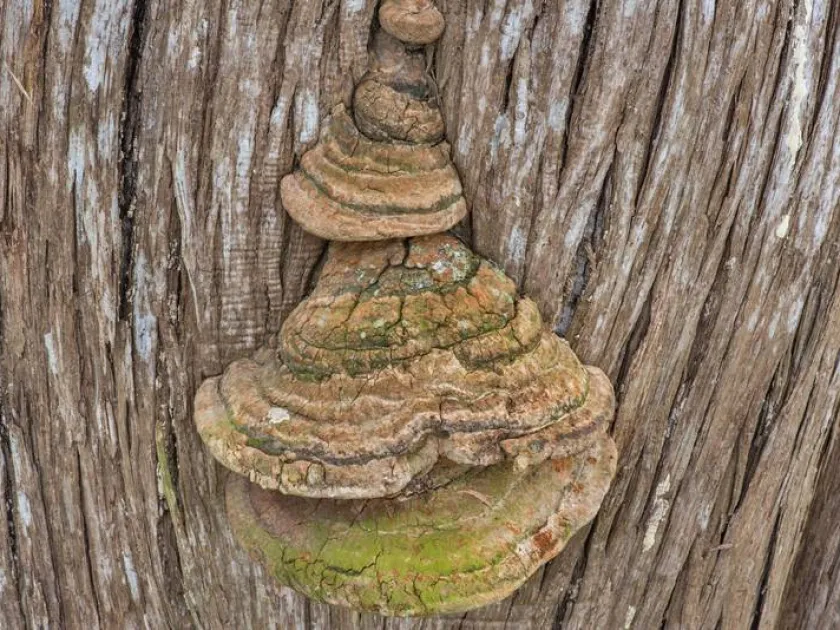
The most visible sign of infection is the presence of hard, perennial conks or hoof-shaped fruiting bodies protruding from the trunk of the tree.
Infected trees often exhibit crown thinning, chlorosis, and general signs of decline, as the heartwood rot disrupts the tree's overall stability and metabolic processes.
When the wood is cut or sampled, internal decay manifests as a yellowish-brown or reddish-brown discoloration, often accompanied by a brittle or fibrous texture.
Advanced stages of the disease may show evidence of resinosis or localized bark depressions where the mycelium has exerted pressure from within.
Structural weakness is a critical diagnostic sign, as infected trees often show signs of snapping during high-wind events due to the hollowness caused by decay.
Pathogen
Pyrofomes is a genus of fungi belonging to the order Polyporales, which includes several species responsible for severe trunk rot in coniferous and deciduous trees.
The pathogen functions as a wood-decaying organism that degrades cellulose and lignin, the primary structural components of the tree's heartwood.
The fungus typically enters through wounds in the bark caused by branch breakage, frost, fire, or animal activity, establishing an internal infection site.
As the mycelium spreads throughout the heartwood, it establishes a perennial presence, eventually producing conspicuous fruiting bodies on the surface of the trunk.
The life cycle of the pathogen is closely tied to the host's longevity, allowing it to slowly digest the internal core while the tree remains standing for many years.
Conditions for development
Development is favored by environments with moderate temperatures and consistently high humidity, which are ideal for spore germination and mycelial growth.
Stands that are overstocked or poorly managed are more susceptible, as these conditions increase the likelihood of bark injury and create a conducive microclimate.
Weakened trees, suffering from drought, soil nutrient deficiencies, or other pathogens, have reduced defensive capacity to contain the fungal spread.
The dispersal of basidiospores through wind currents allows the fungus to colonize new wounds, especially in areas where host density is high.
Mechanical damage during logging operations or thinning processes frequently provides the initial infection court needed for the fungus to establish itself.
Why it matters
The primary impact of Pyrofomes is the severe degradation of timber, leading to significant economic losses for the forestry industry due to decreased lumber quality.
Infected trees represent a safety hazard, as they are prone to uprooting or stem breakage, which can damage surrounding infrastructure and equipment.
The disease reduces the long-term productivity and carbon sequestration potential of forest stands by accelerating the mortality of mature trees.
Loss of habitat occurs when infected stands undergo rapid decay, forcing forest managers to execute clear-cuts or intensive sanitary salvage operations.
In ecological terms, the loss of large, mature trees disrupts the forest structure, which can negatively impact species that depend on healthy old-growth timber.
Protection
Management focuses on sanitation, primarily through the identification and removal of infected trees to reduce the inoculum load within the forest stand.
Preventative measures include careful handling of timber during harvesting to avoid wounding the residual crop trees, which could serve as entry points.
Regular forest health monitoring helps detect infection early, allowing for timely management actions that minimize the spread of the pathogen.
Silvicultural treatments that promote stand vigor and maintain optimal density can help trees better resist fungal infections.
- Removal of infected trees via sanitary logging.
- Elimination of fruiting bodies to prevent spore dispersal.
- Minimization of logging scars and mechanical damage to trunks.
- Promotion of tree health through proper stand management.
Discussion
No discussions yet — be the first.