
Pyrenulales
Pyrenulales
Description
Symptoms
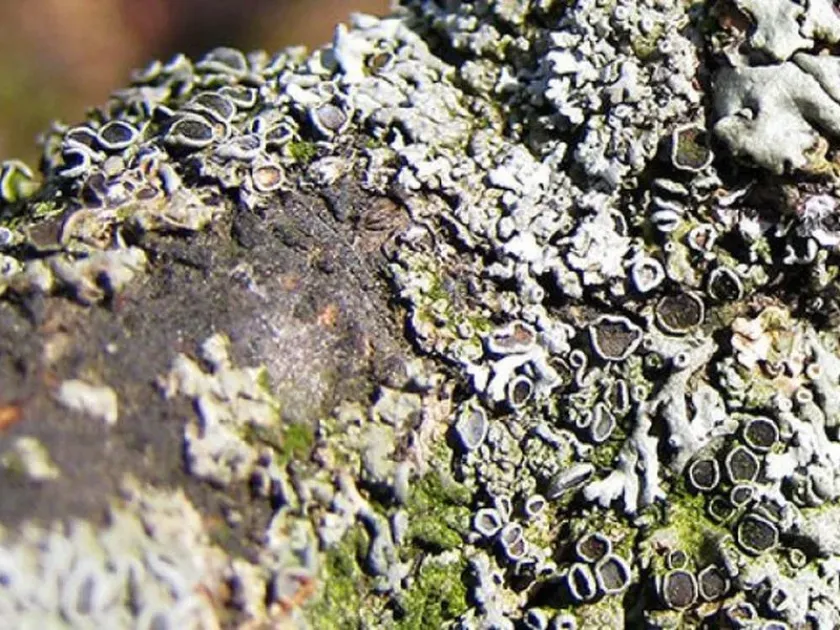
Pyrenulales typically appear as crust-like or dot-like growths on the bark of trunks and branches. They are often embedded within the bark, appearing as tiny dark spots or bumps.
The primary symptom is a change in the texture and color of the bark. Affected areas often become dull, grayish, or brownish, losing the smooth appearance characteristic of healthy young bark.
Key indicators include the presence of perithecia, which look like minute, protruding dark points. These reproductive structures break through the bark surface as the lichen matures.
These lichens form dense, scale-like patches that adhere tightly to the tree. Over time, these patches can merge, covering significant portions of the scaffold branches.
While the lichen itself is not an active parasite, its presence often coincides with the bark becoming brittle or exhibiting premature cracking due to poor physiological condition.
Pathogen
The causative agents are fungi within the order Pyrenulales, living in symbiosis with algae. These are non-parasitic epiphytes that use the tree bark merely as a substrate for physical support.
The fungal partner produces fruiting bodies known as perithecia, which are often semi-immersed in the bark substrate, providing structural protection to the organism.
Unlike parasitic fungi, they do not extract sap from the host tree. Instead, they derive moisture and nutrients from atmospheric precipitation, dust, and light.
Despite being non-parasitic, their biological activity can hinder the tree's bark respiration by covering the lenticels, which are essential for gaseous exchange.
Reproduction is primarily via spores, which are disseminated by wind or splashing rain. Once landed on damp bark, spores germinate and colonize the substrate to form new thalli.
Conditions for development
High humidity and poor air circulation are the primary drivers for the development of Pyrenulales. Orchards with overly dense canopies create a stagnant microclimate that fosters lichen growth.
Lack of direct sunlight within the inner canopy prevents bark surfaces from drying out properly, maintaining the moisture levels required for these lichens to thrive.
Older trees with weathered, cracked, or rough bark are more prone to colonization than young trees, as the micro-fissures provide ideal anchorage for the lichen thallus.
Cool, damp conditions, such as those found in foggy or high-rainfall regions, significantly accelerate the colonization rate across the orchard.
Poor orchard hygiene, specifically the failure to prune and thin branches, exacerbates the issue by keeping the tree interior in a perpetually moist and shaded state.
Why it matters
Although they do not feed directly on the host, the presence of these lichens creates a harbor for other pests, such as scales, mites, and various harmful fungal spores that hide beneath the lichen layer.
Massive colonization blocks bark lenticels, which impairs the tree's gas exchange. This causes physiological stress, potentially weakening the tree and reducing overall vigor.
The damp environment maintained by a thick lichen layer can lead to secondary bark damage, including softening or necrosis in areas where the bark remains constantly wet.
Trees heavily infested with lichens often show reduced fruit production and slower growth, as the plant struggles to maintain its vitality in a compromised state.
The presence of lichen is an indicator of low tree vigor. It warns the gardener that the tree's natural defense and metabolic processes may be declining, requiring attention.
Protection
Regular pruning is the most effective preventative measure. Thinning the canopy improves airflow and light penetration, ensuring bark dries quickly and becomes inhospitable to lichens.
Mechanical removal using soft scrapers or specialized brushes helps clear lichen patches. Care must be taken to remove them gently without damaging the living bark underneath.
Applying a lime wash or copper-based disinfectant to the trunk after cleaning can prevent recolonization by eliminating fungal spores lingering in the crevices.
Early spring spraying with copper-containing fungicides effectively suppresses the growth of both lichen populations and various pathogenic fungi common in orchards.
Maintaining high tree health through adequate fertilization and proper irrigation ensures a fast-growing, healthy bark, which naturally discourages long-term lichen colonization.
Discussion
No discussions yet — be the first.