
Barley pyrenophora leaf spot
Pyrenophora japonica
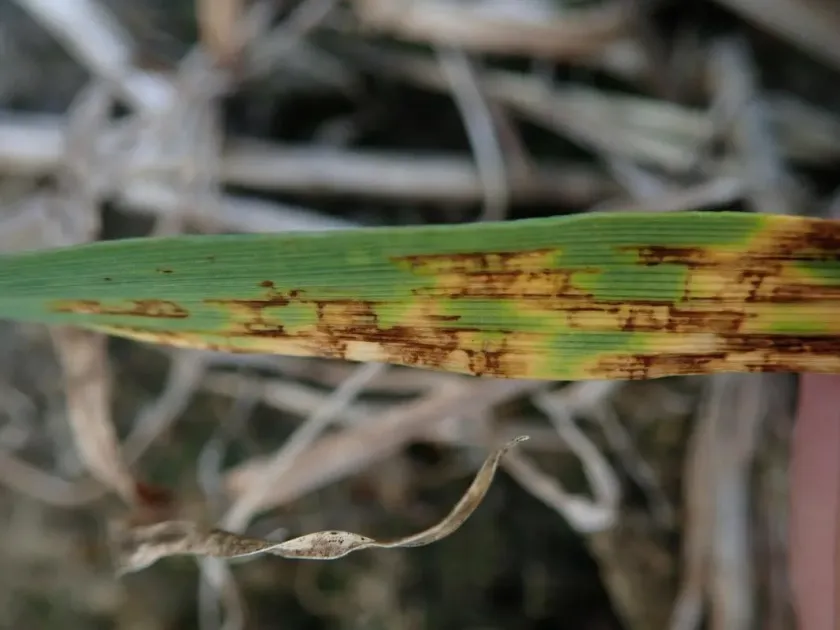
Description
Symptoms
The primary symptom of the disease is the appearance of small chlorotic spots on the leaves. These spots gradually expand, eventually developing into elongated, necrotic lesions.
The color of the spots typically ranges from light brown to dark reddish-brown. A characteristic feature is the development of a distinct yellow halo (chlorosis) surrounding the lesion, indicating the impact of fungal toxins on plant tissue.
In high humidity, a greyish-olive mold layer appears on the surface of the lesions. This layer consists of fungal conidia, which are responsible for the continuous secondary spread of the infection.
As the disease progresses, these lesions merge, covering significant portions of the leaf blade. This leads to premature drying and wilting of the leaves, starting from the lower parts of the plant and moving upwards.
Severe infestations can also involve the barley heads, resulting in brown lesions on the glumes and kernels, which significantly impairs the quality and yield of the harvest.
Pathogen
The causal agent of this disease is the fungus Pyrenophora japonica (anamorph: Drechslera japonica). It is a specialized ascomycete pathogen that primarily affects barley crops in various temperate climates worldwide.
The fungus survives the winter season in soil and on infected crop debris in the form of mycelium, conidia, and pseudothecia. Unharvested straw left in the field remains the primary source of initial infection for the following season.
During the growing season, the fungus produces conidia, which are easily disseminated by wind and water splashes. This mechanism ensures rapid secondary spread of the disease within the crop canopy.
The pathogen demonstrates remarkable adaptability, allowing it to survive under various environmental stressors. It can colonize barley at different growth stages, from seedling emergence to the grain-filling phase.
Beyond barley, the pathogen can also infect various wild grasses, which serves as an alternative host and complicates disease management programs in fields surrounded by natural vegetation.
Conditions for development
The development of Pyrenophora leaf spot is favored by moist, moderate weather conditions. The fungus thrives at temperatures ranging from +15°C to +22°C (approx. 59°F to 72°F).
Frequent rainfall, morning mists, and heavy dew provide the necessary surface moisture for conidia germination. Under optimal conditions, the incubation period can be as short as 5 to 10 days.
Dense crop stands create a microclimate with high relative humidity and reduced airflow, which significantly accelerates the epidemic development of the disease.
Imbalanced mineral nutrition, particularly excessive nitrogen fertilization, promotes lush growth and makes the plant tissues more susceptible to fungal penetration and colonization.
Plants weakened by drought, nutrient deficiencies, or pest infestations are significantly more vulnerable to rapid disease progression compared to healthy, well-nourished plants.
Why it matters
The main impact of this disease is the significant reduction in photosynthetic leaf area. As leaves die prematurely, the plant loses its ability to produce carbohydrates necessary for grain development.
This results in shriveled, lighter grains, directly reducing the overall yield per hectare. In severe cases, the reduction in weight and quality can lead to significant economic losses for the farmer.
The disease negatively affects seed viability. Harvested grain from infected fields often shows lower germination rates and poor vigor, making it unsuitable for use as high-quality seed material.
Pyrenophora leaf spot weakens the overall health of the crop, making plants more susceptible to secondary infections and environmental stress, thereby reducing the resilience of the field.
During years with high disease pressure, yield losses can range from 15% to 30%, depending on the variety's resistance level and the specific weather patterns during the season.
Protection
Crop rotation is the most critical preventative measure. Avoiding the cultivation of barley in the same field for consecutive years helps to break the pathogen's infection cycle.
Thorough soil tillage and incorporation of crop residues significantly reduce the amount of primary inoculum in the field by accelerating the decomposition of the infected material.
The use of genetically resistant or tolerant barley cultivars is the most effective long-term strategy for managing the disease and reducing dependency on chemical inputs.
Seed treatment with high-quality systemic fungicides before planting is essential to protect young seedlings from early-season infection and to promote uniform growth.
- Monitoring fields for early symptoms during the tillering and stem elongation stages.
- Applying fungicides from the triazole or strobilurin groups if thresholds are exceeded.
- Managing weeds that may act as alternative hosts for the pathogen.
- Maintaining balanced fertilization to ensure strong plant cell walls.
- Adjusting planting density to improve canopy airflow and reduce humidity.
Discussion
No discussions yet — be the first.