
Light leaf spot
Pyrenopeziza brassicae
Description
Symptoms
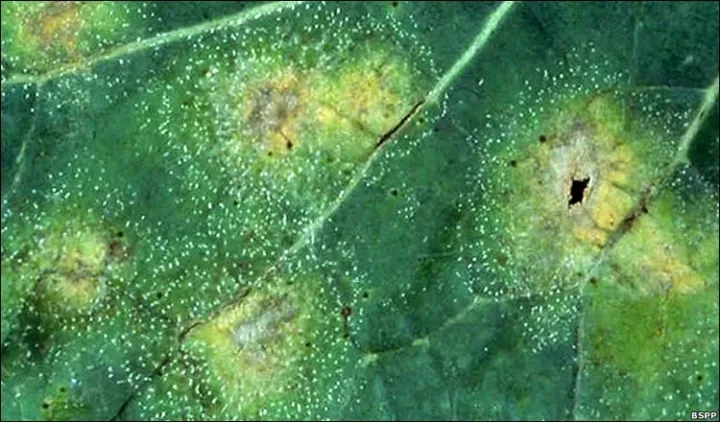
Light leaf spot, caused by the fungus Pyrenopeziza brassicae, affects all aerial parts of the plant, including leaves, petioles, stems, and pods. Initial symptoms appear as small, round lesions (1–5 mm in diameter) with a light, off-white center and a darker border.
As the pathogen develops, microscopic fruiting bodies known as apothecia form in the center of the lesions, appearing as tiny black specks. Under severe infection, these lesions merge, leading to premature yellowing and leaf senescence.
On stems and petioles, infected areas appear as elongated, sunken grey lesions. The tissue in these areas often cracks, creating entry points for secondary pathogens and further weakening the plant structure.
Symptoms on pods present as numerous small spots that cause premature ripening and pod shattering. This leads to massive seed shedding before the crop can be harvested, resulting in significant yield losses.
A diagnostic feature is the presence of the white, waxy fungal growth or the aforementioned black apothecia within the lesion, easily seen with a hand lens. It is often confused with Phoma, but the specific light center with black specks is characteristic of this fungus.
Pathogen
The causal agent of this disease is the ascomycete fungus Pyrenopeziza brassicae (anamorph: Cylindrosporium concentricum). It is a specialized pathogen targeting members of the Brassicaceae family.
The fungus survives on crop debris, in the soil, and on seeds in the form of mycelium or fruiting bodies. During the growing season, conidia are the primary inoculum, spread by rain splash and wind.
The lifecycle includes both sexual (apothecia) and asexual (conidia) stages. In cool, wet weather, apothecia release ascospores capable of infecting healthy plants over long distances.
Disease progression is closely linked to the crop's biological stages, as the pathogen exploits the rapid tissue growth of brassicas as a primary nutritional substrate.
Over time, the fungus has adapted to thrive in temperate climates, making it a major threat to both winter and spring oilseed rape, as well as various cabbage types in high-humidity regions.
Conditions for development
Optimal conditions for infection are cool, damp weather with high humidity. A temperature range of +10°C to +18°C is most favorable for spore germination and colonization.
Persistent rainfall and fog facilitate the mass release of conidia and rapid spread within the field. Prolonged leaf wetness is essential for the successful penetration of the fungus into the host tissue.
Plant density is a critical factor; in dense, poorly ventilated stands, a humid microclimate persists, creating an ideal environment for the epidemic development of the disease.
High nitrogen application leads to tender, succulent tissue, which is more susceptible to fungal penetration. Crops weakened by pests or environmental stress are typically infected much faster.
Mild winters contribute to a high inoculum load, as the fungal mycelium survives easily within the basal rosette of winter crops, ready to sporulate at the first signs of spring growth.
Why it matters
The primary damage from light leaf spot is the significant reduction of the photosynthetic leaf area, which severely inhibits plant growth and leads to substantial losses in biomass production.
Pod infection causes premature shattering and seed loss, which can reach 30–50% in severe epidemics. The quality of the remaining seed is also degraded, resulting in smaller, shriveled grains.
The disease reduces the winter hardiness of oilseed rape; infected leaves die prematurely, leaving the plant exhausted and less resilient to freezing temperatures during winter.
Stem lesions disrupt the translocation of water and nutrients to the reproductive organs, negatively impacting yield components such as the number of seeds per pod and thousand-grain weight.
For large-scale agricultural operations, this disease represents a direct financial risk due to the need for multiple fungicide applications and increased costs for grain drying and processing.
Protection
Effective management of Pyrenopeziza brassicae starts with strict crop rotation. It is recommended to avoid planting brassica crops in the same field for at least 3 to 4 years.
Cultural practices include the thorough incorporation of crop residues into the soil to accelerate decomposition and reduce the survival of the fungus. Controlling volunteer brassicas and weeds also removes essential pathogen reservoirs.
The use of resistant cultivars and hybrids is the most sustainable approach. Breeding programs continue to prioritize traits that provide stable resistance against leaf spot diseases.
When necessary, fungicide application is required. The best results are achieved by preventive spraying during the early stages of active growth and the formation of lateral branches.
- Use of triazole and strobilurin-based fungicides.
- Integrated pest management to reduce secondary tissue damage.
- Usage of high-quality, treated seed material.
- Optimizing plant spacing to ensure better canopy airflow.
Discussion
No discussions yet — be the first.