
Pustule
Pustula
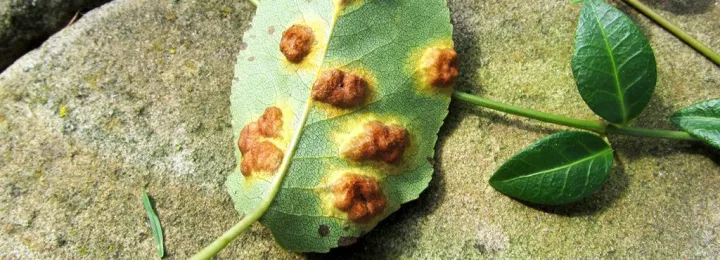
Description
Symptoms
A pustule is a localized accumulation of parasitic fungal spores that breaks through the plant epidermis. It appears as a small bulge, pimple, or cushion with colors ranging from bright yellow to reddish-brown or black.
These structures typically form on leaves, stems, and leaf sheaths of infected crops. Once the plant tissues rupture, the spore mass is exposed and easily dispersed by wind, facilitating the rapid spread of the infection to healthy neighboring plants.
During the early stages of disease development, pustules may be solitary and inconspicuous. As the disease progresses, they often merge, covering large areas of the plant surface and causing severe damage to the plant's structural integrity.
The color of pustules often changes throughout the growing season. Early in the season, they produce urediniospores, which are lighter in color, while later in the season, darker teliospores are formed, indicating the pathogen's transition to a dormant state.
The presence of pustules is a hallmark of many rust diseases, which can quickly lead to a significant loss of plant vitality, foliage quality, and overall crop productivity.
Pathogen
Pustules are caused by specialized fungi from the order Uredinales. These are obligate parasites that derive their nutrition exclusively from the living tissues of the host plant.
The life cycle of these fungi is complex, often involving up to five different spore stages. Pustules are the visual expression of the asexual spore-producing stage, designed for rapid and mass infection during the growing season.
These pathogens primarily affect cereal crops, including wheat, barley, rye, and oats. They can also occur on broad-leaved plants, fruit trees, and ornamental species, making them a significant challenge in modern agriculture.
The primary method of spread is the long-distance transmission of spores by air currents. The pathogen can also overwinter in the soil or on plant debris as dormant spores, waiting for favorable conditions to emerge.
The high genetic variability of rust fungi allows them to overcome host resistance. Therefore, ongoing monitoring for the emergence of pustules is essential for effective crop management and loss prevention.
Conditions for development
High humidity or the presence of surface moisture, such as dew or mist, is required for the active development of pustules. The optimal temperatures for spore germination typically range from 15 to 25 degrees Celsius.
Dense, poorly ventilated crop stands create a microclimate that encourages the rapid spread of the pathogen. Reduced sunlight and high plant density further increase the risk of disease outbreaks.
Applying excessive nitrogen fertilizers makes plant tissues softer and more succulent, which facilitates the penetration of fungal mycelium and the subsequent eruption of pustules through the epidermis.
The disease often spreads in an epidemic-like manner during warm, moist spring and early summer periods. Successive cycles of infection can occur every 7–10 days under favorable environmental conditions.
Windy weather plays a crucial role in the aerogenic dispersal of spores from initial infection foci to healthy crops, quickly turning a localized issue into a widespread threat for the entire field.
Why it matters
Pustules destroy plant tissues, which disrupts vital processes like photosynthesis and transpiration. This leads to a decrease in the accumulation of nutrients and slows down the growth of the affected crop.
Due to moisture loss through ruptured epidermal layers, the plants suffer from premature wilting. Grain filling is severely impaired, resulting in lower thousand-kernel weight and reduced overall yields.
The quality of the harvest is significantly degraded, with grains becoming shriveled and losing both food and seed value. In severe cases, yield losses can exceed 30–50% depending on the cultivar and the timing of infection.
Rust infection weakens the plant's immune system, making it more susceptible to other fungal and bacterial diseases, which necessitates additional costly plant protection interventions.
In forage crops, the nutritional value of the green mass decreases, which negatively affects livestock productivity when grazing or using the harvest for hay production.
Protection
The primary method of control is the use of rust-resistant cultivars and hybrids. Breeding for genetic resistance is the most sustainable way to minimize losses without relying on heavy fungicide applications.
Agronomic practices include strict crop rotation to prevent the buildup of inoculum in the soil. Timely removal of volunteer cereals is also critical, as they often act as a green bridge for the pathogen.
Fertilizer management is important: excess nitrogen should be balanced with potassium and phosphorus applications to strengthen cell walls and increase the plant's resistance to fungal invasion.
Chemical control involving systemic fungicides is effective when the first signs of the disease appear. These chemicals can inhibit mycelial growth within the plant tissues, effectively curbing the spread of the disease.
Maintaining optimal planting dates and appropriate plant density are foundational for disease prevention. Regular field monitoring for early pustule detection allows for prompt action, significantly reducing potential economic losses.
Discussion
No discussions yet — be the first.