
Spruce rust
Pucciniastrum goeppertianum
Description
Symptoms
The primary symptom is a distinctive spindle-shaped or club-like swelling and curvature of young spruce shoots. The infected branches lose their normal structure, becoming thickened and distorted compared to healthy growth.
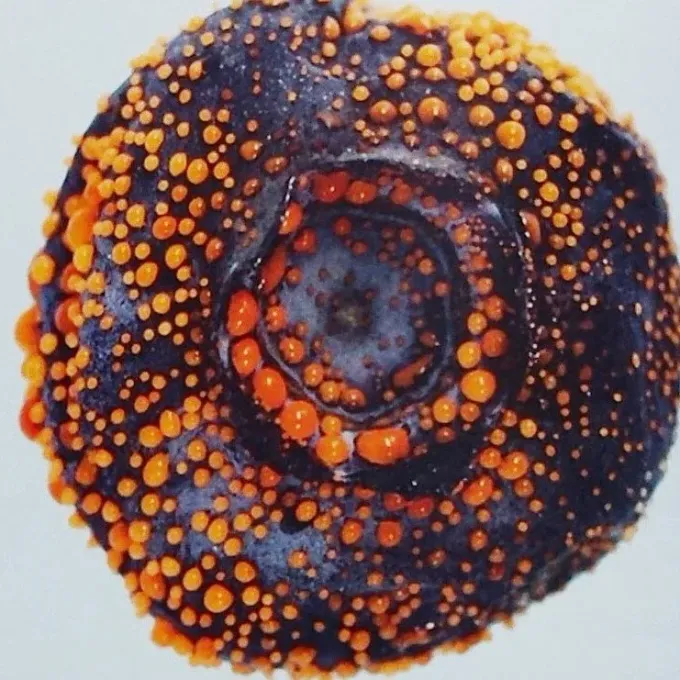
During the active sporulation period, typically in May or June, the surface of the infected bark erupts with bright orange aecial pustules. These structures burst to release a powdery yellow mass of aeciospores, making the infection highly visible.
Needles on the affected shoots often turn yellow and fall off prematurely. In severe cases, the shoot tissue may die entirely, leading to dieback of the branch or even the leader shoot in young spruce trees.
On the alternate hosts (blueberry or lingonberry), signs are more subtle, appearing as small yellow or brown spots on the underside of the leaves, which correspond to the fungal sporulation sites.
Long-term colonization by the fungus often results in a thin, ragged crown, loss of decorative value, and general decline of the spruce tree. If left untreated, the cumulative stress can lead to the death of young or susceptible trees.
Pathogen
The causal agent of this disease is the specialized rust fungus Pucciniastrum goeppertianum. It is a heteroecious parasite that requires two different hosts to complete its complex life cycle: Norway spruce and various Ericaceous plants, primarily blueberry or lingonberry.
As a member of the Basidiomycota, this fungus exhibits a multi-stage spore development. On the spruce host, the fungus infects young shoots, causing pathological hypertrophy and deformation, which is the most prominent diagnostic feature during the spring.
In spring, aecia emerge on the infected spruce shoots as bright orange-yellow pustules. These structures rupture the bark and release millions of aeciospores, which are wind-dispersed over long distances to infect the alternate host (berry bushes).
Once on the Ericaceous host, the fungus develops uredinia and telia during the summer. It survives the winter as a mycelium within the tissues of the blueberry or lingonberry plants, ensuring the survival of the pathogen until the following spring.
After winter, basidiospores produced from the overwintered mycelium on the berry bushes infect the new spruce shoots, thus completing the infection cycle. This cycle is crucial for the pathogen's persistence in the local environment.
Conditions for development
High humidity and moderate temperatures during the spring are the most favorable conditions for spruce rust development. The germination of spores on spruce needles requires the presence of free water, such as dew or rainfall.
Infection risk is highest in areas where spruce trees are grown in close proximity to abundant populations of Ericaceous berry bushes. This close association facilitates the rapid and repeated transmission of the fungus.
Dense planting patterns with poor airflow contribute to disease severity by maintaining high humidity levels within the canopy for longer periods, which allows spores to germinate even after brief light rains.
Prolonged, wet spring weather often leads to significant disease outbreaks (epiphytotics). Conversely, dry spring weather acts as a natural limiting factor, significantly reducing the success rate of spore germination and spread.
Trees under stress, such as those with nutrient deficiencies or poor site conditions, show increased susceptibility to the fungus. A vigorous, healthy tree is generally more capable of limiting fungal spread within its tissues.
Why it matters
In ornamental landscaping and nurseries, spruce rust is a significant aesthetic issue. The distortion of the shoots permanently ruins the natural symmetrical shape and beauty of the spruce tree.
Physiologically, the disease disrupts the vascular system within the infected shoots, causing them to wither and die. The loss of foliage reduces the tree's photosynthetic capacity, which adversely affects its overall growth and vigor.
The ruptures in the bark created by fungal sporulation serve as entry points for secondary pathogens, such as wood-decaying fungi or stem borers. These secondary infections can severely shorten the lifespan of the tree.
In forest nurseries, the disease can cause high mortality rates among seedlings, resulting in substantial financial losses for growers. Young trees are particularly vulnerable to the systemic stress caused by the fungus.
Over time, recurring infections lead to crown thinning and decreased structural integrity of the tree, making it more prone to damage from wind or snow loads in the long term.
Protection
The most effective preventative measure is spatial isolation by removing the alternate hosts (blueberry and lingonberry) from the immediate vicinity of spruce plantings, ideally within a 50-meter radius.
If symptoms are detected, immediate sanitation is necessary. All infected shoots should be carefully pruned and burned to prevent the further dispersal of spores and reduce the local inoculum load for the following year.
Chemical control involving copper-based fungicides can be applied in early spring just before bud break. This creates a protective barrier on the young tissue that inhibits spore germination and infection.
Maintaining good silvicultural practices, including proper spacing to ensure adequate air circulation and regular fertilization, helps boost tree health and increases resistance to fungal colonization.
- Spatial separation from Ericaceous hosts.
- Sanitary pruning and destruction of infected shoots.
- Preventative copper-based fungicide applications.
- Regular monitoring of tree health in spring.
- Optimization of growth conditions to improve tree vigor.
Discussion
No discussions yet — be the first.