
Onion rust
Puccinia trebouxii
Description
Symptoms
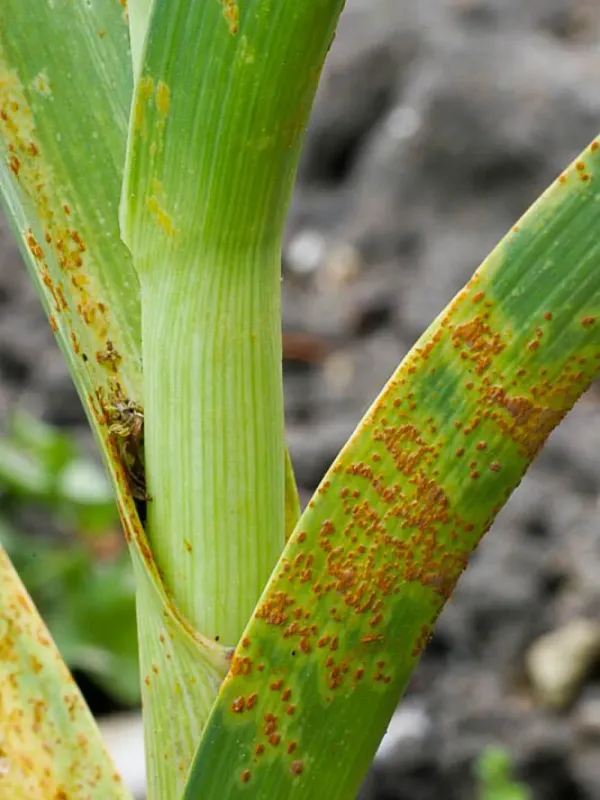
The first signs of onion rust appear as small, faint white or light yellow spots on the leaves. As the disease progresses, these spots develop into raised pustules, which can be circular or oval, displaying a vibrant orange or rusty-brown color.
These pustules contain mature fungal spores that eventually rupture the leaf epidermis to spread to surrounding healthy tissues. Consequently, the affected leaves begin to yellow, curl, and wither prematurely, starting from the tips downward.
Under heavy infection, the leaf surface becomes covered in a dense layer of spores, giving the plant a scorched, rusty appearance. This significantly impairs the plant's ability to conduct photosynthesis, leading to stunted growth.
In the late stages of the vegetative season, the pustules may darken as the fungus transitions to producing winter spores. This is a critical stage for the survival of the pathogen in the field environment.
Diagnostic identification requires careful inspection, especially on the lower leaves where moisture accumulation is higher and the initial infections often take hold before spreading to the rest of the plant.
Pathogen
The causative agent of onion rust is the fungus Puccinia trebouxii, a specialized pathogen belonging to the rust family of basidiomycetes. It is an obligate parasite, meaning it requires living host tissue to complete its life cycle.
The fungus propagates through the production of several spore types, primarily urediniospores, which are easily carried by air currents over long distances to infect new hosts. Its complex life cycle allows it to adapt to varying seasonal conditions.
The mycelium of the fungus colonizes the intercellular spaces within the host leaf tissues. It extracts nutrients through specialized structures called haustoria, which penetrate the plant cell walls to access the cell's cytoplasmic content.
The pathogen can survive the winter months on crop debris or perennial onion species as teliospores. These dormant spores are highly resistant to cold and dry conditions, acting as the primary inoculum for the following season.
When environmental conditions become favorable in the spring, these spores germinate to produce infection structures, initiating the primary infection cycle on emerging onion shoots or seedlings.
Conditions for development
The development of onion rust is strongly favored by periods of high humidity. Frequent rainfall, morning dew, and heavy fog create the wet leaf surface conditions necessary for spore germination and successful infection.
The fungus thrives within a temperature range of 15°C to 22°C. Within these parameters, the disease can spread rapidly throughout a field, especially in closely spaced or poorly ventilated plantings where stagnant air accumulates.
Excessive nitrogen fertilization often leads to lush, succulent vegetative growth, which is more susceptible to fungal penetration. This imbalance makes the plants softer and less resistant to the pathogen's initial attack.
Lack of proper crop rotation is a major risk factor, as it allows the population of the pathogen to build up in the soil over time. Returning onions to the same site annually increases the severity of potential outbreaks.
Weedy fields, particularly those containing wild relatives of the onion family, provide a secondary habitat for the fungus to persist and spread, complicating integrated pest management strategies.
Why it matters
The primary damage caused by onion rust is a significant reduction in the green leaf area, which directly translates into reduced bulb size and overall yield. Yield losses can be substantial in sensitive varieties.
Infected plants produce bulbs that are often poorly filled, having thin outer scales and poor maturity. Such bulbs have a significantly lower shelf life and are prone to rapid decay during storage and transportation.
The metabolic disruption caused by the fungus lowers the concentration of essential sugars and sulfur compounds, which negatively impacts the flavor and nutritional quality of the onion crop.
Severely weakened plants often fall victim to secondary opportunistic infections, such as bacterial soft rots or downy mildew, which can complicate the health status of the crop and lead to total failure.
Economic damage is twofold: the loss of marketable yield and the increased cost associated with intensive chemical control measures required to stop an ongoing outbreak in the field.
Protection
Cultural control is the first line of defense, starting with a strict crop rotation policy. Avoiding planting onions in the same location for at least 3-4 years helps to exhaust the soil-borne inoculum.
Effective sanitation is critical. Removing and destroying all infected crop debris immediately after harvest reduces the amount of pathogen material available to survive the winter and cause new infections next year.
Selecting rust-resistant varieties is the most sustainable approach for long-term management. Planting in well-drained, sunny locations with adequate spacing ensures that foliage dries quickly, preventing spore germination.
When necessary, chemical management involves the use of copper-based fungicides or systemic triazoles. These should be applied at the first sign of symptoms, strictly adhering to pre-harvest intervals to ensure safety.
Maintaining optimal soil fertility, particularly by ensuring adequate potassium and phosphorus levels, strengthens the plant's structural integrity and biochemical defenses against fungal penetration.
Discussion
No discussions yet — be the first.