
Cluster cup rust of currant
Puccinia ribesii-caricis
Description
Symptoms
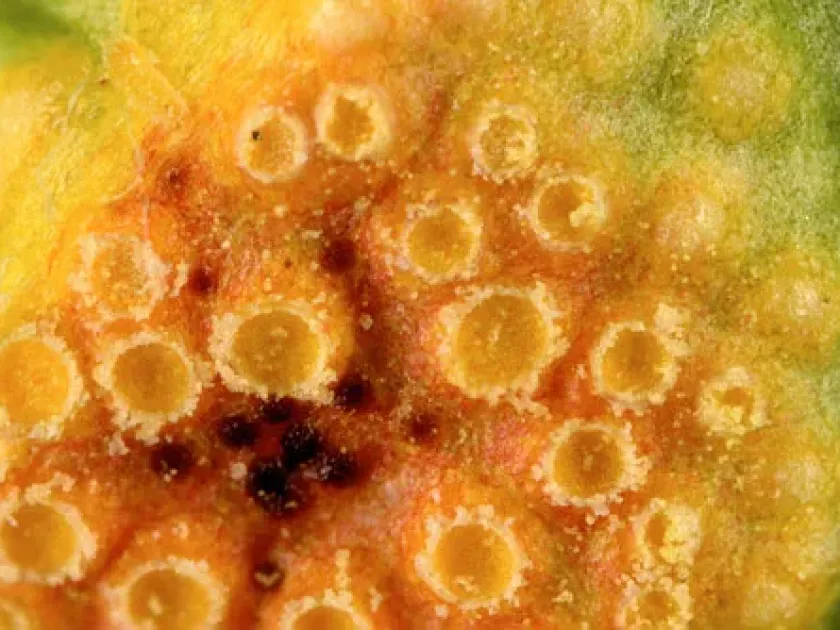
Early symptoms appear in spring on the undersides of young leaves. They manifest as bright orange or yellow pustules, which eventually develop into characteristic cup-shaped structures.
On the upper side of the leaf, yellow spots form exactly opposite the orange pustules. Over time, these spots can expand and merge, leading to a general discoloration of the foliage.
Severe infections may cause visible deformation of petioles, shoots, and young developing berries. The plant parts appear stunted and heavily infested with fungal structures.
As the fungal cups mature, they rupture, releasing mass quantities of spores. This dispersal phase causes rapid secondary spread of the disease within the entire plantation.
Infected plant tissues eventually turn brown, dry out, and drop prematurely. This leads to a sparse, sickly appearance of the currant bush by mid-summer.
Pathogen
The causal agent of this disease is the heteroecious rust fungus Puccinia ribesii-caricis. It requires two distinct hosts to complete its complex life cycle, which is a critical aspect of its ecology.
The primary host for the pathogen is the sedge (Carex spp.), where the fungus survives the winter. In spring, spores are wind-dispersed to currant or gooseberry bushes, initiating the infection.
The fungus infects leaves, petioles, and young berries of the bushes. By diverting nutrients for its own growth, the pathogen severely weakens the host plant's physiological health.
The fungal mycelium invades plant tissues, causing disruption in cellular functions. This process significantly impairs photosynthesis, which is essential for the plant's overall vitality and yield production.
The pathogen's life cycle is strictly dependent on climatic factors, specifically the presence of surface moisture required for spore germination and successful penetration of plant tissues.
Conditions for development
Warm and humid weather conditions during spring are optimal for cluster cup rust development. Frequent rainfall and high humidity levels drastically accelerate the spread of spores.
The proximity of sedge-infested areas is the most significant risk factor. Fields located near wetlands or poorly drained sites are highly prone to recurring disease outbreaks.
Crowded plantings that lack adequate airflow create a microclimate with high humidity. This environment prevents leaves from drying quickly, facilitating spore germination.
The temperature range between +12°C and +18°C is considered ideal for the pathogen's active phase. During this window, plants are most vulnerable to initial and secondary infections.
Lack of direct sunlight and poor site aeration contribute to extended leaf wetness. These conditions effectively serve as a catalyst for fungal proliferation across the garden.
Why it matters
The primary impact of the disease is premature leaf drop. Early defoliation prevents the plant from building up sufficient energy reserves for winter survival and next year's growth.
Reduced photosynthetic capacity leads to significant yield losses. Berries on infected bushes often remain small, lose their flavor, or drop prematurely due to lack of nutrients.
Weakened plants show a decreased tolerance to winter frosts. This frequently results in cold injury or the death of entire branches after an especially cold winter season.
Long-term exposure to the disease causes a systemic decline in plant health. Over several years, untreated bushes may lose their productivity entirely and fail to recover.
Additionally, damaged foliage makes the plants more susceptible to secondary pathogens and pests, creating a complex disease pressure that is difficult to manage without intervention.
Protection
The most effective preventive measure is the removal of sedge plants within a 300-500 meter radius of the currant plantation to break the fungus's life cycle.
Implement proper cultural practices such as regular pruning and thinning of bushes. This ensures better air circulation and reduces humidity levels around the foliage.
If necessary, apply registered fungicides during the vegetative stage. Treatments are most effective when applied at the bud-burst stage and immediately following the flowering period.
Collect and destroy all fallen leaves during autumn to minimize the overwintering inoculum. This sanitation step is crucial for reducing infection pressure in the following year.
- Select and plant resistant currant and gooseberry cultivars.
- Water at the base of the plant to keep the foliage dry.
- Apply balanced potassium and phosphorus fertilizers to boost plant immunity.
Discussion
No discussions yet — be the first.