
Brown rust of wheat
Puccinia recondita
Description
Symptoms
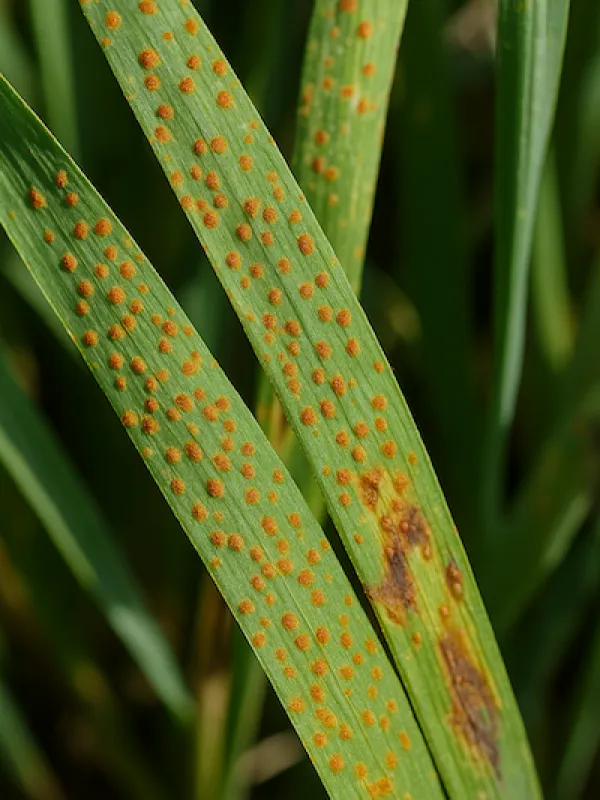
Symptoms are first observed as small, scattered, rusty-brown pustules (uredinia) on the upper surface of the leaves. These pustules break through the epidermis, releasing mass amounts of urediniospores.
As the disease progresses, the number of pustules increases significantly. In severe cases, they cover most of the leaf area, causing the foliage to yellow and wither prematurely.
Later in the season, the fungus produces teliospores, which appear as black, crust-like pustules. This is a survival mechanism that helps the pathogen endure less favorable environmental conditions.
While leaves are the primary target, severe infections can also spread to leaf sheaths, further reducing the plant's photosynthetic capability at a critical developmental stage.
- Rusty-brown pustules on leaves
- Leaf chlorosis and premature drying
- Black telia formation in late stages
- Significant reduction in foliage area
- Poor grain development and shriveling
Pathogen
The causal agent of this disease is the fungus Puccinia recondita f. sp. tritici, which belongs to the Basidiomycota phylum. It is a specialized obligate parasite that requires living plant tissue to complete its life cycle.
The fungus produces various types of spores, with urediniospores being the primary source of reinfection throughout the growing season. It can survive the winter in wheat fields or on volunteer plants.
Infection begins when spores land on susceptible leaves and germinate in the presence of moisture. The mycelium penetrates through the stomata and begins to colonize the host's intercellular spaces.
By extracting nutrients directly from the plant, the pathogen severely disrupts the host's normal metabolic processes. This parasitic relationship is the root cause of the significant damage observed in infected wheat stands.
The pathogen is known for its high genetic diversity, which allows different races to evolve and overcome the resistance of previously successful wheat varieties.
Conditions for development
Brown rust development is highly dependent on humidity and temperature. The fungus thrives in moist environments, especially when dew, light rain, or fog persists on the leaves for several hours.
The optimal temperature for spore germination and infection is between 15°C and 25°C. Within this range, the pathogen can complete its cycle in as little as one week under favorable conditions.
High relative humidity is a key factor, as it facilitates the germination process. Dense crop canopies trap moisture, creating a perfect microclimate for the disease to spread rapidly.
Spore dispersal is primarily wind-driven, allowing the pathogen to travel over long distances and potentially trigger widespread outbreaks across large agricultural regions.
Periodic dry spells may slow the progress of the infection, but any return to moist conditions will trigger the production of new spore generations, renewing the epidemic threat.
Why it matters
The economic impact of brown rust is primarily due to the reduction in the leaf surface area available for photosynthesis. This significantly limits the plant's ability to fill the grains properly.
Infected crops often show lower thousand-grain weight and reduced grain quality, such as lower protein content. Yield losses in susceptible varieties can range from 10% to 50% in epidemic years.
The disease also weakens the plant's overall vitality, making it more susceptible to environmental stressors and other concurrent plant pathogens like root rots.
Winter wheat crops affected by brown rust may have lower cold tolerance, as the lack of sufficient photosynthesis prevents the accumulation of necessary sugars for survival during winter.
Managing the disease often requires a significant investment in chemical fungicides to prevent irreparable losses, which increases the overall cost of production for wheat growers.
Protection
The most effective long-term strategy for managing brown rust is the use of genetically resistant wheat varieties. Breeding programs focus on incorporating resistance genes to current races of the pathogen.
Cultural practices play a crucial role in disease prevention. This includes proper crop rotation, removing volunteer wheat plants, and ensuring optimal planting density to avoid overly humid microclimates.
Fungicide application is recommended when threshold levels are reached. Farmers should monitor fields regularly for the first signs of the disease, particularly during the flag leaf stage.
Integrated Pest Management (IPM) techniques emphasize the alternating use of different fungicide modes of action to prevent the development of resistant fungal populations.
Timely application of chemical treatments, guided by accurate field scouting and local weather forecasts, is essential for maintaining crop health and maximizing harvest potential.
Discussion
No discussions yet — be the first.