
Purple rust of sorghum
Puccinia purpurea
Description
Symptoms
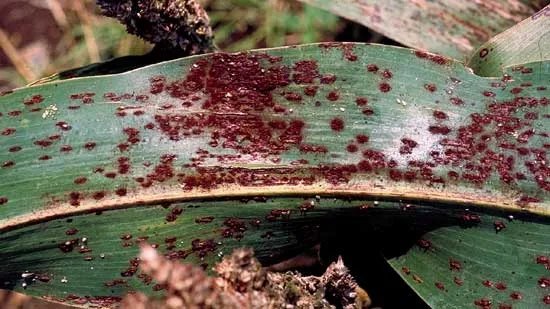
The initial symptoms appear as small chlorotic spots on the leaves, which gradually develop a distinctive purple or dark reddish hue as the disease progresses.
In the affected areas, pustules form, representing the fungal spore masses. These range from reddish-brown to dark purple, which is the hallmark identifier of this specific rust.
As the infection intensifies, numerous uredinia become visible, particularly on the lower surface of the leaf. Eventually, they can manifest on the upper leaf surface as well.
Severe infestations cause the leaves to turn yellow, wither, and die prematurely. This loss of canopy health directly impacts the plant's ability to produce energy.
- appearance of purple spots on leaves;
- formation of pustules containing rusty-brown spores;
- premature wilting and senescence of foliage;
- reduced plant vigor;
- impaired grain filling and development.
Pathogen
The causal agent of purple rust of sorghum is the highly specialized fungus Puccinia purpurea. This pathogen is an obligate parasite, meaning it can only complete its life cycle on living host plant tissues.
Belonging to the class of Basidiomycetes, the fungus exhibits a complex development cycle. In warm climates, it spreads rapidly through the massive production of urediniospores carried by the wind.
The infection survives as mycelium or spores on crop residues, volunteer plants, or alternative wild grass hosts. This persistence makes disease management a continuous seasonal challenge.
The fungus colonizes the leaf tissue by growing in the intercellular spaces. Once established, it develops reproductive structures that rupture the epidermis to release new spores into the environment.
While moisture is critical for spore germination, the parasite is remarkably resilient once it has successfully colonized the host tissue, allowing it to thrive under varied field conditions.
Conditions for development
Purple rust thrives in moderately warm environments with frequent rainfall or heavy dew. High relative humidity is the primary catalyst for the widespread dispersal of spores.
Optimal temperatures for infection range from 18°C to 25°C. Under these conditions, the latent period of the disease shortens, leading to rapid and dangerous epidemic cycles.
Dense planting patterns, which reduce airflow and increase humidity within the canopy, create the perfect microclimate for the fungus to jump from plant to plant.
Excessive nitrogen application stimulates vigorous but succulent vegetative growth, which is more susceptible to pathogen penetration through the leaf stomata.
Wind is the primary vector for spore dispersal, enabling the pathogen to spread across vast fields and neighboring farms in a relatively short period.
Why it matters
The primary damage caused by purple rust is the significant reduction in leaf area index. This inhibits photosynthesis, directly starving the plant during the critical grain-filling stage.
Plants affected by the disease suffer from stunted growth and reduced grain weight, leading to substantial yield losses that can be devastating in susceptible varieties.
For forage sorghum, the disease lowers the nutritional quality of the crop, reducing sugar and protein content, making the harvest less valuable for livestock feed.
Weakened plants are significantly more vulnerable to secondary stresses, such as drought or heat waves, further compounding the losses in both yield and quality.
The financial impact includes not only the loss of raw grain or biomass but also the costs associated with repeated fungicide applications and increased field management requirements.
Protection
The most effective strategy for long-term management is the selection and planting of resistant or tolerant sorghum hybrids, which significantly reduces the need for chemical intervention.
Good agricultural practices are essential, including crop rotation to break the disease cycle and proper management of volunteer plants that serve as "green bridges" for the fungus.
Optimizing plant density is crucial to improving air circulation within the field, which helps to lower humidity and makes the environment less hospitable for the pathogen.
If the disease threshold is reached, chemical control using systemic fungicides, such as triazoles or strobilurins, can effectively suppress fungal development and prevent further spread.
Regular field scouting is vital for early detection. Identifying the onset of rust early allows for timely intervention, preventing the disease from reaching levels that threaten overall crop profitability.
Discussion
No discussions yet — be the first.