
Daisy rust
Puccinia obscura
Description
Symptoms
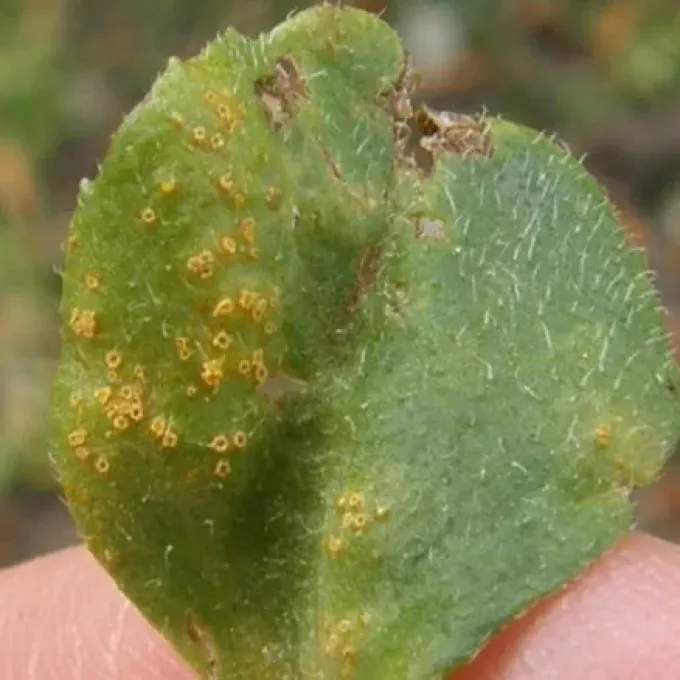
The first symptoms appear as small, chlorotic spots on the upper leaf surface of the daisy, which gradually expand as the disease progresses.
As the infection matures, characteristic pustules form in the center of the spots. These contain masses of brown, rusty-colored spores.
Heavy infestation leads to the lower surfaces of the leaves being covered in a dusty, brownish-red layer, significantly impacting the plant's aesthetic value.
Leaves affected by the fungus eventually turn yellow, wilt, and die prematurely, leading to reduced vigor and stunted growth of the daisy clump.
- Chlorotic yellow spots on leaves
- Raised brown pustules on leaf undersides
- Premature leaf senescence
- Decreased flower production
Pathogen
The causal agent of this disease is the fungus Puccinia obscura, which belongs to the class of Basidiomycetes. It is an obligate parasite that requires living plant tissue to complete its life cycle.
The fungus is heteroecious, meaning it requires alternate hosts to complete its life stages. Luzula species often serve as alternate hosts where the fungus survives the winter, while daisies are the primary hosts for the summer stages of spore production.
The fungus invades the intercellular spaces of the plant, drawing nutrients from the host. As the fungus matures, it produces pustules that rupture the plant epidermis to release spores.
Dissemination is primarily through windborne urediniospores, which can travel considerable distances to infect new plants.
The biological nature of this rust makes it persistent in gardens where both the primary and alternate hosts are present in the same vicinity.
Conditions for development
The development of Puccinia obscura is heavily favored by high humidity levels and mild temperatures ranging from +15°C to +22°C.
Poor air circulation within dense plantings creates an ideal microclimate for the spores to germinate and infect the host tissues rapidly.
Prolonged morning dew or wet weather conditions provide the surface moisture necessary for the spores to penetrate the leaf cuticle.
Overhead watering techniques are a major risk factor, as they leave the foliage wet for extended periods, facilitating spore germination.
Plants growing in shaded areas with restricted light are generally more susceptible to rust due to weaker cell walls and less active photosynthesis.
Why it matters
The primary damage results from a decrease in photosynthetic efficiency, as the fungus damages large areas of the leaf surface.
The parasite siphons off essential carbohydrates that the daisy would otherwise use for growth and bloom production, leading to weaker plants.
Visible damage makes the plants unattractive, rendering them unsuitable for ornamental garden displays or commercial sales.
Severe infestations can lead to total plant collapse during the growing season, especially if the plants are already under other stress factors.
The reduction in vigor makes the plants less capable of surviving harsh winter conditions or resisting secondary infestations by other pests.
Protection
Sanitation is the most critical control measure; gardeners should remove and destroy all infected plant debris to reduce the overwintering inoculum.
Strategic planting, including the removal of Luzula species from the immediate area, can effectively break the fungal life cycle.
Applying fungicides with systemic action or copper-based compounds during the early stages of infection can successfully halt the spread of the disease.
Changing irrigation methods to drip or base watering prevents moisture from sitting on the leaves, thereby inhibiting spore germination.
Regular monitoring of the garden allows for the early detection of the rust, permitting the selective removal of infected leaves before the problem becomes widespread.
Discussion
No discussions yet — be the first.