
Lagenophora rust
Puccinia lagenophorae
Description
Symptoms
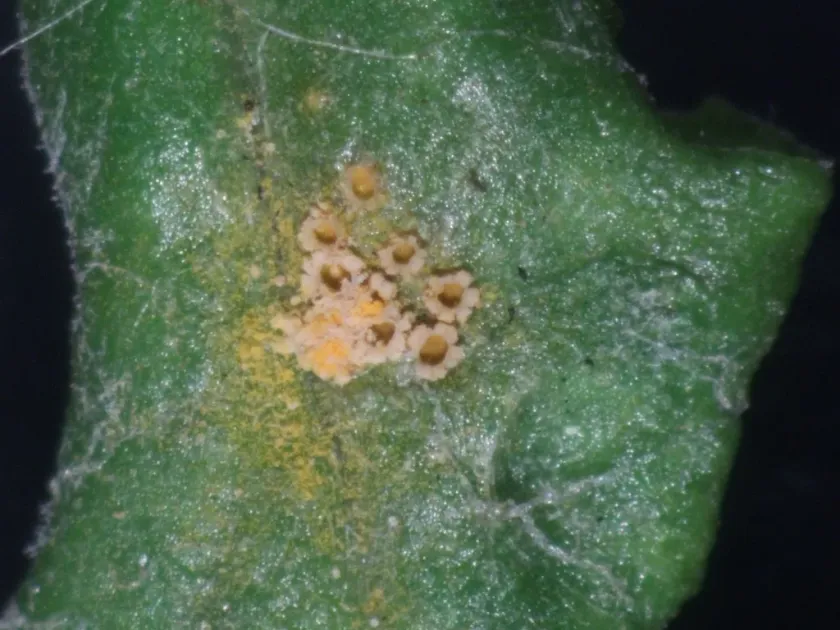
The most distinctive symptom of Lagenophora rust is the appearance of small, bright orange or yellow pustules on both sides of the leaves. These pustules represent the fruiting bodies of the fungus bursting through the plant's epidermis.
As the infection matures, the pustules rupture, releasing clouds of powdery spores. Over time, these spots may darken to a reddish-brown or black color, signaling the development of overwintering teliospores.
Severe infestations often cause the leaves to yellow, curl, and eventually drop prematurely. In addition to foliage, stems and petioles may show elongated, ruptured lesions that cause the growth tips to distort or twist.
In advanced stages, the plant's overall vigor declines significantly. The presence of the characteristic rust-colored dust on the plant surfaces and on any contact tools is the primary diagnostic feature for identifying this specific rust species.
Unlike bacterial spot diseases, rust pustules are distinctly raised, and the spores can be easily wiped off with a finger, confirming their fungal origin.
Pathogen
The causal agent of this disease is the fungus Puccinia lagenophorae, a specialized obligate biotroph within the order Pucciniales. It survives exclusively on living host tissues of the Asteraceae family, drawing essential nutrients directly from the plant cells.
The fungus is highly adapted to its hosts, often completing its life cycle without needing an alternative host plant. This makes the disease highly contagious within plant communities of susceptible species.
Infection begins when urediniospores land on leaves and stems, germinating and forming a mycelium that invades the host's intercellular spaces. This fungal growth eventually triggers the formation of eruptive structures known as aecia.
The pathogen is known for its invasive nature, having expanded its global range significantly over the past decades. Its ability to produce massive quantities of wind-borne spores allows for rapid transmission during the active growing season.
Due to its biological nature, the fungus effectively hijacks the plant's metabolic pathways to support its own sporulation, which eventually leads to the structural degradation of the infected plant organs.
Conditions for development
The development of Puccinia lagenophorae is highly dependent on environmental factors, particularly moisture and temperature. The fungus thrives in cool to moderate temperatures ranging from 15°C to 22°C combined with high relative humidity.
Free water on the plant surface, such as dew, fog, or overhead irrigation, is essential for spore germination. The fungus requires these moist films to infect the plant tissue through the stomata or direct penetration.
Dense plantings restrict airflow and prevent the foliage from drying out quickly after rain, creating a perfect microclimate for the fungus to multiply. Poor ventilation is a major contributor to localized outbreaks.
Plants under physiological stress—due to nutrient imbalances, nitrogen excess, or waterlogged soil—tend to be more susceptible to the infection as their defensive capacity is compromised.
The pathogen survives between seasons in the form of dormant spores residing on crop debris or perennial host weeds, which act as a reservoir for new infections when the season restarts.
Why it matters
The primary impact of Lagenophora rust is the drastic reduction in the plant's photosynthetic capacity. By diverting energy away from growth and toward spore production, the fungus significantly stunts the host's development.
Infected plants suffer from impaired water transport and weakened cell walls, leading to rapid wilting and necrosis. This damage can eventually cause the death of the entire plant if the infection reaches a high enough density.
For ornamental varieties, the disease leads to a complete loss of aesthetic value. Even if the plant survives, the disfiguring spots make it unsuitable for commercial sale or decorative use.
In perennial crops, the disease reduces the plant's ability to accumulate sugar reserves, making it far more susceptible to winter frost damage and other environmental stressors.
Large-scale outbreaks can cause significant economic losses in nurseries and horticultural production, where the rapid spread of spores requires intense labor for sanitation and chemical management.
Protection
Effective management begins with stringent sanitation practices. Any plant material showing symptoms should be immediately removed and destroyed (preferably by burning or deep burial) to minimize the inoculum load.
Cultural methods are crucial: ensure adequate spacing between plants to improve ventilation. Avoid overhead irrigation and use drip lines instead to keep the foliage as dry as possible throughout the day.
When the infection is detected early, systemic fungicides—particularly those containing triazoles or strobilurins—can be highly effective in stopping the progression of the mycelium.
Proactive treatments with copper-based sprays or biofungicides at the start of the season can help prevent the initial colonization of leaves by providing a protective chemical barrier.
- Monitor plants frequently, checking both leaf surfaces.
- Manage weeds around the area to eliminate secondary hosts.
- Maintain balanced soil fertility to ensure plant resilience.
- Use certified disease-free seedlings for all new plantings.
- Sanitize tools regularly to prevent spreading spores.
Discussion
No discussions yet — be the first.