
Orange rust of sugarcane
Puccinia kuehnii
Description
Symptoms
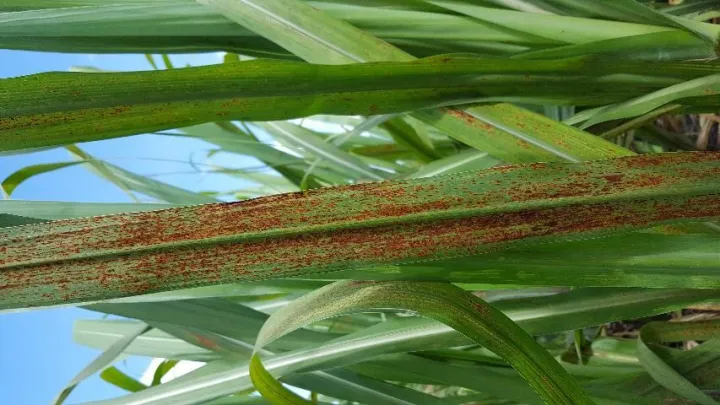
Initial symptoms are characterized by small, chlorotic spots on the leaf surface. As the infection progresses, these spots expand into elongated, oval-shaped lesions following the leaf veins.
The most diagnostic feature is the development of orange or reddish-brown powdery pustules in the center of the lesions. These pustules represent masses of fungal spores emerging through the plant surface.
As the disease severity increases, affected leaves turn yellow and undergo necrosis. Premature senescence of the foliage occurs, leading to a significant reduction in the plant's active photosynthetic area.
Symptoms are most pronounced on young and mid-aged leaves, as the pathogen targets the most metabolically active parts of the plant to extract necessary resources for its rapid development.
Under heavy infection pressure, the entire canopy may take on a rust-like appearance, which is a clear indicator of severe colonization and significant physiological stress on the plant.
Pathogen
The causal agent of this disease is the fungus Puccinia kuehnii. It is an obligate parasite, meaning it requires living host tissue to complete its life cycle and derive nutrients for growth and reproduction.
The fungus produces large quantities of urediniospores, which are characterized by their distinct orange to reddish-brown coloration. These spores serve as the primary inoculum for the spread of the disease across fields.
Spore production occurs within localized structures known as pustules (uredinia), which rupture the plant epidermis to release spores into the atmosphere. This process allows the pathogen to spread via wind and rain splash.
The life cycle of Puccinia kuehnii is highly adapted to tropical and subtropical climates. It can survive on volunteer sugarcane plants or alternative wild grass hosts during the off-season.
Genetic variability within the pathogen populations remains a significant concern, as the emergence of new virulent races can overcome the resistance built into commercial sugarcane varieties.
Conditions for development
The development of Orange Rust is highly dependent on environmental conditions, with temperatures ranging from 20 to 25 degrees Celsius being considered optimal for spore germination and infection.
Free moisture on the leaf surface, provided by dew, fog, or light rain, is an absolute requirement for the pathogen to successfully penetrate the sugarcane leaf tissue.
High humidity and canopy density contribute to a microclimate where moisture is retained for longer periods, thereby facilitating the rapid spread of the fungus among healthy plants.
Wind speed plays a crucial role in the dissemination of urediniospores over long distances. Consequently, outbreaks often coincide with windy periods that promote the movement of airborne spores.
Variable weather conditions, such as extended cloudy spells with high moisture levels, can trigger epidemic outbreaks, turning localized occurrences into widespread field infections.
Why it matters
The primary economic impact of Orange Rust is a reduction in the photosynthetic capacity of the sugarcane plant, which directly correlates to decreased sucrose accumulation in the stalks.
Heavy infestations lead to reduced biomass production, stunting of the stalks, and inferior juice quality, which significantly lowers the recovery rate of sugar during the milling process.
The loss of foliage affects the overall vigor of the crop, rendering the plants more susceptible to secondary stressors, including other pathogens and various pests that thrive on weakened plants.
Yield losses can be severe in susceptible cultivars, particularly when environmental conditions remain favorable for the fungus throughout the critical growth stages of the sugarcane crop.
In addition to immediate losses, the disease can negatively impact the quality of the planting material (setts), which may lead to poor germination and reduced vitality in subsequent ratoon crops.
Protection
The most effective long-term strategy for managing Orange Rust is the cultivation of resistant or tolerant sugarcane varieties developed through systematic breeding programs.
Agronomic management, including proper field spacing and canopy management, helps to improve airflow and reduce humidity levels, thereby creating a less favorable environment for the fungus.
Regular field scouting is essential for early detection. If disease thresholds are exceeded, the application of systemic fungicides may be necessary to suppress the spread of the infection.
Sanitation practices, such as removing infected crop residues and managing wild grass hosts near the fields, help to reduce the primary inoculum load for the next planting season.
Balanced fertilization, particularly the judicious use of nitrogen, ensures that plants remain healthy and maintain their natural defensive mechanisms against fungal pathogens.
Discussion
No discussions yet — be the first.