
Onion rust
Puccinia concrescens
Description
Symptoms
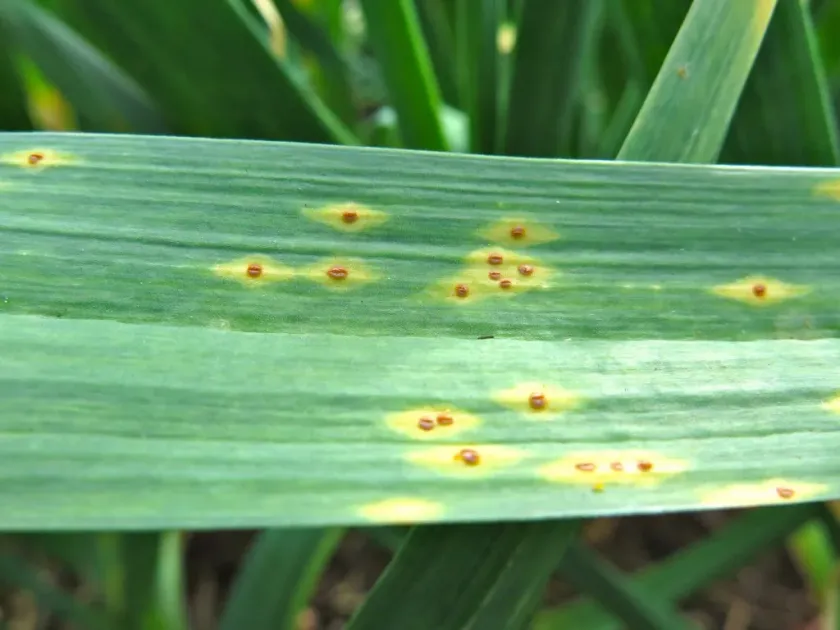
Initial symptoms appear as small, pale yellow spots or flecks on the foliage. As the disease progresses, these spots expand and become slightly raised above the leaf surface.
Eventually, these spots develop into pustules. These pustules rupture the plant epidermis, releasing a dusty, rusty-brown mass of spores, which is a diagnostic feature of the disease.
Severe infestations cause the leaves to turn yellow, curl, and wither prematurely. Typically, the oldest leaves are affected first, followed by the younger ones as the infection spreads.
In later stages of the life cycle, black structures known as teliospores may appear, indicating that the fungus is preparing to enter a dormant phase for the winter.
The overall appearance of an infected crop is withered and stunted, with a characteristic rusty appearance on the leaves that significantly reduces the plant's health and vigor.
Pathogen
The disease is caused by the specialized pathogenic fungus Puccinia concrescens (often referred to as Puccinia allii). It is an obligate parasite that specifically infects plants of the Alliaceae family.
The fungus completes its complex life cycle by producing several types of spores, which allow it to survive in various conditions and disperse rapidly throughout the growing season.
The pathogen typically overwinters on crop debris or perennial onion species. In the spring, spores are carried by wind to new plantings, initiating primary infections.
Infection begins when spores land on the leaves and penetrate through stomata. Once inside, the fungus develops mycelium in the intercellular spaces, drawing nutrients from host cells via haustoria.
The high reproductive rate of this pathogen makes onion rust a significant threat, as it can escalate from isolated spots to a full-field epidemic under favorable environmental conditions.
Conditions for development
Onion rust thrives in conditions with high relative humidity (above 85%) and moderate temperatures ranging from 15°C to 22°C, which are optimal for spore germination.
Periods of heavy dew, frequent fogs, or prolonged rainfall are highly conducive to the spread of the disease, as leaf surface moisture is essential for successful infection.
Overcrowded plantings that lack proper air circulation create a microclimate with persistently high humidity, accelerating the transmission of spores between plants.
Excessive application of nitrogen fertilizers can exacerbate the problem by promoting succulent, fast-growing tissue that is more vulnerable to fungal penetration.
Failure to maintain physical separation between commercial fields and areas containing volunteer or perennial onions serves as a constant source of primary inoculum.
Why it matters
The primary impact of onion rust is the substantial loss of photosynthetic area, which directly prevents the translocation of nutrients into the bulb.
This results in reduced bulb size, poor quality, and significantly shortened shelf life, making the harvested product unsuitable for long-term storage.
In cases of early-season infection, total yield losses can reach 30% to 50%. Furthermore, diseased plants are significantly more susceptible to secondary pathogens, such as bacterial rots.
For agricultural producers, this disease leads to economic losses through both reduced marketability of the crop and the high cost of intensive fungicidal control programs.
Seed production fields are particularly sensitive, as infections can lead to shriveled, low-vigor seeds that compromise the viability of future crops.
Protection
The cornerstone of disease management is strict crop rotation, which breaks the pathogen's life cycle and lowers the density of dormant spores in the soil.
Producers must ensure the removal and deep incorporation of crop residues into the soil, as these are the primary reservoirs for the fungus to survive between seasons.
When initial signs appear, systemic or contact fungicides—such as those containing triazoles or copper-based compounds—should be applied, alternating modes of action to prevent resistance.
- Selection of cultivars with documented resistance to rust.
- Effective weed control to eliminate alternative host plants.
- Balanced fertilization, with an emphasis on potassium to harden tissues.
- Optimizing planting density to ensure adequate ventilation.
Regular field scouting is critical to detect localized hotspots early, allowing for targeted fungicide applications before the disease spreads across the entire field.
Discussion
No discussions yet — be the first.