
Onion rust
Puccinia allii
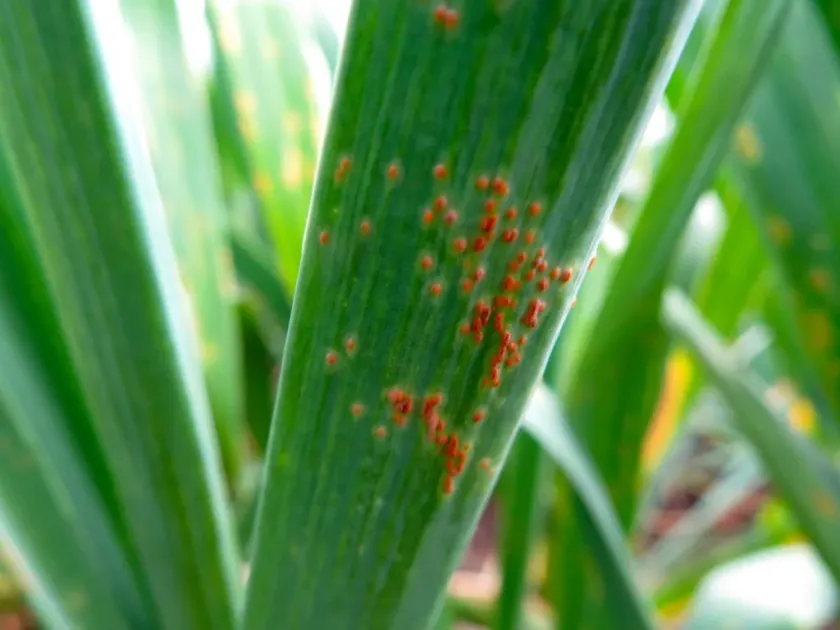
Description
Symptoms
The first signs of onion rust appear as tiny, pale, yellow-white flecks on the leaf surfaces. Over time, these spots enlarge and develop into distinct pustules.
As the infection progresses, these pustules break through the leaf epidermis, releasing a dusty mass of orange-brown or reddish-brown spores, which gives the disease its characteristic rust-like appearance.
In severe cases, individual pustules coalesce to cover large sections of the leaves, resulting in widespread chlorosis, necrosis, and premature wilting of the foliage.
When touched, the rust-colored spores easily rub off onto fingers or clothing, a diagnostic feature used to differentiate it from other foliar disorders like downy mildew.
The overall plant vigor declines sharply as the photosynthetic area is reduced, eventually leading to stunted plant height and drooping, withered leaves.
Pathogen
The causative agent of onion rust is the fungus Puccinia allii, a specialized obligate biotroph that belongs to the Basidiomycota phylum. It strictly requires living plant tissues to survive and complete its life cycle.
This pathogen specifically targets plants within the Amaryllidaceae family. The most commonly affected crops include bulb onions, garlic, shallots, and chives, making it a significant threat to commercial vegetable farming.
The fungus produces several types of spores, including urediniospores, which are responsible for the rapid spread of the disease during the growing season through wind dispersal.
Puccinia allii can overwinter as dormant mycelium or as teliospores on infected plant debris or volunteers left in the field from the previous season.
The complexity of its life cycle and the ability to reproduce asexually multiple times in one season allow the fungus to build up high inoculum levels rapidly.
Conditions for development
Onion rust thrives in temperate conditions, with optimal development occurring at temperatures between 15°C and 22°C (59°F to 72°F).
High relative humidity and the presence of surface moisture, such as dew or rain, are essential for spore germination and the successful penetration of the fungus into the plant tissue.
Poor ventilation, caused by high-density planting or low-lying field positions, creates a localized microclimate that traps moisture and facilitates the rapid spread of the fungus.
Frequent overhead irrigation, especially when performed in the evening, keeps foliage damp for extended periods, significantly increasing the risk of infection.
Nitrogen-rich environments can also exacerbate the problem by promoting lush, succulent growth that is more susceptible to colonization by fungal hyphae.
Why it matters
The primary economic harm of onion rust stems from the significant reduction in leaf area, which limits the plant's ability to photosynthesize and store energy in the bulb.
Infections occurring early in the season can lead to severe stunting, resulting in undersized bulbs that do not meet market quality standards and have poor shelf life.
If left unmanaged, the disease can cause total crop failure in highly susceptible varieties, leading to substantial yield losses in both home gardens and commercial operations.
The weakened plant tissue is more prone to secondary colonization by opportunistic bacteria and other fungi, which may lead to bulb rot during storage.
Marketability is heavily impacted, as rusted leaves are unsightly and unacceptable for produce sold as fresh green onions or chives, directly affecting producer profits.
Protection
Effective management begins with preventative cultural practices, such as rigorous crop rotation to avoid planting Allium species in the same soil for at least three consecutive years.
Sanitation is critical; all plant debris should be removed or deeply buried after harvest to destroy the primary sources of overwintering inoculum.
- Ensuring adequate spacing between plants to improve air circulation.
- Avoiding overhead watering to keep foliage dry during the day.
- Balancing soil nutrition by avoiding excessive nitrogen applications.
- Monitoring fields regularly for the earliest signs of the disease.
- Applying registered fungicides as a protective measure or upon first symptom detection.
When chemical control is necessary, select fungicides specifically labeled for rust control in onions and follow application rates and pre-harvest intervals to ensure safety and efficacy.
Discussion
No discussions yet — be the first.