
Ginger Cercospora leaf spot
Pseudocercospora zingiberis
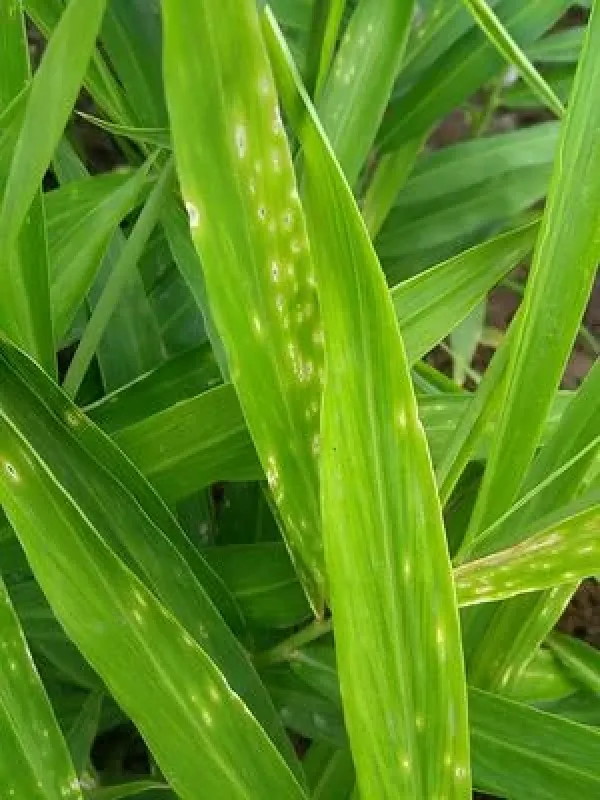
Description
Symptoms
The disease manifests as small, water-soaked spots on the foliage. As the infection progresses, these spots turn brown or dark gray and are often surrounded by a distinct yellow chlorotic halo.
In more advanced stages, the lesions expand and may merge, creating large necrotic areas. Under high humidity, a grayish fungal growth (the conidiophores) may be visible within the center of the spots.
Severe infection leads to the premature yellowing and drying of leaves, starting from the lower parts of the plant and moving upwards if conditions remain favorable for the pathogen.
The plant exhibits stunted growth, and in cases of heavy infestation, the overall vigor of the crop is significantly reduced, affecting the quality of the harvested rhizomes.
- Appearance of small, water-soaked lesions.
- Yellow halo surrounding the necrotic spots.
- Coalescence of spots into large brown areas.
- Premature drying and shedding of foliage.
- Reduced plant growth and vigor.
Pathogen
The causal agent of Cercospora leaf spot in ginger is the fungus Pseudocercospora zingiberis (formerly known as Cercospora zingiberis). This pathogen is specialized in attacking plants within the Zingiberaceae family.
The fungus reproduces through spores known as conidia, which are easily disseminated by wind and water splashes. It thrives by colonizing the leaf tissue, causing necrotic lesions that disrupt the photosynthetic capacity of the plant.
The pathogen can survive in crop debris or infected soil, making it a persistent threat in fields where ginger is grown continuously without adequate crop rotation practices.
Infection typically occurs when environmental conditions allow for spore germination on the leaf surface. Once inside the tissue, the fungus forms mycelia that gradually consume plant cells.
Understanding the biology of Pseudocercospora zingiberis is key to developing effective control strategies, as the fungus relies heavily on moisture to initiate its life cycle.
Conditions for development
High relative humidity and frequent rainfall are the primary drivers for the development of Cercospora leaf spot. The fungus thrives in temperatures between 20°C and 28°C, which are common in ginger-growing regions.
Poor aeration within dense crop stands creates a stagnant microclimate that keeps leaves wet for extended periods, providing ideal conditions for spore germination.
Irrigation methods that wet the foliage, such as overhead sprinklers, can exacerbate the spread of the disease if they are used at times that prevent leaves from drying quickly.
Low-lying areas or fields with poor drainage are particularly susceptible to outbreaks, as these sites tend to trap humidity and favor the proliferation of the fungal pathogen.
Weed infestation further complicates the issue by restricting airflow and increasing moisture levels around the ginger plants, creating a bridge for disease spread.
Why it matters
The primary economic impact of this disease is the reduction in rhizome yield. Because leaves are essential for energy production, their loss directly translates to smaller and lower-quality ginger roots.
The aesthetic damage to the leaves makes the ginger less marketable for fresh consumption, leading to financial losses for the grower. Secondary infections can also take hold in weakened tissues.
If the disease strikes early in the growing season, it can severely limit the photosynthetic period, preventing the plant from reaching its full potential before the harvest.
Post-harvest issues may arise if plants weakened by leaf spot are more susceptible to storage rots, resulting in a loss of inventory during the shipping or storage phase.
Overall, the disease negatively impacts both the quantity and quality of the final harvest, necessitating proactive intervention to maintain agricultural profitability.
Protection
Integrated management is essential. Using clean, disease-free planting material is the first step in preventing the introduction of Pseudocercospora zingiberis into new areas.
Practicing crop rotation is vital to break the cycle of the fungus in the soil. Avoiding ginger cultivation in infested fields for several years allows the pathogen population to decline.
Maintaining proper spacing between plants ensures good air circulation, which helps keep the foliage dry and discourages fungal growth. Regular weeding is also required.
When necessary, fungicides (including copper-based options or systemic fungicides) should be applied preventively or at the very first sign of infection to curb the spread.
Sanitation practices, such as the removal and destruction of crop debris after harvest, are crucial to reducing the primary inoculum source for the following season.
Discussion
No discussions yet — be the first.