
Pseudocercospora leaf spot
Pseudocercospora clematidis
Description
Symptoms
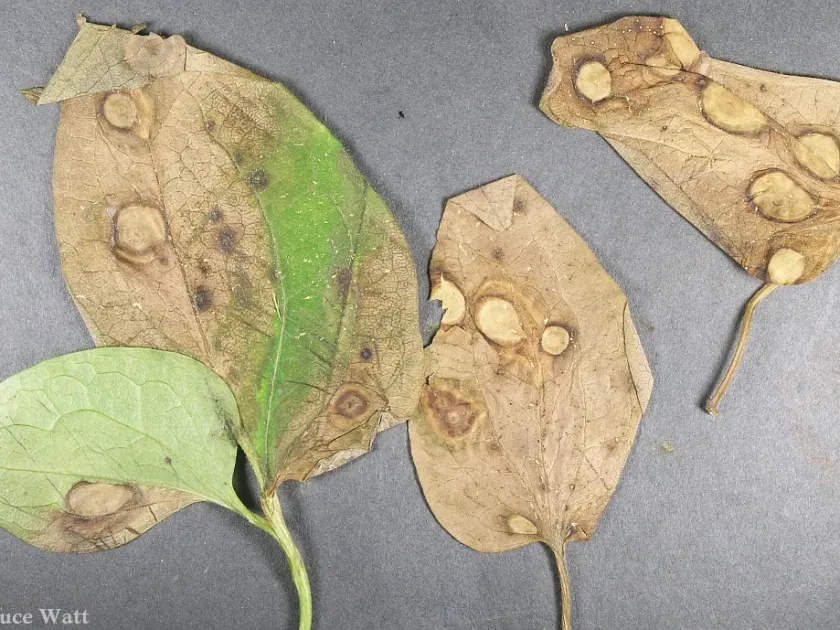
The initial symptoms of Pseudocercospora leaf spot appear on clematis leaf blades as small circular or angular spots. Initially, they have a yellowish or light brown hue, gradually darkening to a dark brown color.
In the central part of the affected areas, a characteristic fungal growth eventually forms, which represents the sporulation of the pathogen. This growth is most noticeable on the underside of the leaf but can also appear on the upper side during high humidity.
As the disease progresses, the spots tend to merge, covering significant portions of the leaf blade. The leaves begin to deform, yellow prematurely, and dry out, which significantly reduces the ornamental value of the plant.
The infection is not limited to the leaves; during severe outbreaks, the pathogen can spread to leaf petioles and young shoots. This leads to a general weakening of the plant and stunted growth.
Diagnosis of the disease is often complicated by the fact that symptoms may resemble other types of leaf spots, so a microscopic analysis of the pathogen's spores is required for accurate identification.
Pathogen
The causative agent of this disease is the phytopathogenic fungus Pseudocercospora clematidis. It is a highly specialized parasite that affects primarily plants of the Clematis genus.
The fungus belongs to the group of imperfect fungi (Deuteromycetes). It reproduces via conidia, which are spread by wind, rain splashes, or insects to the healthy tissues of neighboring plants.
The pathogen is capable of maintaining its viability in fallen infected leaves and plant debris for a long period. Soil mulch acts as the primary reservoir for the infection in the garden.
The biology of the fungus is closely tied to the seasonal growth cycle of the host plant. Several infection cycles occur during the growing season, allowing the disease to spread rapidly across the site.
The presence of specialized overwintering structures allows the fungus to successfully survive unfavorable winter conditions in temperate climates.
Conditions for development
The development of Pseudocercospora leaf spot is facilitated by periods of high air humidity and frequent rainfall. Air stagnation in dense plantings significantly accelerates the spread of spores.
The optimal temperature range for the active germination of conidia and the penetration of the fungus into plant tissues is between 20 and 25 degrees Celsius.
Poor agricultural practices, such as planting clematis too densely, hinder normal air circulation within the bush. This creates a microclimate with high humidity, which is ideal for the pathogen.
Insufficient lighting and low-hanging foliage near the ground also provoke disease outbreaks, as leaves remain wet for longer periods after rain or dew.
In dry periods, the development of the infection may slow down; however, with the onset of rainy weather, the disease quickly resumes its activity.
Why it matters
The primary damage lies in the loss of the clematis's decorative appeal, as they are prized for their lush foliage and abundant flowering. Defoliation caused by the disease ruins the visual appearance of vertical structures.
An affected plant is forced to expend significant resources on replacing its foliage, which leads to the depletion of the root system and a decrease in the clematis's overall immunity.
As a result of severe infection, the winter hardiness of the shoots is significantly reduced. A plant weakened by the fungus may not survive harsh winter months.
Flowering in diseased plants becomes sparse; flower buds may drop or fail to open completely. Nutrients do not reach the reproductive organs in sufficient amounts.
Without control measures, the infection spreads throughout the entire garden, moving to adjacent healthy bushes, which makes management more difficult and costly.
Protection
Prevention begins with the thorough removal and burning of all plant debris in the autumn. This allows for a drastic reduction in the fungal spore load on the site.
It is essential to maintain proper spacing during planting, ensuring good airflow around the bushes. Regular pruning and correct training help improve ventilation.
At the first signs of the disease, it is recommended to apply sprays of systemic and contact fungicides based on copper or specialized azoles.
- Apply treatments strictly according to the instructions in calm, windless weather.
- Rotate fungicide classes to prevent the development of resistance in the pathogen.
- Promptly remove and destroy heavily infected leaves throughout the season.
It is important to monitor overall soil health and avoid waterlogging during irrigation. Drip irrigation is preferable to overhead watering, as it does not wet the leaves.
Discussion
No discussions yet — be the first.