
Postia stiptica
Postia stiptica
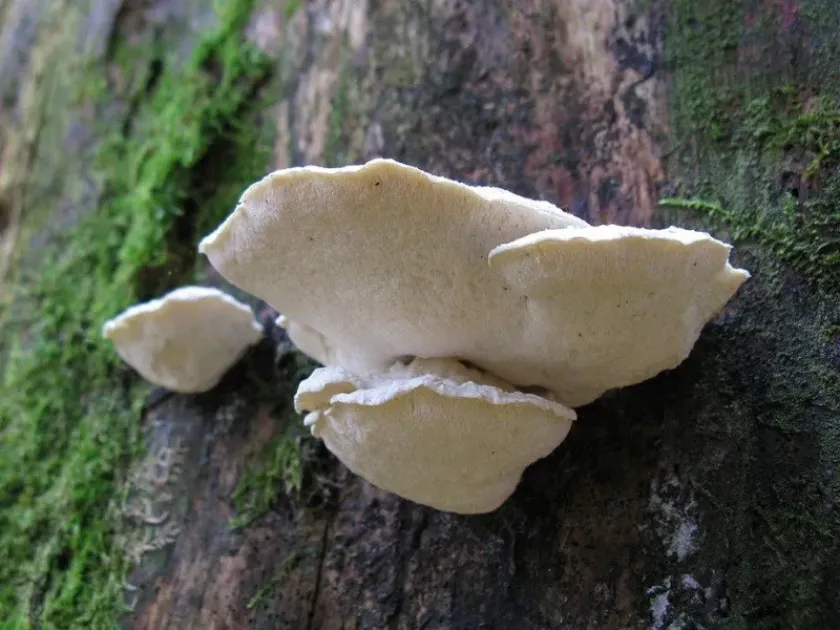
Description
Symptoms
The most visible sign of infection is the presence of white to cream-colored, fleshy, and often overlapping fruiting bodies on the surface of the bark or wood.
Infected wood exhibits a distinct brown discoloration, which deepens as the decay progresses, characteristic of brown rot fungi.
The wood eventually loses all structural integrity, splitting into characteristic cubes that are brittle and easily crumble into a fine powder when touched.
White mycelial mats or strands can often be found growing in the fissures and cracks of the decaying wood, serving as a sign of active colonization.
The name stiptica refers to the bitter or acrid taste of the fruiting bodies, which is a distinguishing feature used in field identification.
Pathogen
The causal agent is the wood-decaying basidiomycete Postia stiptica (synonym: Oligoporus stipticus). It is a well-known agent of brown cubical rot in coniferous trees.
This fungus acts primarily as a saprotroph, decomposing dead wood, but it can also colonize weakened or stressed standing trees in forest environments.
The fungus produces extracellular enzymes that selectively degrade cellulose and hemicellulose, leaving behind the dark-colored, chemically modified lignin.
Reproduction is facilitated by the formation of annual fruiting bodies that release large quantities of basidiospores, which are dispersed by air currents.
The mycelium of the fungus is aggressive and can spread rapidly through the timber, especially in environments with high humidity and limited airflow.
Conditions for development
Postia stiptica thrives in environments characterized by high relative humidity and moderate temperatures, typically found in dense forest stands.
Fungal development is promoted by stagnant air and persistent moisture, which allow spores to germinate and colonize the substrate effectively.
Mechanical injuries to the stem, caused by animal activity, storms, or logging equipment, provide essential entry points for the pathogen.
Optimal growth occurs at temperatures ranging between 15°C and 25°C, with the fungus showing high resilience to fluctuating climate conditions.
Poorly managed forest lots with large accumulations of coarse woody debris serve as primary breeding grounds for the pathogen to spread to neighboring trees.
Why it matters
The primary economic impact is the rapid degradation of valuable timber, rendering it useless for structural or industrial purposes due to the loss of physical strength.
In forest ecosystems, the fungus contributes to the decline of tree vigor, leading to increased mortality and susceptibility to other biotic and abiotic stressors.
Decayed trees are highly susceptible to breakage, which poses a physical safety risk in areas frequently visited by humans, such as parks or hiking trails.
Infestations reduce the overall commercial yield of forestry operations and necessitate costly sanitation measures to prevent the spread to healthy stands.
The destruction of wood tissues disrupts the carbon cycle within the forest, although this is part of the natural ecological succession in untouched forests.
Protection
Effective management begins with strict sanitation practices, including the timely removal of infected trees and logging residues from the site.
Silvicultural practices should focus on maintaining tree vigor and minimizing physical damage to bark during thinning or harvesting operations.
Storage of timber should prioritize elevated, dry, and well-ventilated conditions to prevent the moisture levels required for fungal growth.
- Regular monitoring of stands for early symptoms of decay.
- Application of protective sealants to stumps and large wounds.
- Prioritizing the planting of site-adapted and healthy tree species.
Chemical treatments and biological fungicides can be employed in industrial timber yards to protect fresh logs from spore colonization.
Discussion
No discussions yet — be the first.