
Postia caesia
Postia caesia
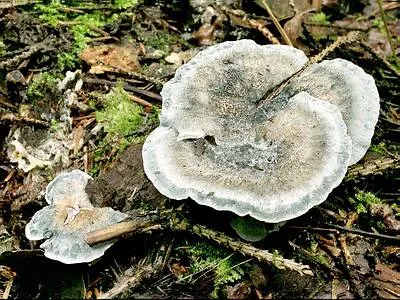
Description
Symptoms
The primary symptom of infection is the discoloration of the wood, which turns dark brown. As the decay progresses, the structural integrity of the timber is significantly compromised.
Advanced stages of decay result in cubical rot, where the wood cracks into characteristic rectangular chunks. These fragments are brittle and can easily be crushed into a fine powder by hand.
Fruiting bodies are often found on the surface of dead trunks, stumps, or fallen branches. They have a soft, fleshy texture when young and darken into a slate-blue or charcoal-grey color as they age.
Close inspection often reveals the presence of thin, white to grey mycelial mats underneath bark flakes or deep within the crevices of infected wood logs.
A distinctive, slightly earthy or musty fungal odor often emanates from heavily decayed wood, indicating the presence of active fungal metabolic processes within the heartwood.
Pathogen
Postia caesia, commonly known as the blue cheese polypore or simply a brown rot fungus, belongs to the Fomitopsidaceae family. It is a basidiomycete fungus that acts as an aggressive wood decomposer.
The fungus is characterized by its small, effused-reflexed fruiting bodies. These sporocarps often display a distinct greyish-blue or "caesious" coloration, which serves as a key diagnostic feature in the field.
The life cycle relies on the dispersal of basidiospores. Once spores land on suitable substrates—typically damaged bark or fresh wood wounds—they germinate, initiating the colonization process within the woody tissue.
The mycelium secretes specific enzymes that break down cellulose and hemicellulose. Because it leaves the lignin component largely untouched, the wood eventually takes on a dark, brittle, and cracked appearance.
While primarily associated with coniferous trees, the fungus is a specialized saprotroph. It thrives in forest ecosystems by decomposing deadwood, though it can occasionally attack living trees that are already physiologically weakened.
Conditions for development
Postia caesia requires high moisture levels for optimal growth. Wood moisture contents ranging between 30% and 50% are ideal for the rapid expansion of fungal hyphae through the cellular matrix.
Temperature plays a vital role in development, with the fungus showing maximum activity in temperate conditions, typically between 15°C and 25°C. Development slows down significantly during freezing winter temperatures.
The fungus favors shaded, humid environments. Consequently, dense forest stands or areas with high humidity and limited airflow are the most prone to colonization by this pathogen.
Physical trauma to trees, such as wind snap, frost cracks, or improper pruning, creates the entry points necessary for the fungus to bypass the tree's natural defense systems.
The presence of abundant woody debris or downed timber in the forest floor acts as a reservoir, providing a constant source of inoculum for potential spread to standing trees.
Why it matters
The primary impact of the fungus is the degradation of structural wood quality. Infected standing trees become structurally unstable, posing significant risks of windthrow during storms.
In the timber industry, Postia caesia causes significant economic losses. Wood affected by brown rot loses its commercial value as it becomes unsuitable for construction or high-quality manufacturing.
While the fungus plays an important role in forest nutrient cycling by breaking down dead matter, its activity in managed forests is detrimental as it reduces the yield of merchantable timber.
Infestation of living trees stresses the host, making it more susceptible to secondary attacks by wood-boring insects, such as bark beetles, which further accelerate the tree's decline.
By disrupting the vascular tissues and structural fibers, the fungus prevents the transport of water and nutrients, eventually leading to crown dieback and tree death.
Protection
Sanitation harvesting is the most effective management strategy. Regularly removing dead, dying, or diseased trees helps reduce the overall spore load within the forest stand.
Preventative care focuses on minimizing wounds during forestry operations. Protecting the bark from mechanical damage prevents the initial colonization by fungal spores.
Applying fungicidal sealants or protective treatments to fresh pruning wounds or logging stumps can effectively inhibit the germination of wind-borne spores.
Maintaining proper stand density is crucial. By ensuring adequate airflow and reducing local humidity, forest managers can create conditions that are less hospitable to fungal growth.
For harvested timber, storage practices should include keeping logs off the ground and ensuring sufficient ventilation to maintain wood moisture below the threshold required for fungal activity.
Discussion
No discussions yet — be the first.