
Postia
Postia
Description
Symptoms
The primary external sign of infection is the discoloration of the wood to a dark brown, accompanied by deep cracks that develop both along and across the wood grain.
In the final stages of decay, the wood loses all structural integrity, becoming brittle and easily crumbling into dust, resembling dry, charred material.
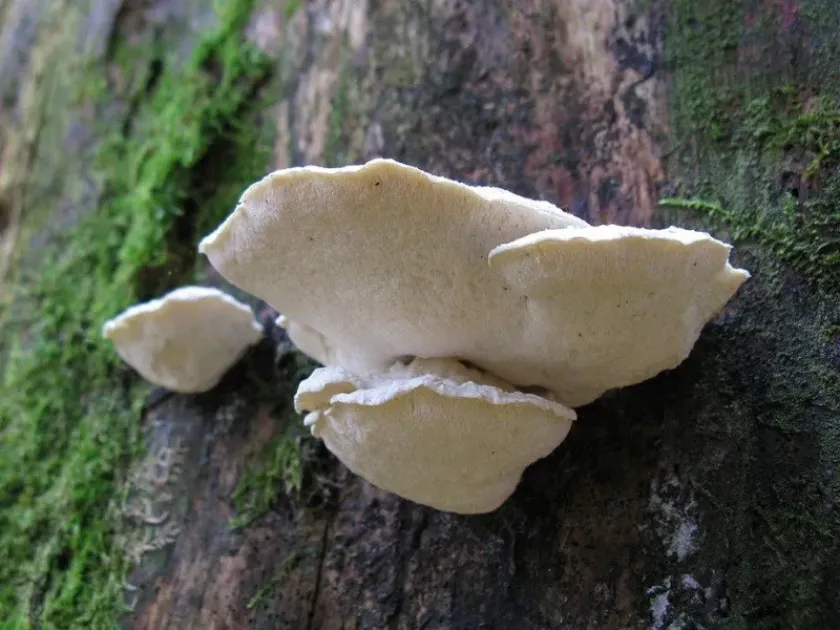
Fruiting bodies of the fungus appear on the surface of infected logs, stumps, or timber structures as white or cream-colored patches with a porous hymenophore surface.
Infected wood often emits a specific musty odor, which is typical of active fungal decomposition of organic matter.
In conifers, resin flow is frequently observed at sites of active mycelial growth, serving as the tree's defensive response to the invading infection.
Pathogen
The Postia genus (synonym Oligoporus) belongs to the Fomitopsidaceae family and consists of basidiomycete fungi responsible for wood decay. These organisms are typical agents of brown destructive rot.
Biologically, Postia acts as a saprotroph or a facultative parasite, breaking down cellulose and hemicellulose in wood. Importantly, it leaves the lignin largely intact, which gives the infected wood its characteristic dark brown appearance.
The fungal fruiting body (basidiocarp) is usually annual, with a soft or watery texture, often white or cream in color. It develops on the surface of the infected substrate and releases spores into the environment.
The mycelium of the fungus penetrates deep into the wood structure, using enzymatic systems to decompose complex carbohydrates. This allows the fungus to thrive even in environments with limited nutrient availability.
One of the most well-known species is Postia placenta, which is frequently found on conifers and serves as a model organism in wood biodegradation research.
Conditions for development
Development of Postia fungi requires high moisture content in the wood, typically above 20–25%. It is at this moisture level that the fungal enzymes function most efficiently.
Optimal temperatures for mycelial growth range from +15 to +25 degrees Celsius, although the fungus can remain viable during short-term temperature drops.
Proper aeration and access to oxygen promote more intensive development of fruiting bodies and the spread of basidiospores via wind or insects.
Moisture accumulation in wood structures, direct contact with soil, or poor ventilation in storage facilities are critical factors that trigger outbreaks.
Mechanical damage to the bark or existing fissures in construction timber significantly facilitate the entry of fungal hyphae into the deeper plant tissues.
Why it matters
The activity of the fungus leads to a total loss of structural strength in the timber, rendering it unsuitable for construction or woodworking purposes.
In forestry, Postia causes premature death of weakened trees, leading to windthrow and trunk damage, which significantly reduces the yield of marketable timber.
In warehouses and sawmills, the fungus can quickly infect large batches of lumber, causing significant financial losses for the industry.
The destruction of wood alters its chemical composition, making the resulting wood waste unusable for agricultural purposes or the production of particle boards.
Infection of living trees weakens their immune system, making them more susceptible to secondary pests such as bark beetles and longhorn beetles.
Protection
The key prevention method is maintaining wood moisture content below 20%, which is achieved through proper storage organization and effective drying techniques.
The application of wood preservatives and fungicide treatments based on copper or other active agents provides reliable protection against spore colonization.
Regular sanitary logging in forests is essential to remove infected trees and stumps, which serve as primary reservoirs for the spread of the infection.
Ensuring high-quality ventilation in facilities where timber is stored is necessary to prevent the formation of condensation and high-humidity zones.
Upon detecting the first signs of decay, it is critical to immediately isolate or dispose of infected materials to prevent the spread of spores to healthy areas.
Discussion
No discussions yet — be the first.