
Porpoloma
Porpoloma
Description
Symptoms
Signs of the presence of Porpoloma are limited to the appearance of fruit bodies in forests, meadows, or woodland edges where they thrive on decomposing organic matter.
The fruit bodies often form clusters or "fairy rings" in nutrient-rich soils.
They do not cause chlorosis, necrosis, leaf spots, or wilting on any agricultural or garden crops.
The presence of these fungi indicates high soil fertility and good aeration rather than any pathological process.
Visual inspection of surrounding plants shows no signs of growth inhibition or fungal infection damage.
Pathogen
The genus Porpoloma belongs to the family Tricholomataceae, order Agaricales. In an agronomic and phytopathological context, this object is not a plant disease.
Biologically, these are basidiomycete fungi that lead a predominantly saprotrophic lifestyle or form ectomycorrhiza with forest trees.
This genus does not act as a pathogen for agricultural crops, and therefore it is not classified as a plant disease in specialized literature.
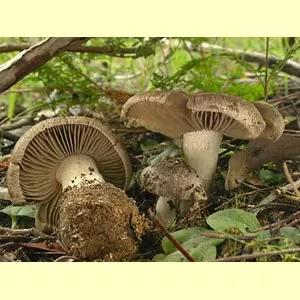
Morphologically, the fruit bodies are characterized by a cap-and-stalk structure, often with a distinctive scaly appearance on the cap surface.
The genus includes several species found in leaf litter, which do not infect the living tissues of cultivated plants.
Conditions for development
The development of Porpoloma fungi is directly dependent on soil moisture levels and the presence of organic debris.
Optimal fruit body production requires moderate temperatures and cool, rainy weather, typically observed in the autumn months.
They prefer substrates rich in organic residues, where they actively decompose cellulose and lignin.
Unlike phytopathogenic fungi, their growth is not limited by standard plant protection measures.
Specific forest ecosystem conditions provide the most favorable environment for representatives of this genus.
Why it matters
Fungi of the genus Porpoloma pose no threat to the agricultural sector or gardening.
They are not parasites; therefore, they do not reduce crop yields or impair the quality of agricultural produce.
Instead, by participating in humification processes, they contribute to the improvement of soil fertility.
The lack of harm excludes this genus from the list of objects requiring pest or disease control.
Many species of this genus are beneficial, as they participate in the natural nitrogen mineralization cycles within the soil.
Protection
No protection measures or prophylactic methods are required for Porpoloma, as they are not plant diseases.
The application of fungicides to control these fungi is economically unjustifiable and ecologically unnecessary.
If the presence of mushrooms is unwanted, mechanical removal of the fruit bodies along with the mycelium from the topsoil layer is sufficient.
It is recommended to maintain natural soil biodiversity by avoiding the excessive use of chemicals.
It is important to distinguish between beneficial forest mycobiota and real phytopathogens for rational garden and field management.
Discussion
No discussions yet — be the first.