
Porpidiaceae lichens
Porpidiaceae
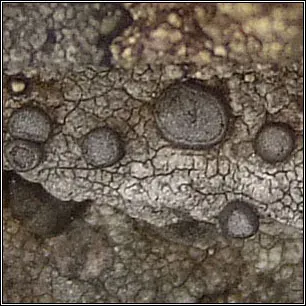
Description
Symptoms
The primary symptom of lichen colonization is the appearance of rigid, tightly adhered crusty growths on the trunks and main branches of trees.
The color of these growths can vary widely based on light exposure and moisture, typically ranging from greyish to brownish or dull greenish hues.
The bark surface where these lichens localize becomes rough, and in cases of heavy infestation, large portions of the branches may be entirely obscured by the crust.
These organisms often colonize the northern or shaded sides of tree trunks, where moisture remains longest after rainfall or morning dew.
Lichens from this family are characterized by their dry, hardened structure that cannot be easily scraped off without damaging the outer cork layer of the bark.
Pathogen
The Porpidiaceae family consists of lichens, which are complex symbiotic organisms formed by a fungus and an algae partner. In agronomy, they are not classified as infectious plant pathogens.
These organisms are epiphytes that use the bark of woody plants merely as a substrate for attachment. They do not possess a root system capable of penetrating deep into plant tissues and do not feed on plant sap.
Biologically, they are crustose lichens that grow tightly against the bark surface, forming distinct crusty patches, often with visible reproductive structures known as apothecia.
Although they are not true parasites, their presence is often an indicator of slow plant growth and reduced vigor, as healthy, fast-growing trees naturally shed old bark.
The development of Porpidiaceae in orchards is typically associated with high ambient humidity and lack of proper canopy management, which keeps the bark surfaces consistently damp.
Conditions for development
The establishment of Porpidiaceae depends heavily on orchard microclimate, particularly consistent high humidity and lack of adequate air circulation within the canopy.
A key factor facilitating colonization is the accumulation of aged, dead bark that is not being shed quickly enough due to slow radial growth of the tree.
Densely planted orchards with overlapping crowns create shaded, humid environments that are highly conducive to the spreading of lichen spores.
Poor horticultural practices, including infrequent pruning and neglected sanitation, allow these epiphytes to persist even on younger trees that are experiencing growth stress.
The optimal periods for the spread of these organisms are cool, moist spring or autumn seasons, which keep the bark surface damp for extended durations.
Why it matters
While not direct parasites, Porpidiaceae can be indirectly harmful by creating ideal overwintering habitats for insect pests like scale insects and mites, as well as fungal spores.
A dense layer of lichens may restrict gas exchange through the bark lenticels, which can slightly impede the natural respiration processes of the woody tissue.
Persistent coverage of the trunk can negatively impact the general physiological state of the tree, particularly when it is already struggling with environmental or pest stress.
The extensive presence of these lichens serves as a warning sign to growers that the trees lack sufficient vigor and require corrective horticultural measures.
In long-term cases, the suppression of normal bark physiological functions can contribute to a decline in tree vitality and potentially localized dieback of surface tissues.
Protection
The most effective strategy for lichen management is regular sanitary pruning, which improves light penetration and air circulation throughout the tree structure.
Mechanical removal of old, dead bark and the lichen crusts themselves using wire brushes or special scrapers is an essential practice for infected trees.
After mechanical cleaning, it is recommended to apply a disinfectant treatment to the trunks and base of branches using copper-based or other fungicide solutions.
- Late autumn or early spring spraying with a 3-5% iron sulfate solution.
- Whitewashing of trunks with lime milk mixed with copper preparations for surface disinfection.
- Optimizing fertilizer regimes to stimulate active bark growth and natural shedding of old layers.
A comprehensive approach combining orchard hygiene and tree vigor management is the most effective way to eliminate lichens and prevent their return to the orchard.
Discussion
No discussions yet — be the first.