
Porpidia hydrophila
Porpidia hydrophila
Description
Symptoms
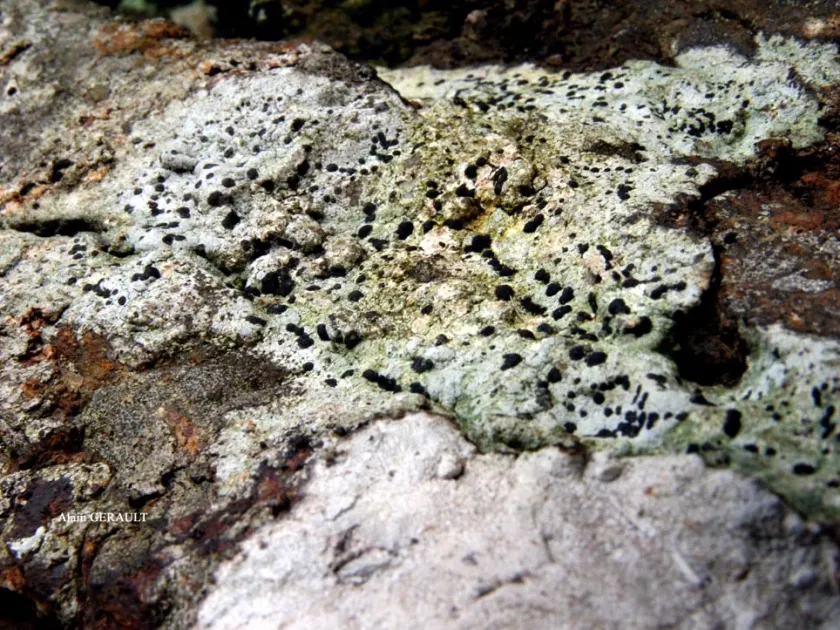
Porpidia hydrophila typically manifests as a thin, tightly adherent thallus growing on stone, concrete, or brick surfaces of agricultural buildings.
The lichen appears as a greyish or whitish crust, often exhibiting a cracked or fragmented structure that gives the affected surface a weathered look.
A distinctive feature is the presence of apothecia—the reproductive structures appearing as tiny black discs or dots embedded within the lichen body.
It prefers high-moisture environments, frequently appearing on foundations, wall bases, and drainage channels where water tends to accumulate.
As the colony matures, it can spread extensively, covering large sections of the material and indicating long-term dampness in those specific areas.
Pathogen
Porpidia hydrophila is not a crop pathogen; it is a lichen, which is a symbiotic organism composed of a fungus and an alga or cyanobacterium.
The fungal component provides the structural framework and attachment to the substrate, while the alga performs photosynthesis to supply energy.
In an agronomic context, it is classified as a biodeterioration agent that colonizes artificial materials rather than attacking living plant tissues.
The lichen survives through its ability to withstand extreme environmental conditions, making it a persistent inhabitant of outdoor masonry and concrete.
Propagation occurs via spores or thallus fragments, which are easily dispersed by wind and water, allowing the lichen to colonize new structural surfaces.
Conditions for development
The primary driver for the development of Porpidia hydrophila is consistent high surface moisture, particularly in shaded or poorly ventilated areas.
It thrives on porous substrates like concrete and stone, which can retain water for extended periods, providing a stable base for the lichen to grow.
This species is highly adaptable to various environmental conditions and can colonize both neutral and slightly alkaline artificial materials successfully.
High humidity and prolonged rainy seasons significantly increase the rate of spore germination and overall colonization of agricultural infrastructure.
Neglected surfaces with accumulation of debris and micro-cracks provide the necessary niches for the lichen to anchor and establish its initial colonies.
Why it matters
The main harm caused by this lichen is the accelerated degradation of building materials through the secretion of organic acids that erode concrete.
By inhabiting surface micro-cracks, the lichen gradually expands them as it grows, which compromises the structural integrity of the affected surface.
The presence of a moist, lichenous crust encourages the growth of secondary microorganisms, such as molds, which further accelerate the decay of the material.
On farms, this damage can lead to compromised waterproofing of buildings, increasing maintenance requirements and potential risks to stored goods.
Severe infestations create aesthetic and sanitation issues, necessitating periodic cleaning and the application of protective coatings to maintain the structures.
Protection
Mechanical removal using stiff brushes or high-pressure water jets is the most common and effective method for cleaning surfaces of lichen infestations.
After mechanical cleaning, the application of specialized biocides or fungicides is recommended to kill lingering spores and prevent immediate regrowth.
Implementing regular inspection and maintenance routines allows for the early removal of colonies before they cause significant damage to masonry.
Improving site drainage and ventilation around agricultural structures is essential to reduce the moisture levels that promote lichen establishment.
Treating susceptible surfaces with high-quality water-repellent (hydrophobic) coatings significantly reduces the ability of the lichen to colonize structures.
Discussion
No discussions yet — be the first.