
Porpidia
Porpidia
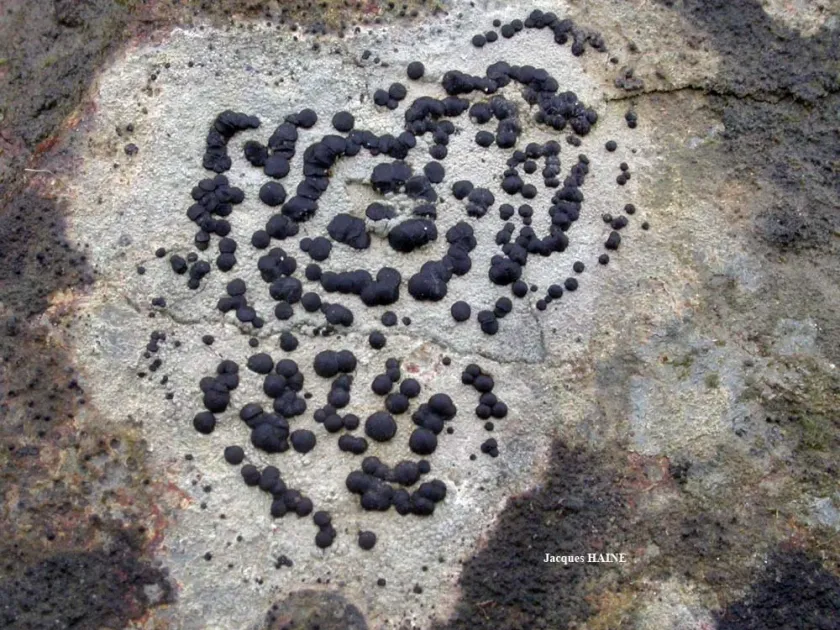
Description
Symptoms
Porpidia is a genus of crustose lichens, which appear as thin, hardened, and often grain-like or cracked coatings on a substrate such as tree bark or rocks.
The visual signs of its presence include patchy, grayish or yellowish discolorations on the surface of the bark, which can look like a permanent stain.
Small, disc-like structures called apothecia, which are usually black or very dark, are visible upon close inspection as the fruiting bodies of the fungus component.
Unlike parasitic infections, these patches do not cause lesions, cankers, or rotting of the underlying wood, as the lichen remains strictly on the outer bark layer.
When observing these growths, they are easily distinguishable from fungal pathogens by their static nature and lack of expansion into live tissues.
Pathogen
Porpidia is not a plant disease or a pathogen; it is a composite organism formed by a symbiotic relationship between a fungus and a photosynthetic partner.
This genus belongs to the family Lecideaceae and exists as an epiphyte, meaning it uses the plant only for physical support without extracting any nutrients.
The organism derives its nutrition primarily from atmospheric moisture, dust, and minerals, making it completely independent of the host tree’s sap flow.
Biologically, it plays a role in the ecosystem by contributing to biodiversity and acting as a bioindicator for air quality in the surrounding environment.
Classifying Porpidia as a disease is a common misunderstanding; in reality, it is a harmless colonizer that thrives in stable conditions.
Conditions for development
The development of Porpidia requires relatively high air humidity and a stable substrate, which is why it is often found on the bark of long-lived, mature trees.
It prefers environments with clean air, as most lichen species of this genus are highly sensitive to industrial pollution and sulfur dioxide levels.
Adequate but diffused sunlight is necessary for the photosynthetic component of the lichen to thrive, allowing the organism to slowly expand over years.
The texture of the bark is a limiting factor; rough, older bark provides better attachment and surface area for the lichen to establish its crustose body.
It can remain dormant during periods of extreme dryness or cold, resuming its metabolic activities as soon as favorable weather conditions return.
Why it matters
There is no direct economic harm caused by Porpidia, as it does not negatively impact the growth, vitality, or yield of the trees it colonizes.
In some contexts, a dense coverage of lichens might be perceived as a sign of neglect, but it does not threaten the physiological function of the host plant.
The presence of lichen may occasionally harbor small insects, which might be a concern for very sensitive orchards, though it is rarely a practical problem.
The myth that Porpidia damages trees stems from the visual change in bark appearance, which is often misattributed to pathological processes.
Overall, the impact on trees is neutral; it is simply a passive occupant of the bark surface that does not interfere with the plant’s health.
Protection
Since Porpidia is not a pathogen, specific control measures are typically not required unless there is a specific cosmetic or orchard management preference.
Routine horticultural practices, such as maintaining tree health and regular light pruning, naturally prevent excessive lichen buildup by improving airflow.
Whitewashing tree trunks with a lime-based solution is a traditional and effective method to discourage lichens from settling on the bark surface.
Mechanical cleaning using soft brushes can be done during dormancy if the removal of the lichen layer is desired for sanitation purposes.
No chemical pesticides or fungicides are necessary, as treating for this harmless lichen would be an inefficient use of agricultural resources.
Discussion
No discussions yet — be the first.