
Porphyrellus porphyrosporus
Porphyrellus porphyrosporus
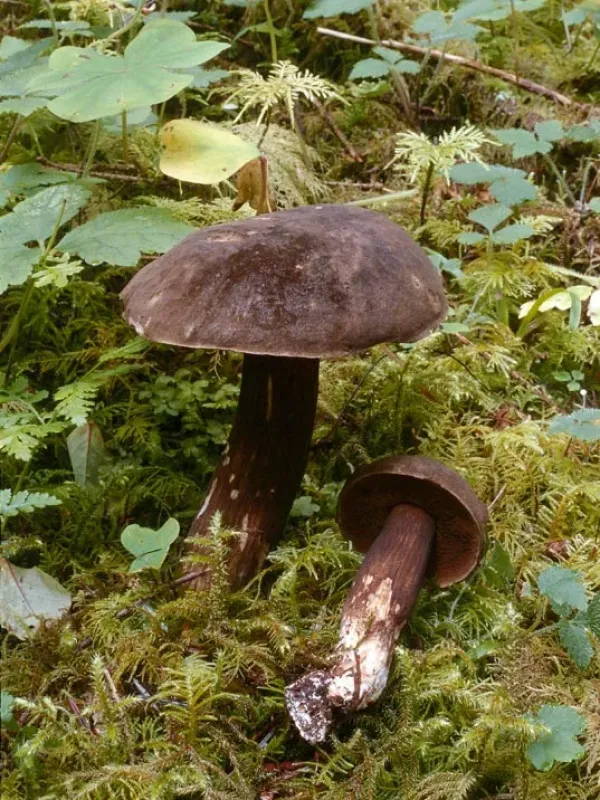
Description
Pathogen
Porphyrellus porphyrosporus, commonly known as the dusky bolete, is a fungus within the Boletaceae family. It is vital to clarify that this organism is not a plant disease, pathogen, or pest affecting agricultural crops.
The fungus functions primarily as a mycorrhizal partner in forest ecosystems. It establishes beneficial symbiotic relationships with the root systems of various tree species, aiding in the absorption of minerals and water from the soil.
Morphologically, the fungus is distinguished by its dark, smoky-brown cap and a stem that often displays a similar color. The spore print is characteristically purple-brown, which provides the inspiration for its scientific name.
There is no evidence of Porphyrellus porphyrosporus causing damage to plant tissues. On the contrary, it contributes to the overall vigor of forest stands by extending the root systems through its fungal network, or mycelium.
Scientific interest in this species lies in its role within the forest biome rather than plant pathology. It acts as a bioindicator of healthy, stable forest environments and is not a concern for farmers or horticulturists.
Conditions for development
This species thrives in temperate forest zones, favoring coniferous or mixed woodlands. It is particularly common in areas with acidic, nutrient-rich soils that have high levels of moisture and deep leaf litter.
Environmental conditions such as high humidity and stable autumnal temperatures are critical for the formation of its fruiting bodies. The fungus is generally absent in dry or highly disturbed, exposed forest clearings.
Soil quality is a major factor in the distribution of the dusky bolete. It avoids soils contaminated with synthetic fertilizers or heavy pesticides, as these chemicals can inhibit the growth of the sensitive fungal mycelium.
The reproduction and dispersal of Porphyrellus porphyrosporus are driven by wind-dispersed spores. Once a spore lands in a suitable environment near the roots of a potential host tree, it begins to colonize the substrate.
Sustainability of the habitat is essential for this fungus. Proper forest management practices, such as preserving old-growth sections and avoiding excessive soil compaction, help maintain stable populations of this ecologically important organism.
Discussion
No discussions yet — be the first.