
Porostereum
Porostereum
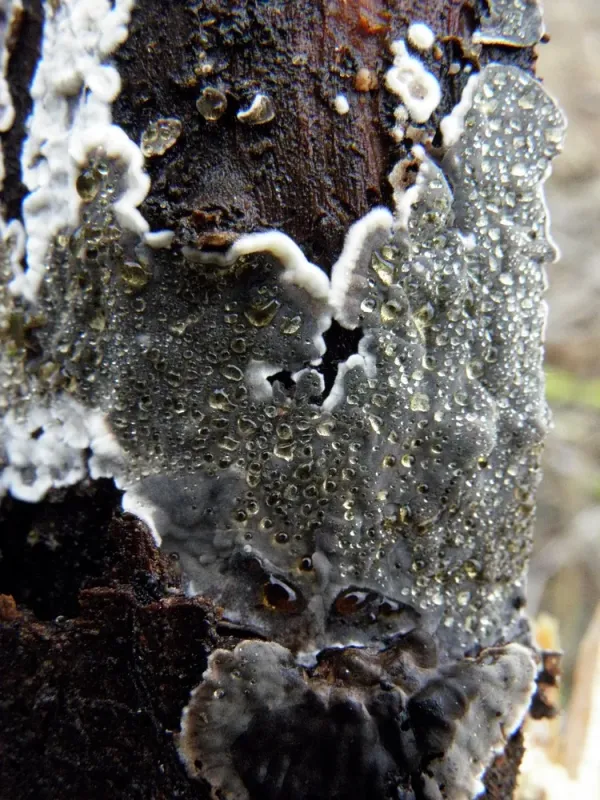
Description
Symptoms
The presence of Porostereum is marked by the development of characteristic fruit bodies on the trunks or branches. These are often flat, crust-like formations with shades ranging from yellowish to deep brown.
Internally, the wood undergoes structural degradation, becoming brittle and exhibiting signs of white rot. As the fungus consumes the wood, the affected areas lose their ability to support the tree, leading to breakages.
Foliage on affected branches often shows symptoms of distress, such as premature yellowing, wilting, and thinning of the crown. This occurs because the fungus disrupts the transport of water and nutrients.
Cracks, fissures, or localized sunken areas on the bark are common entry points. In some cases, trees may exhibit abnormal resin or sap flow (gummosis) as a defensive attempt to compartmentalize the infection.
As the infection progresses, entire limbs may die off. The visual impact on the tree is significant, with canopy thinning and a general lack of vigor leading to eventual decline.
Pathogen
The disease is caused by fungi of the genus Porostereum, which are classified as wood-decaying basidiomycetes. These fungi are potent xylotrophs capable of decomposing the cellular components of wood, such as cellulose and lignin.
The fungal mycelium invades the tree through bark wounds, frost cracks, or pruning cuts. Once established, it colonizes the xylem, gradually destroying the structural integrity of the woody tissue.
The fungus produces visible fruit bodies on the surface of the bark, which typically appear as leathery or cork-like crusts. These structures are responsible for the dispersal of spores that can infect neighboring plants.
Porostereum is known for its persistence; it can act as a saprotroph on dead wood and transition to a pathogenic phase when it encounters a weakened or injured living host.
The biological cycle of this fungus involves the wind-borne or insect-assisted transmission of spores, making it a challenging pathogen to contain in a garden or forest setting.
Conditions for development
Favorable conditions for Porostereum development include high humidity and moderate temperatures. Prolonged periods of rainfall or overcast weather significantly accelerate spore germination and mycelial spread.
Mechanical damage is a primary facilitator of the disease. Pruning without proper sanitation, storm damage, or pest-induced wounds provides the ideal environment for the fungus to establish itself.
Poorly managed sites with accumulations of dead wood, stumps, or forest debris serve as permanent reservoirs for fungal spores, facilitating rapid spread to healthy specimens.
Environmental stress factors, such as soil compaction, poor drainage, or nutrient deficiencies, weaken the tree's natural defense mechanisms, making it more susceptible to infection.
Dense planting schemes that reduce airflow can lead to increased moisture retention on the bark, creating a favorable microclimate for the fungus to colonize and form fruit bodies.
Why it matters
The primary danger of Porostereum is the structural destruction of the wood. This decay compromises the tree's stability, creating significant safety hazards due to potential limb or trunk failure.
Fruit and timber productivity is severely impacted. In orchards, infected trees often show reduced yields and degraded fruit quality, eventually necessitating the removal of the entire specimen.
Because the fungus penetrates deeply into the heartwood, systemic control is extremely difficult. Once the infection is well-established, it is often impossible to save the infected part of the tree.
The disease acts as a catalyst for further decline by attracting secondary pests and wood-boring insects, which exploit the weakened tree, thus accelerating its death.
The presence of Porostereum creates a continuous source of infection for the surrounding landscape, threatening not only the infected tree but the health of the entire orchard or garden ecosystem.
Protection
Sanitation is the cornerstone of control. All infected branches or dead trees must be removed and destroyed (preferably burned) to eliminate the source of spores.
Pruning tools must be sterilized with alcohol or disinfectant solutions between each tree to prevent the mechanical transmission of fungal spores during maintenance work.
Applying protective wound sealants or fungicidal pastes to all pruning cuts and accidental injuries is essential to prevent spores from entering the wood.
Maintaining tree health through proper fertilization and irrigation helps trees maintain their natural vitality, providing a better defense against fungal ingress.
- Regular site cleaning to remove stumps and deadwood.
- Using white latex paint or specialized pastes on bark wounds.
- Monitoring for and controlling wood-boring insect populations.
Discussion
No discussions yet — be the first.