
Poronia punctata
Poronia punctata
Description
Symptoms
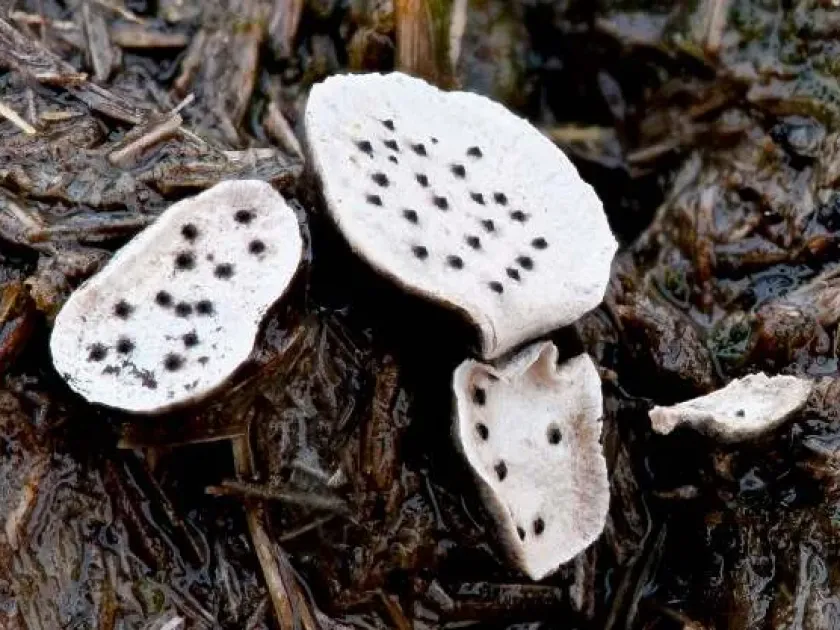
The most visible sign of the fungus is the appearance of small, nail-shaped structures emerging from the surface of the dung.
The tops of these "nails" are marked with small black dots, which are the ostioles—pores used for the release of fungal spores into the air.
Typically, these structures appear in clusters. They are often cream or white in color, contrasting sharply with the black, pin-prick-like openings on the surface.
As the fruiting body matures, it may harden and darken. The size of these bodies is generally small, usually reaching less than 10 millimeters in height.
Recognition is easy due to the unique shape, which resembles a tiny, white-topped mushroom, distinct from other common molds found on decaying material.
Pathogen
Poronia punctata is a rare species of coprophilous fungus belonging to the Xylariaceae family. It primarily thrives on the dung of herbivorous animals, such as horses and cattle.
The fungus is classified as a saprotroph, meaning it gains nutrients by breaking down organic matter rather than attacking living plant tissues.
Its life cycle involves the formation of a stromata—a specialized structure that acts as a pedestal for its reproductive organs. This structure is firm and compact.
Inside the upper part of the stroma, the fungus develops perithecia, which contain asci. These asci house the ascospores responsible for the dispersal of the species.
Biological activity of the mycelium is centered on the decomposition of organic fibers within the dung, playing a specific role in nutrient cycling.
Conditions for development
The primary condition for the development of Poronia punctata is the presence of undisturbed dung left by herbivores in a pasture setting.
High relative humidity and moderate temperatures are essential for the mycelium to fruit effectively during the growing season.
The fungus is highly sensitive to chemicals, particularly anthelmintics (deworming drugs) used in livestock, which often sterilize the dung and prevent fungal growth.
Soil and environmental stability are key; the fungus does not tolerate high-disturbance areas where dung is frequently broken or turned over by machinery.
It prefers temperate climates where the environmental conditions remain consistent throughout the period of its reproductive phase.
Why it matters
Poronia punctata causes absolutely no harm to agricultural crops. It does not possess any phytopathogenic properties and does not affect plant health.
The fungus acts exclusively as a decomposer of animal waste. It helps reduce the accumulation of dung on pastures by converting it into simpler organic components.
Because it is a saprotroph, it does not pose a threat to cereal crops, vegetables, or forage grasses. It is strictly limited to the substrate of herbivore waste.
In many regions, it is considered a conservation interest species because it indicates a healthy, chemical-free ecosystem where biodiversity is preserved.
There is no economic damage associated with this fungus; therefore, it is classified as a beneficial or neutral organism within the agricultural context.
Protection
No protective measures are required for Poronia punctata as it is not a pest or a disease agent. It does not require chemical or mechanical control.
If management of pasture waste is needed, standard agricultural practices like harrowing or collecting manure are sufficient to disperse the habitat of the fungus.
Rotational grazing systems can naturally regulate the density of dung, which effectively manages the presence of coprophilous fungi without specific intervention.
Because the fungus is naturally rare, it is often protected in many ecological regions rather than controlled, as it serves as an indicator of pasture health.
For an agronomist, the presence of this fungus should be viewed as a sign of minimal chemical usage on the livestock, rather than a threat to be managed.
Discussion
No discussions yet — be the first.