
Poria incrassata
Poria incrassata
Description
Symptoms
The primary visual indicators of an infestation are yellowish or brownish leathery, fleshy fruiting bodies. These are often tucked away in dark, damp corners where they can grow undisturbed.
Extensive branching rhizomorphs, resembling heavy cables or cords, are often found crawling over wood, concrete, or stone surfaces. These structures are a clear warning sign of an active infestation nearby.
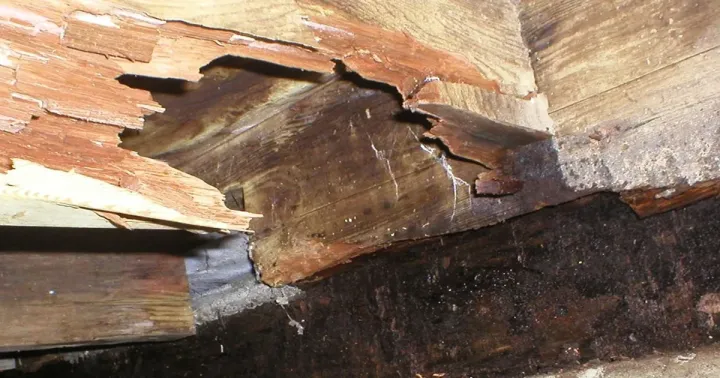
Infected timber typically darkens and becomes extremely brittle. As it dries, the wood cracks into characteristic rectangular, cube-shaped pieces that crumble easily under light pressure.
A persistent, musty, or earthy odor is often associated with the presence of this fungus. This smell is frequently reported by homeowners long before the fruiting bodies become visible, indicating an established infestation.
Structural distortion is a common symptom in later stages. Sagging floorboards, misaligned door frames, and spongy wood textures are clear indicators that the integrity of the support beams has been severely compromised.
Pathogen
Poria incrassata, also scientifically known as Serpula incrassata, is one of the most aggressive wood-decaying fungi. It is a basidiomycete fungus responsible for rapid and severe brown rot in timber.
The pathogen spreads through microscopic spores that travel via air currents or water. Once it finds a suitable environment, the mycelium penetrates deep into the cellular structure of the wood, causing a rapid breakdown of structural components like cellulose.
A unique biological feature of this species is the production of thick rhizomorphs. These root-like mycelial strands are capable of transporting moisture from external water sources to dry wood, enabling the fungus to thrive in otherwise unsuitable locations.
It affects both coniferous and deciduous woods. Its ability to thrive in enclosed spaces, such as subfloors, wall voids, and basements, makes it a major threat to buildings and structural infrastructure.
Unlike many other decay fungi, Poria incrassata can adapt its environment to its needs. Once established, it can sustain itself and continue degrading timber even if the initial moisture source is partially mitigated.
Conditions for development
High moisture content is the critical requirement for the growth of this fungus. Leaky pipes, roof malfunctions, high humidity from poor ventilation, or direct soil contact are the most common triggers for an outbreak.
The optimal temperature range for rapid mycelial development is between 20 and 30 degrees Celsius. Within this range, the fungus can colonize and destroy wooden structural members with alarming speed.
Direct contact between wooden elements and raw ground or masonry is a major risk factor. This connection provides the fungus with the essential moisture required to initiate its life cycle.
Stagnant air in enclosed spaces leads to the accumulation of humidity. Poor airflow prevents wood from drying out, creating a stable, moist environment that is ideal for the germination of fungal spores.
The lack of proper chemical treatment and protection of the timber makes it susceptible to infection. Once the wood's natural resistance is lowered due to moisture, colonization is virtually guaranteed.
Why it matters
The primary danger posed by Poria incrassata is its ability to compromise the structural integrity of a building in a very short time. It can cause a collapse of floor systems and load-bearing walls within months.
Because the fungus often spreads within walls or under floors, the damage is typically hidden. By the time it is visible, the degradation of the timber is often extensive and requires complete replacement.
Economic impacts are significant. Repairing damage caused by this fungus is often costly, requiring not just wood replacement but also structural remediation and professional moisture management solutions.
The fungus can cause secondary damage by affecting insulation materials and other surrounding building components, leading to a overall loss of building efficiency and safety.
Exposure to fungal spores can also impact indoor air quality. Residents may suffer from allergic reactions or respiratory issues when high concentrations of spores are released from mature fruiting bodies.
Protection
The foundation of effective control is moisture management. Ensuring that all wooden structural elements remain dry and isolated from direct contact with soil or damp masonry is mandatory.
Proper ventilation is essential. Installing adequate crawlspace ventilation and ensuring that moisture sources are addressed promptly helps to keep timber moisture levels below the threshold necessary for fungal growth.
If an infestation is discovered, all affected wood must be removed immediately. It is recommended to cut away an additional 50-100 centimeters of sound wood beyond the visible limit of the fungus to ensure no mycelium remains.
Post-removal, the area should be treated with deep-penetrating, high-quality wood preservatives and fungicides. This treatment is necessary to inhibit any remaining spores and protect the surrounding environment.
Regular building inspections are the best strategy for long-term prevention. Monitoring critical zones such as plumbing junctions, foundation walls, and rooflines helps identify and resolve potential problems before they become severe.
Discussion
No discussions yet — be the first.