
Polyblastia
Polyblastia
Description
Symptoms
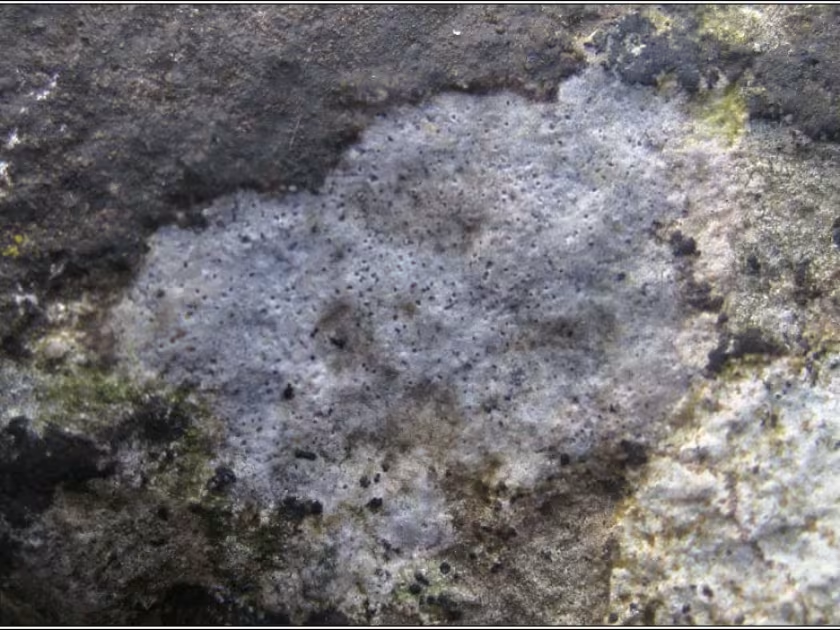
The primary symptom of Polyblastia presence is the appearance of minute, dark, gritty-looking spots on the bark of trees. These are the perithecia of the fungus, often appearing black or dark brown.
The affected areas of the bark may exhibit a slightly rough or crusty texture. Unlike decay-causing fungi, this does not result in soft, rotting wood or significant tissue necrosis.
If viewed under a magnifying glass, the fruiting bodies show a distinct pore-like structure. They are often clustered together, forming small colonies that stand out against lighter-colored bark.
In wet conditions, these structures become more visible and may slightly change color. During dry periods, they appear dormant and dry, making them harder to detect.
No systemic signs such as leaf wilting, canopy thinning, or limb dieback are typically associated with this fungus. Its presence is largely localized to the surface of the plant's outer skin.
Pathogen
Polyblastia is a genus of fungi belonging to the Ascomycota division. Many species within this genus are lichen-forming, living in a symbiotic relationship with algae, while others function as specialized saprotrophs or surface-dwelling organisms on rocks and wood.
The fungus is characterized by the production of perithecia, which are small, dark fruiting bodies embedded within the bark or the substrate. These structures release spores through an opening known as an ostiole.
Biologically, Polyblastia is not an aggressive plant pathogen. It typically thrives on the outer layer of the bark, utilizing existing surface debris and moisture rather than actively decaying the living tissues of the host plant.
The lifecycle depends on the accumulation of environmental moisture and the availability of suitable substrates. It is commonly found in temperate and cold regions where moisture levels remain consistent.
From an agricultural standpoint, it acts more as an epiphyte than a disease agent. However, in dense tree populations, it can become a notable component of the surface microflora.
Conditions for development
High relative humidity is the key factor for the development of Polyblastia. The fungus requires persistent moisture, such as fog or frequent rainfall, to complete its reproductive cycle.
Cooler temperatures are preferred by this organism. It is well-adapted to temperate climates, showing very little growth during hot, dry summer months.
The fungus is highly sensitive to air pollution. Its presence on trees is often interpreted by ecologists as a sign of high air quality and low sulfur dioxide concentrations.
Poor ventilation within an orchard or garden provides a favorable microclimate. Dense canopies that trap moisture near the trunk encourage the establishment of these fungal colonies.
Old, mature trees with deeply furrowed and weathered bark provide the best habitats, as these surfaces offer protection and stability for the fungal mycelium.
Why it matters
The overall harm caused by Polyblastia is negligible for agricultural production. It does not penetrate deep enough into the tree to affect water or nutrient transport.
The main issue is the modification of the bark surface. By creating a textured layer, it may provide shelter for smaller pests like mites or various insects, which can complicate pest control strategies.
Excessive coverage might theoretically interfere with the natural gas exchange of the tree bark, though this impact is generally too localized to cause measurable decline in growth.
In ornamental landscaping, the presence of dark fungal spots on tree trunks can be seen as an aesthetic defect, reducing the visual value of high-maintenance specimens.
In summary, it is rarely an economic threat. Most agronomic interventions focus on maintaining tree health to naturally limit the expansion of such surface organisms.
Protection
Specific fungicidal treatments are rarely needed for Polyblastia. Standard cultural practices are generally sufficient to manage its spread and prevent heavy colonization.
Mechanical cleaning of the bark using a stiff brush can effectively remove established colonies. This is the most direct and eco-friendly method for cleaning trunks.
Applying lime wash to the trunks in the spring helps sanitize the bark surface. The alkaline environment created by the lime inhibits the development of fungal spores.
Pruning to improve air circulation and light penetration into the canopy helps dry out the trunks, making the environment unfavorable for the fungus.
- Regular bark inspection and cleaning.
- Spring lime painting of tree trunks.
- Sanitary pruning to increase light and airflow.
- Maintaining tree vigor through proper fertilization.
Discussion
No discussions yet — be the first.