
Poinsettia phytoplasma proliferation
Poinsettia free-branching phytoplasma
Description
Symptoms
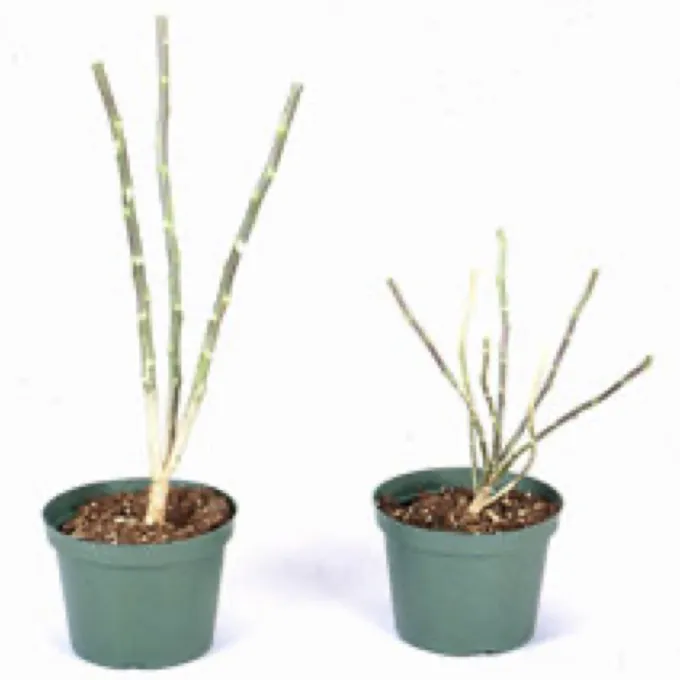
The most distinctive sign is the extreme "free-branching" or excessive proliferation of lateral shoots. The plant appears unusually dense, with shoots emerging from almost every leaf axil.
Affected plants exhibit symptoms of stunting. Internodes are significantly shortened, and the overall size of the plant remains smaller than that of healthy cultivars of the same age.
Leaves on infected shoots often display chlorosis, deformation, or reduced size. The foliage may appear crinkled or irregular, detracting from the natural aesthetic of the Poinsettia.
Bract development is severely impaired. The signature colored bracts may fail to reach their full intensity, remain green, or develop in an asymmetrical pattern, rendering the plant non-marketable.
In severe cases, the plant develops a "witches' broom" appearance, where an chaotic mass of thin, weak shoots obscures the main stem and disrupts the desired commercial shape.
Pathogen
The disease is caused by specialized phytoplasmas, which are wall-less prokaryotes residing in the phloem tissue of the host plant. These pathogens are obligate parasites that cannot replicate outside a living host or insect vector.
Transmission occurs primarily through the propagation of infected vegetative material. If the mother plant carries the pathogen, all cuttings derived from it will inherit the infection, perpetuating the disease cycle.
Leafhoppers act as the main biological vectors in greenhouses. They acquire the phytoplasma while feeding on infected sap and transmit it to healthy plants during subsequent feeding events.
The phytoplasma interferes with the hormonal regulation of the plant, specifically by disrupting the balance of cytokinins and auxins. This chemical manipulation forces the activation of dormant lateral buds.
Unlike viral diseases, phytoplasma infections in Poinsettia are not mechanically transmitted by standard pruning tools, unless there is a grafting procedure involved that allows direct phloem contact.
Why it matters
The primary impact of this disease is the complete loss of commercial value. Plants exhibiting excessive proliferation do not conform to aesthetic standards and are rejected by consumers and retailers.
Phytoplasma infection compromises the plant's physiological vigor. The metabolic strain caused by excessive branching leaves the plant more susceptible to opportunistic pathogens, including root rot fungi.
The disease creates a persistent threat in greenhouse operations. Since it is systemic, it necessitates the destruction of infected batches, leading to significant financial losses for nurseries.
Inefficient resource utilization occurs because the plant directs energy into producing excessive shoots instead of developing high-quality blooms, leading to reduced overall productivity.
The presence of the disease necessitates increased labor costs for sanitation, monitoring, and the disposal of infected material, adding an extra layer of operational expenses.
Protection
The cornerstone of disease management is the use of healthy, tissue-culture-derived, certified planting material. Sourcing from reputable, disease-free stock is the only reliable preventive measure.
A rigorous insect control program is essential. Managing leafhopper populations through both chemical application and physical barriers (such as insect-proof screens) is critical for breaking the transmission cycle.
Early identification and culling are mandatory. Any plant showing signs of abnormal branching should be immediately removed from the greenhouse and destroyed to prevent spreading the pathogen.
Routine cleaning and sanitation of the greenhouse environment help minimize the risk of secondary infestation and maintain a clean environment for healthy propagation.
Staff should be regularly trained to recognize the subtle early symptoms of proliferation to ensure that infected plants are identified and isolated before they can serve as a reservoir for further spread.
Discussion
No discussions yet — be the first.