
Powdery mildew of cucurbits
Podosphaera fusca
Description
Symptoms
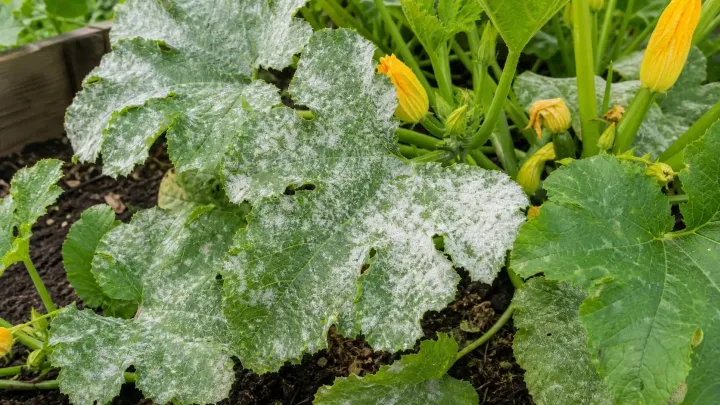
The initial symptoms are characterized by small, scattered white or grayish spots on the upper or lower leaf surfaces. These spots gradually enlarge and coalesce, eventually covering the entire leaf area with a powdery mat.
As the infection progresses, the leaves lose their vibrant green color, turning chlorotic and brittle. In severe cases, the infected leaves will wither and die, which significantly compromises the plant's photosynthetic capacity.
The disease can also manifest on petioles, stems, and fruits. On sensitive cultivars, the presence of the fungus leads to stunted growth, leaf curling, and the distortion of developing vegetative parts.
In advanced stages of infection, tiny black specks may be visible within the white mycelial mat; these are the sexual fruiting bodies, known as chasmothecia, indicating the completion of the life cycle.
- White, powdery mycelial spots on foliage.
- Yellowing and necrosis of infected leaves.
- Stunted growth of new shoots.
- Premature leaf senescence and fall.
Pathogen
The causal agent of this disease is the obligate parasitic fungus Podosphaera fusca (formerly known as Sphaerotheca fuliginea). It is a highly specialized pathogen that survives by deriving nutrients directly from the living tissues of its host plants.
It affects a wide range of cucurbitaceous plants, including cucumbers, zucchini, pumpkins, squash, melons, and watermelons. The fungus penetrates the epidermis using specialized structures called haustoria, which anchor into the plant cells to extract sustenance.
The fungus overwinters as cleistothecia in crop debris left in the field or in greenhouse environments. In protected cultivation, it can persist on residual plant tissue or alternative host weeds throughout the winter months.
During the growing season, the disease is spread by windborne conidia. These spores can travel significant distances, allowing the pathogen to colonize entire fields or greenhouses rapidly under favorable conditions.
The fungal mycelium spreads across the surface of the leaves, eventually producing a characteristic white, flour-like dust that consists of millions of asexual spores capable of repeating the infection cycle.
Conditions for development
Powdery mildew development is heavily influenced by humidity and temperature. It thrives in warm conditions, with temperatures ranging from 18 to 28 degrees Celsius being optimal for spore germination and growth.
While many fungal diseases require high humidity, Podosphaera fusca can develop rapidly in relatively dry air, provided there is high enough humidity at the leaf surface level to support mycelial growth.
Poor ventilation and overcrowded planting densities are primary drivers for outbreaks in greenhouse settings. Lack of light penetration further weakens the host plant's defense mechanisms, making it more susceptible.
Excessive application of nitrogen fertilizers creates succulent, lush tissue that is particularly vulnerable to fungal colonization. Conversely, maintaining proper potassium and phosphorus levels helps build thicker cell walls.
Environmental stress, such as drought or wide temperature fluctuations, often serves as a trigger for the intensification of the disease, as stressed plants are less capable of mounting an immune response.
Why it matters
The primary economic harm of powdery mildew is the significant reduction in the plant's photosynthetic area. This energy deficit causes overall growth suppression and severely reduces the yield potential of the crop.
Fruits harvested from heavily infected plants are often small, poorly developed, and lacking in flavor. In some varieties, the infection can cause fruit bittering, rendering the produce unmarketable.
By causing premature senescence of the foliage, the disease effectively shortens the productive lifespan of the crop. This leads to a substantial loss of yield over the course of the growing season.
Plants weakened by powdery mildew are significantly more susceptible to secondary infections, including bacterial blights and root rots, which often finish off the compromised plant populations.
If not managed correctly, this pathogen can cause epidemics leading to losses between 30 and 80 percent of the total harvest, making it one of the most critical diseases in cucurbit production.
Protection
Effective management begins with strict crop rotation and the removal and destruction of crop residues post-harvest to minimize the survival of overwintering structures in the soil.
Using resistant or tolerant hybrids is the most sustainable approach to long-term control. Field sanitation, including the rigorous removal of weed hosts, is essential to decrease initial inoculum levels.
Chemical control measures involve the use of sulfur-based fungicides, triazoles, or strobilurins. It is crucial to rotate chemical classes to prevent the development of resistance in the pathogen population.
In greenhouses, maintaining optimal air circulation and controlling humidity levels through proper ventilation and spacing can significantly suppress disease development.
Biocontrol agents, such as formulations containing Bacillus subtilis or the mycoparasite Ampelomyces quisqualis, offer effective alternatives for late-season management when chemical residues on fruits are a concern.
Discussion
No discussions yet — be the first.