
Podoscypha
Podoscypha
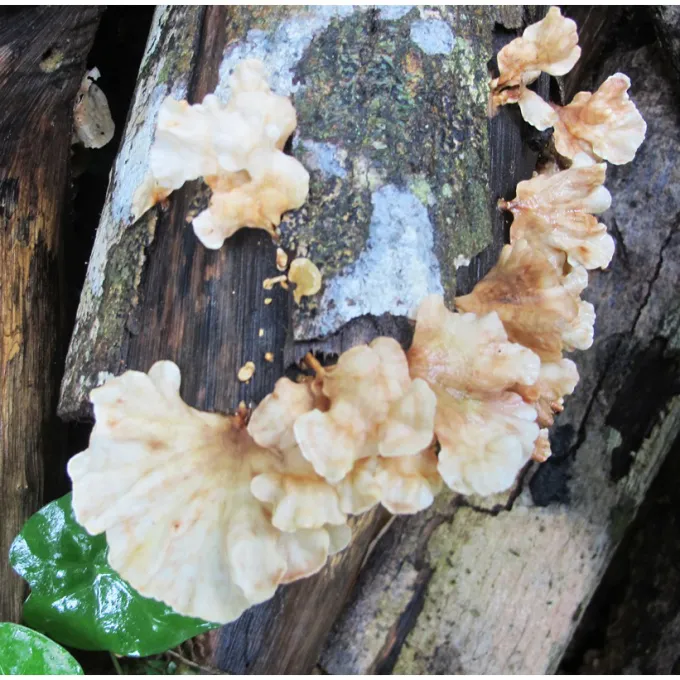
Description
Symptoms
The presence of leathery, multi-layered fungal brackets at the base of the tree or on exposed roots is the most definitive sign of a Podoscypha infection.
Above ground, infected trees often exhibit thinning crowns, chlorotic leaves, or needles that lose their natural color and drop prematurely due to the restricted flow of water and nutrients.
The wood affected by the fungus loses its rigidity, becoming soft and stringy. In advanced stages, large hollows may develop within the trunk or root system, severely compromising the tree's structural stability.
Bleeding or resinous exudations on the bark near the ground level are frequently observed, as the tree attempts to create defensive barriers against the encroaching mycelium.
During dry spells, the foliage may wilt rapidly, as the damaged root system can no longer meet the plant's transpirational demands, leading to sudden limb dieback or whole-tree collapse.
Pathogen
The genus Podoscypha belongs to the order Hymenochaetales and includes several species of fungi known for causing white rot in woody plants. These fungi are primarily decomposers that thrive on lignin and cellulose found in tree tissues.
The fungus reproduces via spores, which are disseminated by wind, water splashes, or insects. Once they reach a wound or a stressed area on a tree, the spores germinate, and the mycelium begins to colonize the xylem and cambium layers.
As the mycelium grows, it secretes enzymes that break down the structural integrity of the wood. This process transforms solid timber into a fibrous, bleached mass, which is a hallmark of white rot pathogens.
Podoscypha can act as a facultative parasite, often waiting for the host tree to become weakened by environmental factors or injuries before aggressively invading its internal systems.
The fruit bodies of this fungus are typically leathery or cartilaginous and grow in clusters, often forming fan-shaped or rosette structures on the bark or at the root collar of infected trees.
Conditions for development
High moisture levels in the soil and atmosphere create the optimal environment for the fungus to spread and colonize new hosts. Waterlogging at the base of the trunk significantly increases the vulnerability of the tree.
Mechanical injuries caused by lawnmowers, landscaping equipment, or storm damage serve as primary entry points for fungal spores to bypass the tree's natural protective bark layer.
Trees undergoing stress from drought, nutrient deficiency, or overcrowding are much more susceptible to Podoscypha than healthy, well-maintained specimens.
Warm temperatures, ranging from 15 to 25 degrees Celsius, accelerate the metabolic activity of the mycelium, allowing it to penetrate deep into the sapwood and heartwood more effectively.
Stagnant air and poor ventilation within dense plantings maintain a humid microclimate that supports the development of reproductive fruit bodies, increasing the overall infection pressure in the area.
Why it matters
The primary threat posed by Podoscypha is the degradation of the tree's structural integrity, which leads to increased risk of windthrow and falling limbs, endangering people and property nearby.
Economic losses in forestry are significant, as the white rot induced by the fungus destroys the commercial value of the timber, rendering it useless for construction or furniture production.
The disease contributes to the gradual decline of urban and forest ecosystems, as affected trees become less resilient to secondary pests and extreme weather events.
Because the fungus can survive in stumps and woody debris for many years, it remains a persistent threat to any new trees planted in or near the site of an infected specimen.
The gradual loss of tree vitality reduces the overall landscape value, necessitating costly removal and replacement procedures to maintain site safety and aesthetics.
Protection
Regular monitoring is essential to catch early signs of infection. If fruit bodies appear, they should be carefully removed and destroyed to limit spore dispersal.
Sanitation measures, including the pruning of infected branches and the prompt removal of dead or dying trees, are crucial to reducing the source of inoculum in the vicinity.
All pruning tools used on infected plants must be disinfected with alcohol or other appropriate sanitizers before being used on healthy trees to prevent cross-contamination.
Applying wound-sealing compounds to mechanical injuries can help prevent fungal spores from establishing themselves, allowing the tree time to compartmentalize the injury.
Maintaining tree vigor through proper irrigation, mulching, and balanced fertilization programs is the most effective long-term strategy for preventing colonization by wood-decaying fungi.
Discussion
No discussions yet — be the first.