
Podofomes
Podofomes
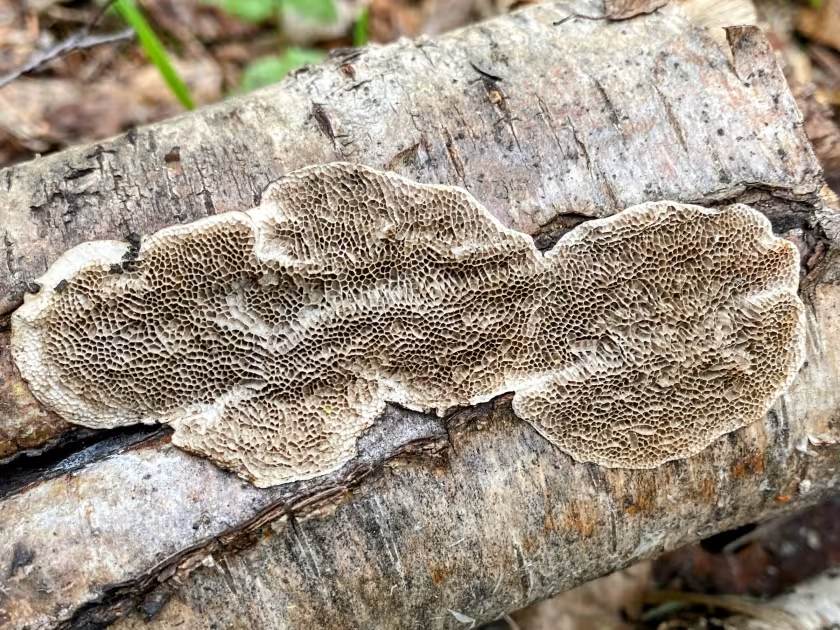
Description
Symptoms
Early symptoms include a gradual thinning of the crown, where leaves or needles may turn pale. The overall vitality of the tree declines steadily over time.
Visible fruiting bodies appearing at the root collar are a classic sign of advanced infestation. Their presence indicates significant decay of the internal root structures.
When examining the root system, one can see discolored, decayed wood with a characteristic texture. In some cases, white mycelial mats may be found under the bark.
Reduced annual shoot growth is a common indicator that the tree is diverting energy to fight the infection. Stunted growth is an early warning sign of severe root stress.
In later stages, trees may exhibit increased sensitivity to wind, leading to windthrow. This happens because the root anchor system has been severely compromised by the rot.
Pathogen
The causative agent of this disease is the fungus Podofomes, a type of wood-decaying basidiomycete. It specifically targets the root system and the lower part of the tree trunk.
The fungus acts as a pathogen that breaks down essential structural components of wood such as lignin. This enzymatic activity leads to the loss of mechanical strength in the infected plant tissues.
Fruiting bodies of Podofomes appear at the base of the tree. These structures are essential for the production and dispersal of fungal spores into the environment.
The pathogen spreads primarily through contact between the roots of infected and healthy trees. Spores can also be transported by wind or moisture to new sites.
Once established in a tree, the fungus can persist for many years, making it a significant challenge for forest management and ecosystem preservation.
Conditions for development
High soil moisture and waterlogged sites are ideal conditions for Podofomes proliferation. The fungus thrives in environments with restricted aeration.
Mechanical damage caused by machinery or wildlife creates entry points for fungal spores. Open wounds on roots are particularly susceptible to new infections.
Optimal temperatures ranging from +15°C to +25°C favor rapid mycelial growth. During warm and humid seasons, the rate of infection increases significantly.
Overcrowded forest stands lack sufficient air circulation, which contributes to the buildup of inoculum on the forest floor.
Poor soil structure and lack of nutrients contribute to tree stress, lowering their natural resistance against the colonization by wood-decay fungi.
Why it matters
The primary damage is the destruction of the root system, which eventually results in the death of the tree. The loss of trees impacts forest density and health.
Decayed wood is worthless for commercial timber use. The economic impact includes loss of valuable forest resources and high costs for cleanup.
The disease spreads in clusters, often leading to the formation of gaps in the forest canopy. This disrupts the local microclimate and biodiversity.
Affected trees are highly susceptible to secondary pests, such as bark beetles, which further aggravate the decline of the forest stand.
Soil quality can be negatively affected as the rapid decay of roots alters the root-soil interface, potentially harming neighboring healthy vegetation.
Protection
Sanitation cutting is the most effective approach. Infected trees, including their entire root stumps, must be removed to prevent further spread of the pathogen.
Improving soil drainage is a critical preventive measure. A well-drained site makes the environment less favorable for the survival and spread of the fungus.
Regular phytopathological inspections are necessary to identify early signs of the disease. Mapping infection sites helps in planning long-term protection strategies.
The application of biological control agents, such as beneficial fungal antagonists, can help suppress Podofomes growth in the soil.
Practicing good forest hygiene, such as disinfecting tools between different sites, is essential to stop the human-assisted spread of the disease.
Discussion
No discussions yet — be the first.