
Podaxis
Podaxis
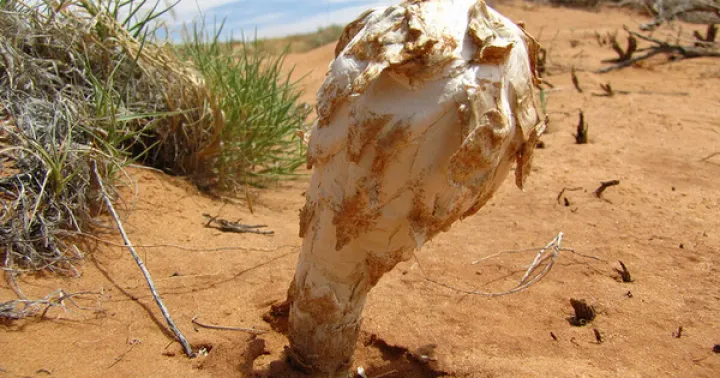
Description
Symptoms
The most visible symptom is the emergence of distinctive fruit bodies that look like clubs or stalks. These are vastly different from the caps and stems of standard mushrooms.
The mycelium on the casing soil surface often forms a dense, whitish mat that may eventually turn brownish as the fungus approaches its reproductive phase.
As the fruit body matures, the interior converts into a dark brown or black powdery mass of spores. This is a clear indicator that the infection has reached a critical, contagious level.
In colonized areas, the development of mushroom pinheads stops entirely. The cultivated mushroom mycelium appears weak and eventually disappears, replaced by the competitive fungus.
A noticeable change in the substrate's texture and smell, often becoming musty or pungent, serves as an additional diagnostic sign of Podaxis presence.
Pathogen
The causative agent of this disease is a fungus from the genus Podaxis, most commonly the species Podaxis pistillaris. In mushroom farming, it is considered a competitive fungus that aggressively invades the substrate.
Biologically, it is a gasteromycete fungus characterized by high sporulation capacity. Its spores are exceptionally durable and can survive in extreme conditions, making the fungus difficult to eradicate once it establishes a colony.
The fungus actively consumes nutrients from the compost intended for mushrooms. Its rapid growth rate allows it to deplete the substrate, leaving no food sources for the cultivated mushroom mycelium.
Infection in professional mushroom houses typically occurs through improperly pasteurized compost. If the core temperature of the compost does not reach the required lethal threshold, spores remain viable.
The life cycle of Podaxis is well-adapted to the moisture and nutrient profiles of mushroom substrates, allowing it to easily outcompete the target crop in suboptimal conditions.
Conditions for development
Inadequate pasteurization of the compost is the primary driver of this disease. If the heat treatment is uneven, the remaining spores can trigger a massive infestation.
High temperatures and humidity during the incubation phase create an ideal environment for Podaxis to colonize the compost rapidly.
Sanitation failures, such as using unsterilized tools or contaminated water supplies, contribute to the rapid spread of spores throughout the production facility.
Airflow systems without proper high-efficiency filtration can facilitate the transport of spores from infected areas to healthy cultivation chambers.
Persistent moisture in structural cracks and equipment gaps allows the fungus to remain in the facility between production cycles, leading to recurring outbreaks.
Why it matters
The primary economic impact is the total loss of yield in the affected areas. Podaxis renders the compost completely useless for the intended mushroom crop.
The rapid release of spores poses a risk to the entire farm. If left unmanaged, the infection can quickly compromise the integrity of multiple production rooms.
Financial losses extend beyond the value of the lost harvest to include the costs of total substrate removal, deep cleaning, and potential downtime for the facility.
The aggressive nature of the fungus degrades the physical structure of the substrate, making it impossible to reuse the compost for secondary purposes.
The presence of Podaxis forces growers to implement quarantine measures, disrupting the production schedule and increasing operational overheads.
Protection
Preventive control starts with ensuring rigorous quality control of raw materials and strict adherence to the thermal pasteurization protocols for the compost.
Regular sanitation of all equipment, structures, and floors is essential to eliminate spore reservoirs. Personnel should also follow strict hygiene protocols.
If Podaxis fruit bodies are detected, they must be removed with great care to prevent spore dispersal. The localized area should be treated with appropriate disinfectants.
Using only sterilized casing material significantly reduces the risk of introducing the pathogen to the surface of the mushroom beds.
Constant monitoring of the mycelium during the incubation phase allows growers to identify and remove localized spots before the entire block becomes compromised.
Discussion
No discussions yet — be the first.