
Plowrightia
Plowrightia
Description
Symptoms
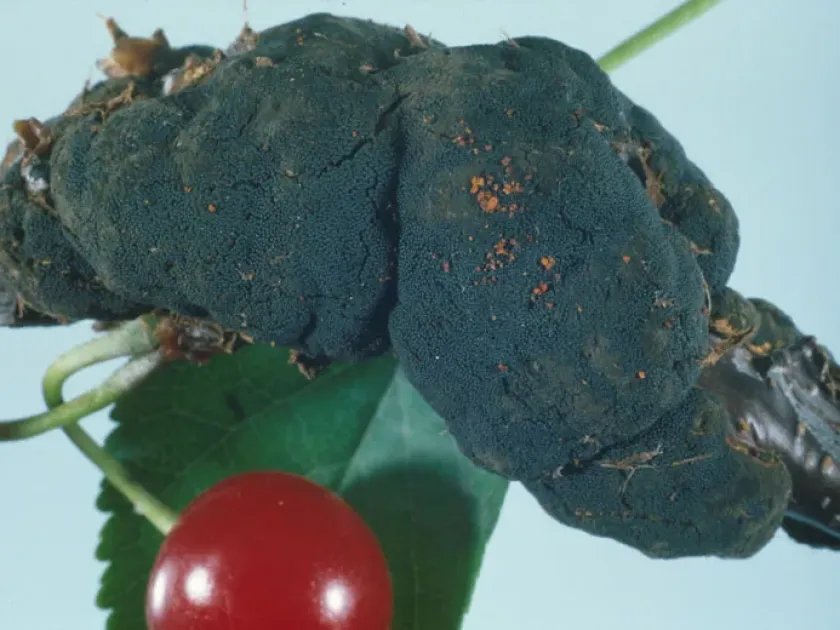
The primary symptom of the disease is the appearance of distinct, tumor-like growths on the bark of branches and trunks. In the early stages, the bark thickens around the infection site, forming hard, uneven bumps.
As the pathogen develops, tiny black dots or pustules emerge on the surface of the infected areas. These are the fruiting bodies of the fungus, containing spores ready to spread across the plant tissue.
In advanced cases, the infected branches begin to dry out because the fungus disrupts the normal flow of nutrients and water within the vascular system. The bark may crack and peel, exposing the inner wood.
Visually, the disease can resemble black knot, requiring careful diagnosis. Infections can occur on both thin young shoots and large skeletal branches of mature trees, leading to structural deformation.
The overall health of the tree declines as the infection progresses. This manifests as stunted growth, premature leaf drop, and eventually the death of affected branches if left untreated.
Pathogen
The disease is caused by fungi of the genus Plowrightia, which belong to the class Ascomycota. They are specialized parasites that target various tree and shrub species, inducing cancerous growths.
The fungal life cycle involves the formation of sexual spores in stroma deep within the host's bark. These spores are highly effective at dispersing to new hosts, especially under favorable conditions.
The mycelium of the fungus penetrates deep into the cambium and bark, stimulating abnormal cell division in the host. This parasitic activity forces the plant to divert energy into creating these growths, severely weakening the tree.
These fungi are highly persistent, often remaining active within the wood throughout the year. Even during dormancy, the fungus survives, ensuring a constant source of infection in the vicinity.
Spore dissemination is primarily driven by rain splash and wind. Once the spores land on a vulnerable surface, moisture allows them to germinate and penetrate the host tissue.
Conditions for development
Development of the disease is favored by high humidity and moderate temperatures. Prolonged rainy periods significantly increase the risk of spore germination and local spread.
Mechanical damage to the bark, such as frost cracks, sunscald, or improper pruning wounds, acts as a primary entry point for Plowrightia. The pathogen readily exploits these vulnerable areas.
Densely planted orchards with poor air circulation create a microclimate with excessive humidity. This environment is ideal for the rapid spread of the fungus from infected individuals to neighboring healthy trees.
Poor orchard maintenance, particularly neglecting to remove dead or diseased branches, allows the inoculum load to build up. The fungus quickly colonizes weakened plant parts.
The general physiological condition of the tree plays a crucial role in disease resistance. Trees suffering from nutrient deficiencies or environmental stress are significantly more prone to fungal colonization.
Why it matters
Plowrightia causes severe damage to ornamental and fruit-bearing trees by inducing structural deformations. This permanent disfigurement reduces both the aesthetic appeal and the economic value of the plants.
By disrupting the vascular pathways, the fungus limits the transport of essential resources to the canopy. This leads to progressive branch dieback and a significant decrease in the tree's productivity.
In nursery settings, the disease can cause mass mortality among young saplings, leading to major financial losses and the need for significant investments in replanting efforts.
Infection of skeletal branches weakens the tree structure, increasing the risk of breakage during high winds or heavy snow. This creates safety hazards for the surrounding landscape and infrastructure.
Because the fungus penetrates deep into the wood, successful treatment is difficult. Infected trees often remain a perpetual threat, continuously releasing spores that jeopardize nearby healthy vegetation.
Protection
The most important control measure is the immediate sanitary pruning of all infected branches. It is essential to cut well into healthy tissue and burn the diseased material to eliminate the inoculum source.
Disinfecting all pruning tools (secateurs, saws) after each cut is mandatory to prevent the mechanical transmission of fungal spores from infected trees to healthy ones.
Preventive fungicide sprays, especially those containing copper, should be applied during the dormant season and early growth stages to protect the bark from spore colonization.
Protecting pruning wounds and mechanical injuries with high-quality wound paint or fungicidal paste prevents the pathogen from entering the vascular system of the tree.
Improving orchard vigor through balanced fertilization, proper irrigation, and canopy thinning helps boost the natural defense mechanisms of the trees, making them more resilient to fungal attacks.
Discussion
No discussions yet — be the first.