
Pine needle cast
Ploioderma lethale
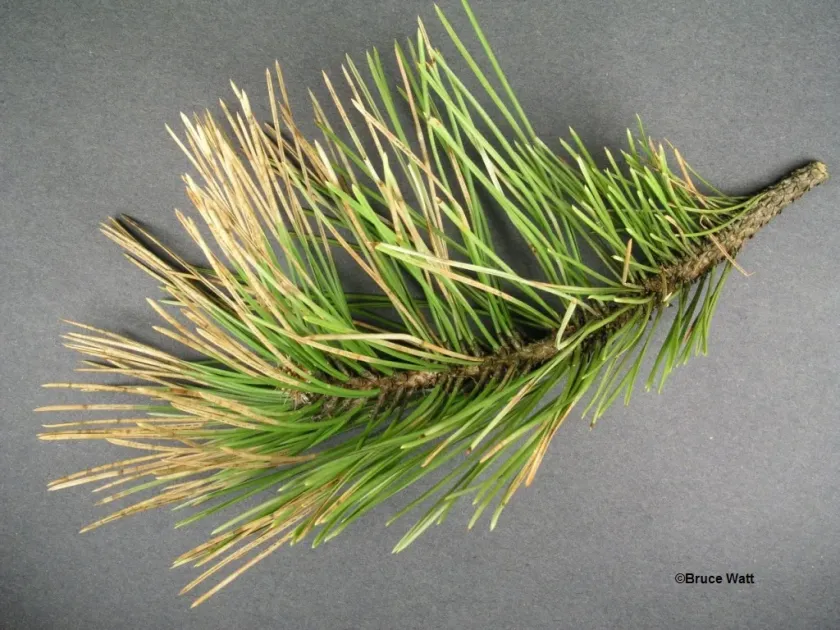
Description
Symptoms
The first symptoms of pine needle cast caused by Ploioderma lethale typically appear in late summer or autumn on the needles of the current season.
Initially, small yellow spots emerge on the needle surface, which gradually turn into reddish-brown or dark brown necrotic lesions.
As the infection progresses, the affected needles begin to wither, turn yellow, and eventually drop prematurely, causing the tree to look sparse.
A hallmark sign of this pathogen is the presence of long, thin, black hysterothecia (fruiting bodies) that develop longitudinally along the needles.
Unlike other needle cast diseases, the infected needles may remain attached to the branches for a prolonged period, showing a dull, dead appearance.
Pathogen
The disease is caused by the ascomycete fungus Ploioderma lethale (formerly classified under the genus Hypoderma).
The fungus completes its lifecycle by producing ascospores in mature hysterothecia that form on dead needles lying on the forest floor.
During moist periods, these spores are forcibly ejected and dispersed by wind or splashing rain to colonize the current year's healthy needles.
The pathogen colonizes the needle tissues, disrupting the vascular and cellular structure, which leads to the eventual death of the needle organ.
The fungus is highly host-specific, primarily targeting various pine species, and its survival depends on the presence of needle debris.
Conditions for development
Prolonged periods of high humidity and rainfall during the summer are the primary drivers for the germination and spread of Ploioderma lethale spores.
Dense plantation layouts that lack sufficient air movement promote the retention of moisture on needles, favoring fungal infection.
Stressed trees, due to nutrient deficiencies, drought, or poor soil conditions, show higher susceptibility to initial infection and rapid disease development.
The existence of previous years' needle litter around the base of the trees serves as the primary reservoir for the fungus.
Cool to moderate temperatures, typically consistent with spring and early summer weather, provide the ideal environment for the maturation of ascospores.
Why it matters
The primary damage caused by this disease is the premature loss of needles, which significantly reduces the tree's photosynthetic capability and growth.
Chronic needle loss leads to severe weakening of the host tree, making it vulnerable to secondary colonization by bark beetles and borers.
In forest nurseries, severe outbreaks of Ploioderma lethale can result in stunted growth and death of seedlings, causing significant economic losses.
The disease degrades the aesthetic value of ornamental pines in parks and gardens, as the thinning canopy becomes visually unappealing.
If left unmanaged, the cumulative impact of needle cast over several years can lead to the decline and mortality of susceptible pine stands.
Protection
The most effective strategy is the sanitation of the site, which includes the physical removal and destruction of fallen needles to eliminate the spore source.
Improving stand aeration through thinning and strategic pruning of lower branches helps to lower humidity levels in the canopy.
Fungicidal applications, particularly those containing copper or systemic triazole compounds, are recommended during periods of high infection risk.
- Maintaining tree vigor through proper fertilization and irrigation.
- Ensuring adequate spacing between trees to prevent humidity buildup.
- Regular inspection for early signs of needle discoloration.
Chemical treatments should be timed precisely with spore release periods in the spring to ensure maximum protective efficiency against the pathogen.
Discussion
No discussions yet — be the first.