
Ploioderma needle blight
Ploioderma cedri
Description
Symptoms
The primary symptom is the discoloration of needles, which turn from yellow to a characteristic reddish-brown or dark brown. Affected needles become brittle and fall off prematurely, resulting in sparse foliage.
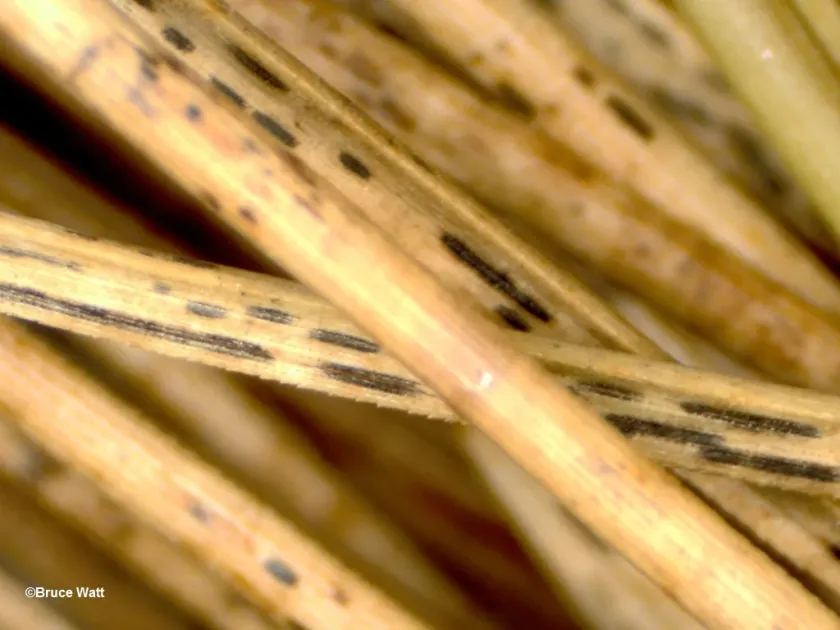
Upon close inspection, black or dark-colored elongated lines and spots can be seen on the needle surface. These are the developing fruiting bodies of the fungus, typically aligned with the longitudinal axis of the needle.
The infection usually starts from the lower branches, where humidity is higher and airflow is restricted, causing the tree to lose its natural aesthetic shape from the bottom up.
Damaged needles lack turgor and appear dried out. In contrast to normal senescence, the lesions caused by Ploioderma cedri are distinct and often accompanied by visible fungal growth structures.
The overall vigor of the tree is significantly reduced, with signs of stunted growth and a general lack of luster in the remaining foliage throughout the canopy.
Pathogen
The disease is caused by the fungus Ploioderma cedri, a specialized pathogen that primarily targets cedar species. This fungus belongs to the order Rhytismatales, which are known for causing significant damage to conifer needles.
The life cycle of the pathogen involves the production of apothecia—fruiting bodies that appear as dark, elongated structures on dead or dying needles. These structures are the source of spores that spread the infection.
The fungus develops internally within the needle tissue. By disrupting the internal cellular structure, the pathogen interferes with essential physiological processes, including photosynthesis and nutrient transport.
Spore dissemination is highly dependent on environmental factors, particularly wind and rain, which transport spores to susceptible healthy needles. Moisture on the needle surface acts as a catalyst for spore germination.
The pathogen remains dormant or continues its development in the needle litter under the trees, ensuring its persistence in the environment across multiple growing seasons.
Conditions for development
High humidity and consistent rainfall are the primary drivers for the development and spread of Ploioderma cedri. Stagnant air and poor ventilation exacerbate the infection risk.
Dense planting schemes that prevent the drying of foliage after rainfall create a perfect microclimate for the fungus to thrive and reproduce.
Trees experiencing physiological stress due to improper watering, poor soil nutrition, or environmental extremes are significantly more susceptible to successful fungal colonization.
Moderate temperatures during the spring season provide the optimal conditions for spore germination and rapid colonization of new, succulent needle growth.
Accumulation of needle debris underneath the canopy provides a persistent reservoir of inoculum, allowing the disease to re-establish itself repeatedly each year.
Why it matters
The main impact is the premature loss of needles, which directly reduces the tree's photosynthetic capacity. This leads to starvation of the tree and gradual decline in overall health.
Long-term infestation can cause dieback of whole branches, significantly diminishing the tree's ornamental value and structural integrity in landscape settings.
Severe infection weakens the tree's immune response, making it highly susceptible to opportunistic secondary pests, including bark beetles and other pathogenic fungi.
In nurseries, this disease can cause massive losses of young stock, leading to significant economic impacts and the loss of entire crop batches.
The recovery process for affected trees is slow and requires intensive care, during which the trees remain vulnerable to any further environmental or biological stressors.
Protection
Sanitation is the cornerstone of management. Removing and destroying all infected needle litter from beneath the trees is essential to break the disease cycle.
Chemical control involves the application of copper-based fungicides or systemic treatments during the early growth season to prevent new infections and halt fungal development.
Improving air circulation through careful pruning of the lower branches is a vital cultural practice to reduce humidity levels in the canopy.
Balanced fertilization and regular maintenance help bolster the tree's internal resistance, making it better able to cope with potential disease pressure.
- Apply fungicides as a preventive measure during the spring flush.
- Maintain adequate spacing between trees to ensure good sunlight penetration.
- Monitor needles closely for the first signs of discoloration or fungal spots.
Discussion
No discussions yet — be the first.