
Plicaria leiocarpa
Plicaria leiocarpa
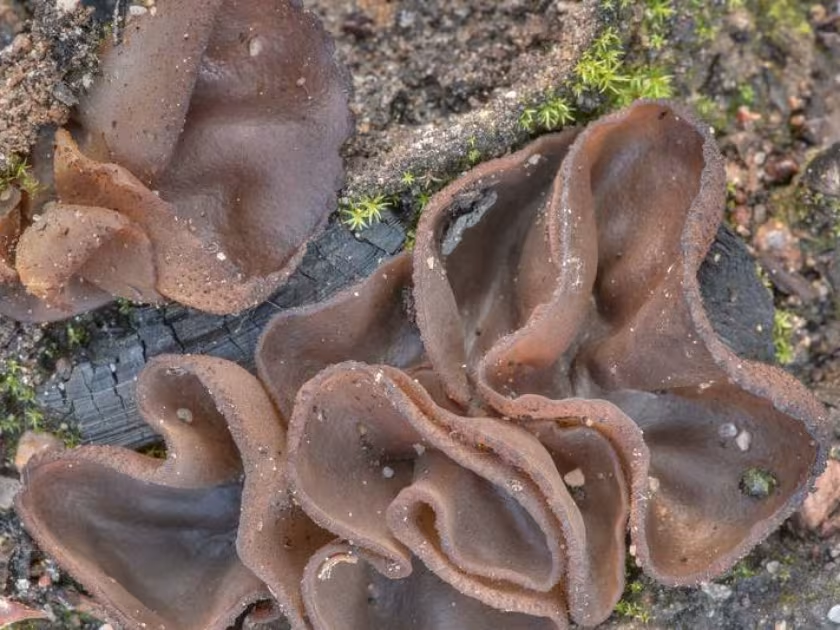
Description
Pathogen
The causal agent of this condition is the ascomycete fungus Plicaria leiocarpa, which is typically found as a saprotroph within various soil environments. Under specific agricultural conditions, it can shift to a pathogenic behavior affecting stressed or vulnerable plant hosts.
This fungus forms cup-shaped fruiting bodies, known as apothecia, which are usually hidden in decaying leaf litter or moist soil. It relies on the decomposition of organic matter, which defines its ecological niche in the field.
The life cycle involves the production of ascospores, which serve as the primary inoculum. These spores are capable of surviving harsh winter conditions, remaining viable in the soil profile for several seasons.
While often benign, the fungal mycelium can invade the rhizosphere and attach to the root systems of crops, especially when the plant's natural defense mechanisms are weakened by external stressors.
Dissemination occurs primarily through water runoff, wind movement of soil particles, and mechanical transport by agricultural machinery during tillage or harvesting operations.
Conditions for development
Plicaria leiocarpa thrives in environments characterized by consistently high soil moisture and moderate ambient temperatures, making it a potential issue during wet spring seasons.
Soils that are poorly drained or suffer from compaction are particularly prone to outbreaks, as these conditions limit aeration and favor the metabolic activity of this specific fungus.
A significant accumulation of surface plant debris provides an abundant food source, allowing the mycelium to proliferate rapidly before it potentially encounters the roots of susceptible crops.
Soil pH plays a critical role in the fungus's competitiveness; it often shows increased activity in slightly acidic conditions where competing microorganisms are less numerous.
Excessive rainfall that creates saturated soil layers creates the perfect conditions for ascospore germination and subsequent root colonization by the pathogen.
Why it matters
The primary economic damage results from the inhibition of root development, which limits the plant's ability to take up water and nutrients from the soil, leading to significant yield loss.
Infected crops typically exhibit stunted growth, chlorosis, and, in severe cases, the sudden wilting of the plant as the integrity of the root vasculature is compromised.
Seedling blight is a common outcome in high-pressure scenarios, resulting in poor stand establishment and the necessity for potentially expensive re-seeding operations.
The pathogen's metabolic byproducts can negatively interfere with beneficial soil microbes, including mycorrhizal fungi, further weakening the plant's long-term health and productivity.
Secondary infections are common, as the damage caused by Plicaria leiocarpa opens pathways for other opportunistic soil-borne pathogens to enter the plant host.
Protection
Effective management begins with deep plowing to bury plant residue, which accelerates decomposition and reduces the amount of fungal inoculum available on the soil surface.
Strategic crop rotation is essential to break the infection cycle, as rotating away from susceptible host species denies the pathogen the resources needed to multiply.
Adjusting soil pH through liming can alter the soil environment to be less hospitable to Plicaria leiocarpa, effectively reducing its ecological advantage.
Biological control, particularly the application of beneficial fungi like Trichoderma, can help establish a healthy rhizosphere that naturally inhibits the growth of the pathogen.
- Implement precision irrigation to avoid waterlogged conditions.
- Ensure adequate mineral fertilization to promote vigorous root development.
- Sanitize farming equipment to prevent spreading contaminated soil between fields.
Discussion
No discussions yet — be the first.