
Plicaria endocarpoides
Plicaria endocarpoides
Description
Symptoms
A primary indicator of the presence of Plicaria endocarpoides is the formation of characteristic fruiting bodies on the soil surface or decaying plant material.
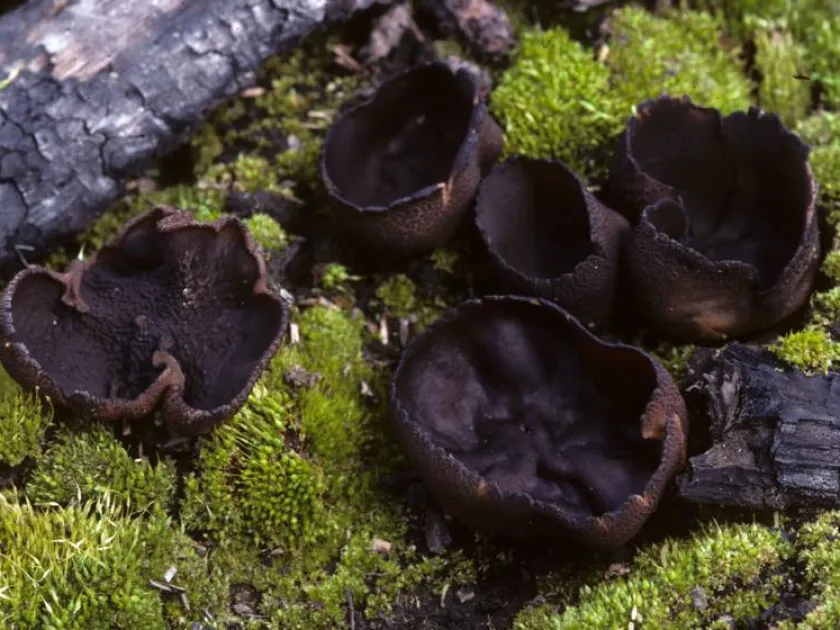
The fungus produces cup-shaped apothecia, which are often embedded in the substrate or soil, making them difficult to detect at an early stage.
Visually, affected areas of the soil might appear as clusters of small, dark brown discs pressed tightly against the ground.
During periods of active growth, the mycelium may wrap around the root necks of young plants, appearing as a delicate, web-like coating.
In high-humidity conditions, sporulation can occur around the fruiting bodies, creating a light, powdery residue that is easily dispersed by air currents.
Pathogen
The pathogen responsible for this condition is the ascomycete fungus Plicaria endocarpoides, which belongs to the order Pezizales.
This fungus primarily functions as a saprotroph, although it can exhibit facultative parasitic properties under specific environmental conditions.
The fungus reproduces sexually by forming apothecia, which contain asci with spores that are released into the surrounding environment.
Its mycelium is characterized by rapid growth in loose, organic-rich soils and possesses the ability to persist deep in the soil profile.
A key biological trait of this pathogen is its high tolerance for temperature fluctuations, allowing it to successfully survive as mycelium or sclerotia.
Conditions for development
The development of Plicaria endocarpoides is directly linked to soil moisture levels and the presence of abundant undecomposed plant debris.
Favorable conditions for spore germination include prolonged periods of rainfall and poor aeration of the topsoil layer.
The fungus spreads actively in shaded locations with stagnant air, where moisture persists on the soil surface for extended periods.
The optimal temperature range for the vegetative growth of this fungus is between 15 and 22 degrees Celsius, while it is sensitive to direct sunlight.
High soil acidity creates an ideal environment for colonization by this species, as it suppresses the beneficial microbial community.
Why it matters
The pathogenicity of this fungus is largely due to its competition with young plants for essential nutrients and space within the rhizosphere.
In nurseries, infection can lead to stunted growth in seedlings, significantly reducing their success rate during transplantation.
Plicaria endocarpoides creates an unfavorable microenvironment around the root collar, which promotes the development of secondary bacterial infections.
Damage caused by the mycelium to root hairs hinders nutrient uptake, resulting in chlorosis and overall exhaustion of the plant stock.
Large-scale outbreaks necessitate significant resources for soil sanitation and sterilization before new crops can be successfully established.
Protection
The primary prevention method is the thorough removal of plant debris from the site followed by timely tillage to incorporate organic matter.
Applying lime to the soil is recommended to reduce acidity, which renders the environment less hospitable to this type of ascomycete fungus.
Improving soil drainage is essential to prevent waterlogging, which significantly slows down both spore dispersal and mycelial growth.
In cases of severe infestation, broad-spectrum fungicides may be applied to the soil surface to manage the pathogen population.
Maintaining proper crop rotation and preventing topsoil compaction are crucial long-term strategies for protecting sensitive plant stock.
Discussion
No discussions yet — be the first.