
Pleurosigma angulatum
Pleurosigma angulatum
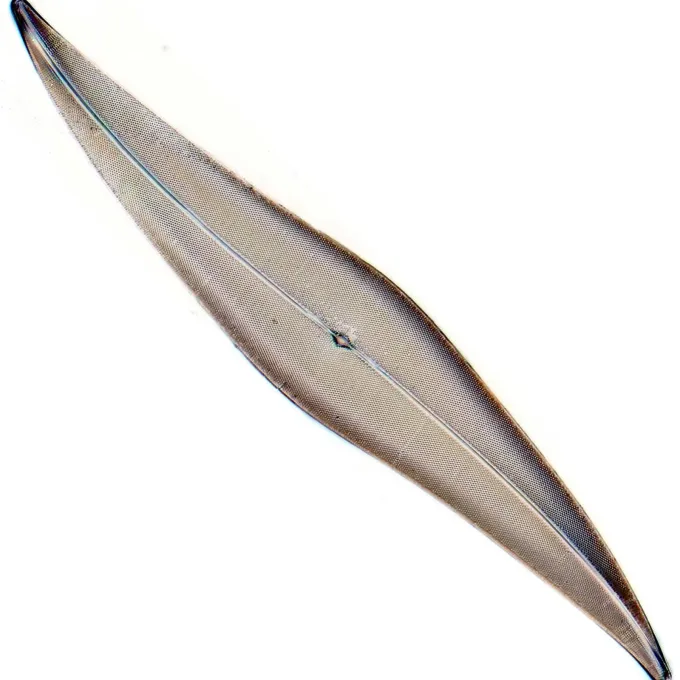
Description
Pathogen
Pleurosigma angulatum is not a plant pathogen and does not cause plant diseases. It is a well-known species of diatom, a type of unicellular algae characterized by a distinct S-shaped silica frustule with a complex grid-like pattern.
In the field of plant pathology, this organism is not classified as a disease-causing agent. It lacks the biological machinery required to infect or parasitize higher plants.
This organism is a photosynthetic life form that exists in aquatic environments. Its role in agricultural systems is limited to being a common inhabitant of irrigation pipes or hydroponic solution tanks.
Scientific interest in Pleurosigma angulatum is primarily focused on its use as a test object for checking the resolution of optical microscopes due to the regularity of its shell structure.
Therefore, it is essential to distinguish this microorganism from harmful pathogens; it poses absolutely no biological threat to crop vitality or development.
Conditions for development
The proliferation of Pleurosigma angulatum depends heavily on light availability and the presence of dissolved silica, which the organism requires to build its rigid cell wall.
It thrives in stagnant or slow-moving water bodies with high nutrient content, often manifesting where water is rich in nitrates and phosphates.
Optimal environmental conditions for its growth include moderate temperatures and a neutral pH level, which are frequently mirrored in industrial hydroponic setups.
Light penetration into irrigation water is the primary trigger for its growth. Without photosynthesis, the diatom cannot sustain its metabolic demands.
The organism does not interact with plant tissues at all, so environmental control efforts are exclusively aimed at the water medium rather than the host plants.
Why it matters
There is no direct damage caused by Pleurosigma angulatum to cultivated crops. It does not produce phytotoxins or cause any symptoms of plant decay.
The primary concern regarding this organism is mechanical. Overgrowth can lead to the clogging of irrigation nozzles, filters, and small-diameter tubing in automated watering systems.
In hydroponics, massive diatom colonies may form a biofilm on the surface of growth substrates, which can hinder the gas exchange process of root systems.
While the algae might sequester some microelements from the nutrient solution, this nutrient loss is generally negligible compared to the total volume of fertilizer applied.
It is important to emphasize that this diatom is not responsible for any wilting, lesions, or necrosis observed in agricultural production.
Protection
Management of Pleurosigma angulatum is strictly related to physical water system maintenance. No fungicides or chemical treatments are necessary to control it.
The most effective preventative measure is shading or light-proofing all water reservoirs and tubing, which prevents algal photosynthesis and suppresses population growth.
Regular sanitation of irrigation systems, including physical cleaning and flushing of lines, effectively removes diatom accumulation from equipment surfaces.
Installing UV sterilization units in irrigation systems is a highly efficient way to eliminate diatom cells without impacting the chemistry of the nutrient solution.
Maintaining high water hygiene standards and implementing routine cleaning schedules are sufficient to ensure that this organism does not impact farming infrastructure.
Discussion
No discussions yet — be the first.