
Pleurosigma
Pleurosigma
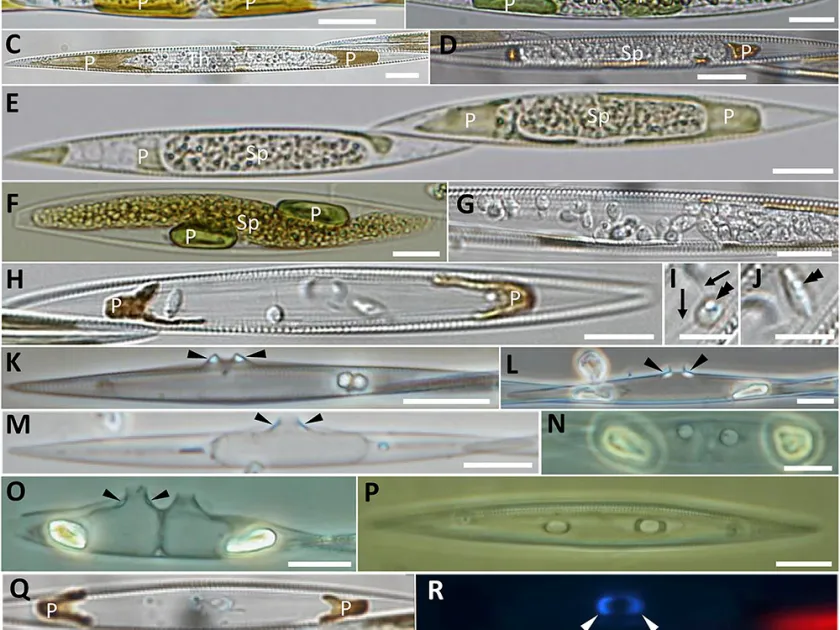
Description
Pathogen
The genus Pleurosigma is frequently confused with plant pathogens due to inaccurate internet database indexing. In reality, it is a genus of marine and brackish water diatom algae, not a plant disease.
These organisms consist of single cells enclosed within a silicate shell called a frustule. They are essential photosynthetic organisms found in oceans and coastal waters, playing a vital role in marine ecosystems.
Unlike fungi, bacteria, or viruses that cause agricultural diseases, Pleurosigma does not possess the biological mechanisms required to infect or degrade plant tissues. They live independently of land-based host plants.
There is no record of Pleurosigma infecting any crop variety. They are strictly aquatic organisms and are physically incapable of causing necrosis, wilt, or any other signs of plant stress.
Misclassification in some datasets as a "pest" or "disease" is a clear case of scientific misinformation. These algae are purely aquatic botanical specimens, not threats to agriculture.
Conditions for development
Pleurosigma thrives exclusively in aquatic habitats, particularly in benthic (bottom) layers of marine environments. Their development depends on sunlight and the availability of dissolved silica to build their frustules.
Environmental requirements include a stable salinity, pH levels found in oceans, and specific nutrient concentrations in the water column. These conditions do not exist in standard soil-based agricultural environments.
Their growth is limited by water chemistry, including temperature fluctuations in marine ecosystems. Agricultural pesticides, fertilizers, or soil management practices have no effect on their lifecycle.
Transmission occurs through tidal currents and wave motion. There is no mechanism by which these organisms could move from an aquatic environment to a terrestrial crop field to cause damage.
As they are not pathogens, no conditions for their "spread" or "development" in an agricultural context need to be studied or managed by agronomists.
Discussion
No discussions yet — be the first.