
Angel wings
Pleurocybella porrigens
Description
Symptoms
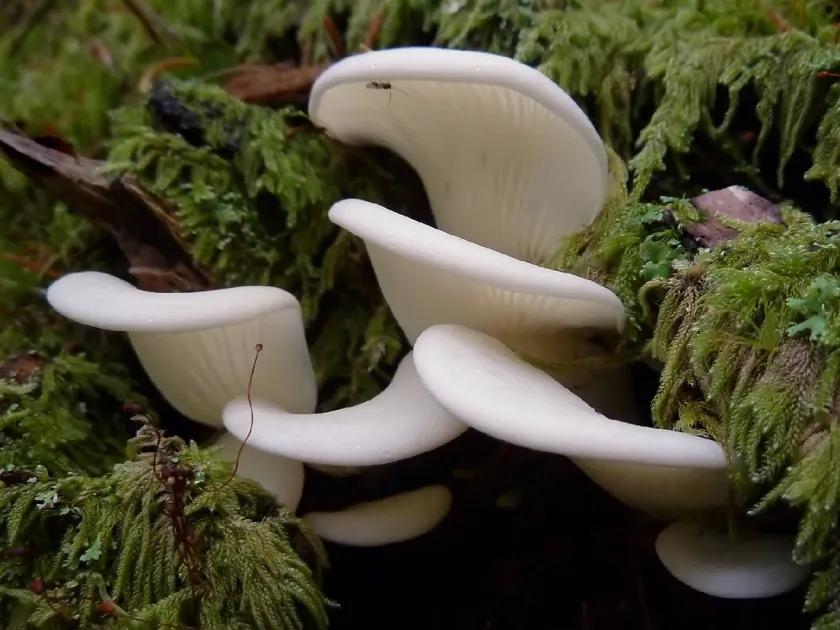
Fruiting bodies are typically white, fan-shaped, or ear-shaped, growing in dense clusters.
The caps lack a distinct stem and are often attached directly to the wood substrate.
The hymenophore is composed of thin, white, decurrent gills that are packed closely together.
The texture of the fruit body is fragile and delicate, often with a smooth surface.
- Fruiting bodies appear primarily on dead coniferous wood such as spruce or fir.
- They form in large, overlapping groups that can cover a significant surface area.
- The caps are generally small but can grow larger under optimal moisture conditions.
Pathogen
The causal agent is the basidiomycete fungus Pleurocybella porrigens, belonging to the Marasmiaceae family.
This organism acts as a saprotroph, feeding on dead and decaying organic matter found in coniferous forests.
The mycelium colonizes the wood fibers, systematically breaking down complex organic compounds.
It is biologically adapted to thrive in cool, humid forest environments dominated by conifer species.
The fungus does not infect healthy living trees; it is strictly a decomposer of non-living woody substrates.
Conditions for development
Optimal development occurs in areas with high ambient humidity and cool forest temperatures.
The fungus relies on the presence of coniferous logs, stumps, or fallen branches for its growth.
Wind-dispersed spores allow the fungus to colonize suitable substrates over long distances.
High moisture content in the woody debris is essential for spore germination and mycelial spread.
The presence of exposed, untreated wood surfaces facilitates easier initial infection by the fungus.
Why it matters
The primary economic impact is the degradation and decay of wood left in logging sites.
It accelerates the decomposition process of timber waste, reducing the quality of stored wood.
There is no threat to the physiological health of standing timber or actively growing forest stands.
The fungus is known for its potential toxicity, posing health risks if misidentified and consumed.
Increased humidity around log stacks encourages rapid colonization and overall wood quality loss.
Protection
Effective management includes the prompt removal or proper disposal of logging debris from sites.
Storage of timber under dry conditions prevents the moisture buildup necessary for fungal growth.
Applying wood preservatives to harvested timber is an effective way to prevent colonization.
Ensuring that stored wood is kept off the ground with proper ventilation reduces infection risk.
Regular sanitation of forest areas helps maintain ecosystem health and prevents excessive fungal spread.
Discussion
No discussions yet — be the first.